
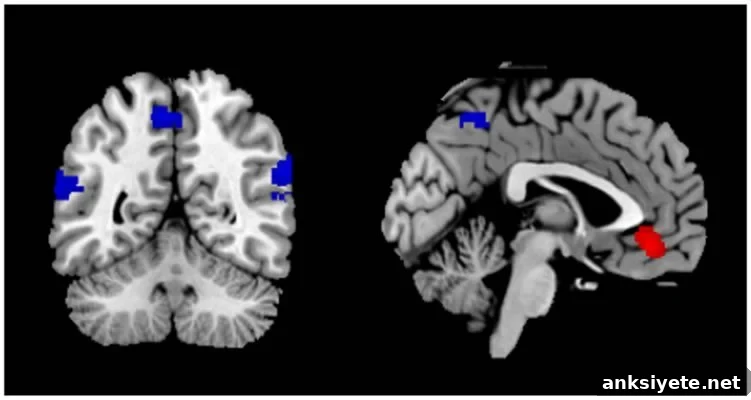
When we listen to a story, we are transported into its situations and identify with the characters’ feelings. Until recently, the precise brain processes that support this immersive experience were not fully accessible. Using functional MRI (fMRI), researchers Roel Willems and Annabel Nijhof have now measured how individual listeners process a literary narrative. The peer-reviewed journal PLOS ONE published their findings on February 11.
People immerse themselves in stories in different ways. Past studies of language and narrative often analyzed group averages and therefore missed the ways individual listeners vary. In this study, Willems and Nijhof show that listeners differ in the aspects of a story they prioritize—some concentrate on characters’ thoughts and feelings, while others focus more on the characters’ actions and the sensory details of events.
Audiobooks inside the fMRI scanner
Participants in the study listened to chapters from contemporary novels, including Island Guests by Vonne van der Meer and Thaw by Rascha Peper, while undergoing fMRI scanning. According to Roel Willems of the Donders Institute at Radboud University, “We found clear individual preferences: some listeners were drawn primarily to the intentions and emotions of the main character, whereas others were more engaged by visualizing the characters’ actions.” These consistent patterns reveal that different neural networks are recruited depending on how a person engages with a story.
Empathy, mentalizing and action simulation
The study distinguishes two complementary ways of engaging with fiction. One mode relies on mentalizing—the ability to infer others’ beliefs and intentions—while the other mode relies on sensorimotor simulation, which involves mentally recreating observed actions and sensory details. Willems notes that most people can do both, but the fMRI data show that individuals tend to favor one mode over the other. This neuroscientific evidence is among the first to demonstrate stable individual differences in how people empathize with and imagine literary narratives.
Studying real language: words, sentences and full stories
Another important feature of this research is that it used extended, naturalistic language rather than isolated words or short sentences. Many cognitive neuroscience experiments present participants with single words or brief phrases; by contrast, Willems and Nijhof had participants listen to longer, continuous excerpts of literary fiction. Studying narrative in this way brings brain research closer to the way language is actually used in everyday life, making the results especially relevant for understanding real-world comprehension.
Contact: Annabel Nijhof – Radboud University
Source: Radboud University press release
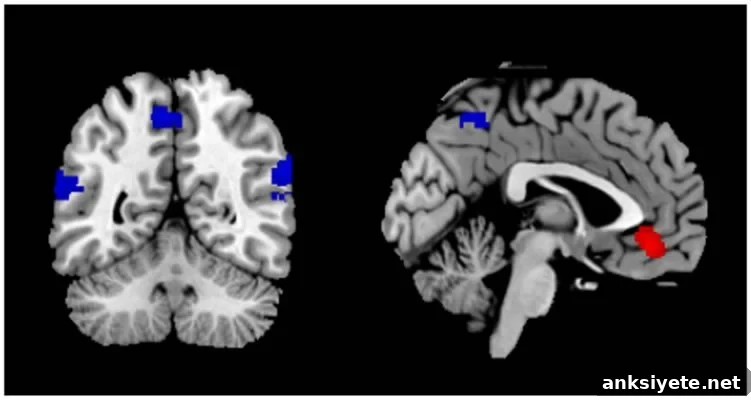
Image credit: Annabel D. Nijhof / Roel M. Willems / PLOS ONE. Image adapted from the open access research article.
Original research: “Simulating Fiction: Individual Differences in Literature Comprehension Revealed with fMRI” by Annabel D. Nijhof and Roel M. Willems, published in PLOS ONE, published online February 11, 2015, doi:10.1371/journal.pone.0116492
Simulating Fiction: Individual Differences in Literature Comprehension Revealed with fMRI
When readers or listeners engage with literary fiction they are transported to imagined places and take on the perspectives of characters. Despite narrative’s central role in daily life and development, the neurocognitive mechanisms that underlie fiction comprehension remain underexplored. This study used functional magnetic resonance imaging (fMRI) to examine how different individuals recruit neural networks associated with understanding others’ beliefs and intentions (the mentalizing network) versus networks involved in sensorimotor simulation while listening to excerpts from literary novels. Localizer tasks identified the cortical motor network and the mentalizing network for each participant after they listened to the excerpts. Results indicate an inverse relationship across individuals: those who showed higher activation in anterior medial prefrontal cortex (aMPFC), part of the mentalizing network, when processing mentalizing content exhibited lower motor cortex activation when processing action-related content, and vice versa. These findings suggest that some people primarily engage fiction by mentalizing about others’ thoughts and beliefs, while others engage more by simulating concrete actions and sensory events. The study provides on-line neural evidence for qualitatively different styles of entering literary worlds and supports the use of neuroimaging to study narrative comprehension.
Simulating Fiction: Individual Differences in Literature Comprehension Revealed with fMRI, Annabel D. Nijhof and Roel M. Willems, PLOS ONE, doi:10.1371/journal.pone.0116492.