
Summary: Researchers at Harvard report that social recognition is regulated by oxytocin-sensitive neurons within a specific region of the hippocampus.
Source: Harvard.
How do we tell one person from another? How do we separate friend from foe or reward from threat? How does the brain parse subtle cues so we know that Susan is not Erica even when they look similar? These questions have challenged neuroscientists for decades.
New experiments in mice by teams at Harvard Medical School, the Harvard Stem Cell Institute and Massachusetts General Hospital provide key insights into the neural circuitry and chemical signals that enable social recognition. The study, published in Nature Communications, identifies oxytocin-sensitive neurons in a hippocampal subcircuit as essential for distinguishing familiar and unfamiliar individuals.
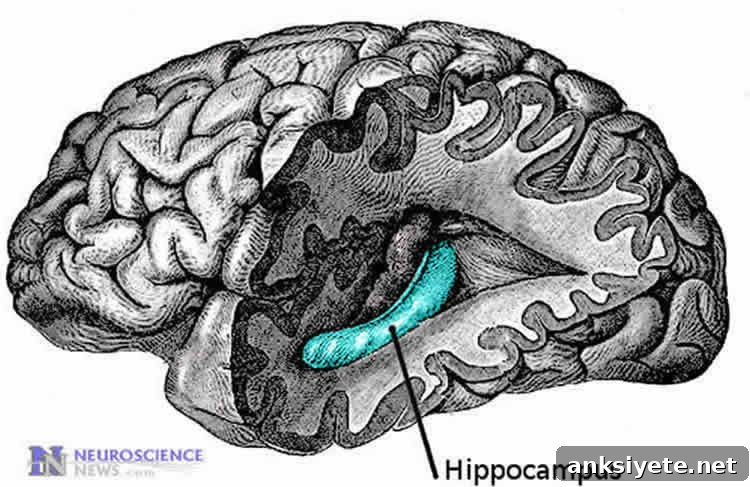
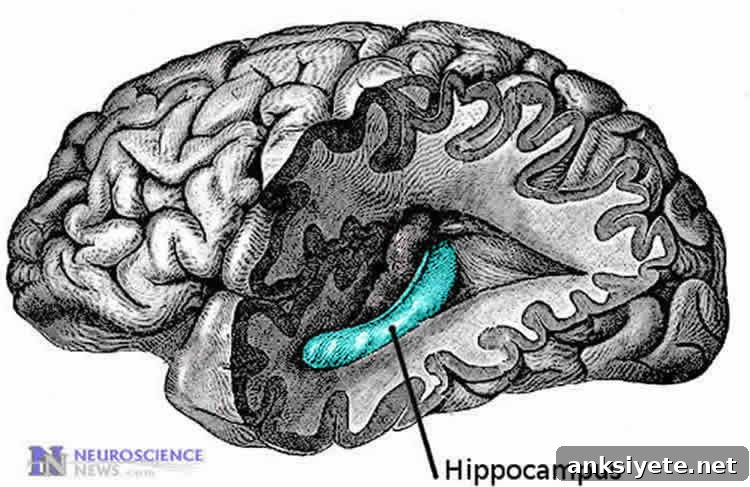
The hippocampus—an evolutionarily conserved, seahorse-shaped structure long known for its role in memory and spatial navigation—emerges from this work as an active participant in social cognition. While the hippocampus has been described as the brain’s librarian, responsible for forming and indexing memories, its contribution to social behavior and social recognition has been less clear. This study clarifies that role by showing how oxytocin modulates hippocampal circuitry to enable discrimination of social stimuli.
The researchers focused on the dentate gyrus–CA3 (DG-CA3) circuit, a hippocampal subunit thought to separate similar memories into distinct representations so the brain retrieves the correct one when needed. Their results show that oxytocin acts as a switch: when oxytocin signaling is present, the DG-CA3 circuit supports social recognition; when oxytocin signaling is absent, the same circuit continues to handle non-social object recognition.
“Our results indicate that oxytocin usurps a preexisting hippocampal circuit that normally differentiates similar memories,” said Tara Raam, the study’s first author. “In the presence of oxytocin, the circuit takes on an additional role as a regulator of social cognition.” Senior investigator Amar Sahay adds that this kind of neural repurposing reflects evolutionary efficiency—rather than creating new machinery for every task, the brain often adapts existing networks for new functions.
This mechanism may help explain why disruptions in hippocampal activity are associated with social deficits observed in a range of neurodevelopmental, psychiatric and neurological conditions, including autism spectrum disorders. More broadly, accurate discrimination between similar stimuli is fundamental to everyday behavior: the same neural computations that help distinguish familiar faces also allow us to judge whether a surface or sound signals danger or is harmless. When these computations fail, as in post-traumatic stress disorder, benign cues can mistakenly trigger intense fear responses.
The neural clue
The team concentrated on the dentate gyrus (DG), which receives sensory input, and its downstream partner CA3. Prior work suggested the DG-CA3 axis is important for differentiating similar experiences—such as recognizing that a particular street sign or building indicates a familiar neighborhood. Intriguingly, neurons in these regions express many oxytocin receptors, a puzzling observation that motivated a closer look at oxytocin’s role in hippocampal processing.
Using genetic tools, the researchers removed oxytocin receptors specifically from the DG-CA3 circuit in mice. These animals retained normal object recognition abilities and still preferred interacting with another mouse over an inanimate object, indicating that basic social interest and non-social discrimination were intact. But when tested for social recognition—choosing between familiar and novel conspecifics—the mice lacking oxytocin receptors failed. Unlike control animals that spent more time investigating new mice, oxytocin-insensitive mice treated familiar and unfamiliar animals the same, showing a clear deficit in social memory.
These experiments demonstrate that the DG-CA3 circuit is versatile: in baseline conditions it supports object recognition, and when modulated by oxytocin it acquires a social function necessary for distinguishing individuals.
From hippocampus to behavior
The hippocampus computes and indexes memories, but behavioral responses depend on communication with other brain regions. To map the pathway that carries social information out of the hippocampus, the researchers used optogenetics—making targeted neurons responsive to light—to selectively activate or silence specific projections from the DG-CA3 circuit.
Mapping these routes revealed a pathway that begins in the anterior DG-CA3 area and travels through posterior hippocampal regions before reaching the nucleus accumbens, a forebrain structure implicated in reward, motivation and social behavior. Terminal-specific optogenetic manipulations showed that outputs from anterior CA2/CA3 to posterior CA1 are crucial for social discrimination, while different CA3 outputs support non-social discrimination. In short, oxytocin receptors gate social computations within an aDG–aCA2/CA3 axis and that information is relayed to posterior hippocampus and then out to regions that shape social behavior.
Together the findings identify hippocampal oxytocin receptors as key modulators that enable a specific hippocampal circuit to compute social stimuli and route that information to structures that drive social decision-making. By revealing how oxytocin tunes an existing memory circuit for social recognition, this work provides a clearer framework for understanding social cognition and its disruption in mental health disorders.
Funding: Supported by the National Institutes of Health (including awards 1-R01MH104175, 1R01AG048908-01, 1R01MH111729-01), the Ellison Medical Foundation, the Whitehall Foundation, the Inscopix DECODE award, NARSAD, the Ellison Family, the Blue Guitar Fund, and the Harvard NeuroDiscovery Center.
Co-investigators included Kathleen McAvoy, Antoine Besnard and Alexa Veenema.
Source: Ekaterina Pesheva – Harvard Medical School
Publisher: NeuroscienceNews.com
Image Source: NeuroscienceNews.com image in the public domain.
Original Research: “Hippocampal oxytocin receptors are necessary for discrimination of social stimuli” by Tara Raam, Kathleen M. McAvoy, Antoine Besnard, Alexa Veenema & Amar Sahay. Published in Nature Communications, December 8, 2017. DOI: 10.1038/s41467-017-02173-0
Harvard. “How a Seahorse-Shaped Brain Structure May Help Us Recognize Others.” NeuroscienceNews. December 8, 2017.
Abstract
Hippocampal oxytocin receptors are necessary for discrimination of social stimuli
Oxytocin receptor signaling is thought to guide social recognition by shaping neural circuits that mediate discrimination of social stimuli and subsequent affiliative or avoidance behavior. The physiological role of oxytocin receptors in the hippocampus has been unclear. Using genetic and pharmacological approaches, this study shows that oxytocin receptors in the anterior dentate gyrus (aDG) and anterior CA2/CA3 (aCA2/aCA3) of mice are necessary for discrimination of social, but not non-social, stimuli. Oxytocin receptor-expressing neurons in aCA2/aCA3 recruit population coding mechanisms to distinguish social cues, and projections from aCA2/aCA3 to posterior CA1 are critical for social discrimination. These results describe an aDG–aCA2/aCA3 axis that computes social memory and routes it through the posterior hippocampus to influence social recognition.
“Hippocampal oxytocin receptors are necessary for discrimination of social stimuli.” Tara Raam et al., Nature Communications. Published online December 8, 2017. DOI: 10.1038/s41467-017-02173-0