
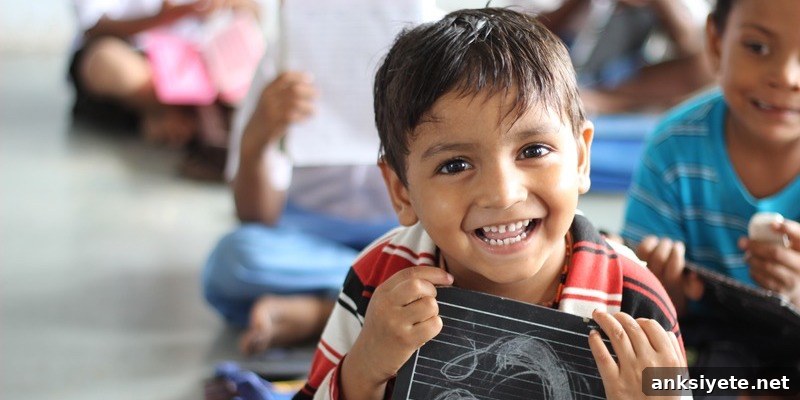
 School is a formative environment that helps shape who children and young people become.
The experiences students have in school influence their future growth, choices, and wellbeing.
Positive experiences at school are linked to lasting benefits, including lower risk-taking behaviors and a stronger sense of preparedness for future goals (Furlong, Gilman, & Huebner, 2014).
Positive psychology concentrates on building strengths rather than fixing deficits. Rather than focusing solely on mental illness, it explores how positive experiences and personal strengths contribute to identity, resilience, and flourishing (Peterson, 2008).
When applied to schools, this perspective becomes positive education—an approach that deliberately cultivates students’ and staff’s strengths, wellbeing, and character.
This guide explains the principles of positive education, presents research-backed benefits, and offers practical strategies, activities, and worksheets you can use to foster a more positive learning environment.
Whether you are an educator, school leader, or parent, the recommendations below will help you introduce evidence-informed practices that improve student wellbeing and learning.
This Article Contains:
- Positive Psychology in Education: An Overview
- 3 Proven Benefits According to Research
- How to Apply Positive Psychology in Schools
- Positive Education Practices: Strengths, Resilience, & More
- Applying the Growth Mindset in Education
- 4 Positive Teaching Strategies for a Happy Classroom
- 4 Best Classroom Activities, Interventions, and Ideas
- 3 Worksheets for a Positive Education Program
- 9 Must-Read Positive Education Books
- Education Resources and Tools
- A Take-Home Message
- References
Positive Psychology in Education: An Overview
Positive education involves creating science-based programs in schools that explicitly promote wellbeing for students and staff. The primary aim is to help learners thrive academically, socially, and emotionally by teaching skills that build life satisfaction, resilience, and meaningful engagement.
Wellbeing is a central target because research links higher wellbeing to better academic outcomes, stronger engagement, and improved school retention (Furlong et al., 2014). Positive education programs typically blend character development, social-emotional learning, and empirically supported interventions to boost mental health and flourishing (White, 2016).
Researchers often measure wellbeing through subjective wellbeing—self-reported assessments of satisfaction and positive affect across life domains (Diener, 2021). When students experience more positive emotions and higher satisfaction, attention and intrinsic motivation tend to improve, which supports learning (Seligman, 2011).
Schools are ideal settings for positive interventions because they are key sites for identity and social development. Embedding wellbeing practices into daily routines allows students to practice strengths, set goals, and develop coping strategies while still in school.
PERMA: A Practical Framework for Schools
Martin Seligman’s PERMA model—Positive emotion, Engagement, Relationships, Meaning, and Accomplishment—offers a practical framework for positive education (Seligman, 2011). Each dimension contributes to wellbeing and can be taught and nurtured in school contexts:
- Positive emotion — fostering optimism, gratitude, and enjoyment.
- Engagement — encouraging flow and absorption in meaningful tasks.
- Relationships — building supportive, trusting connections among students and staff.
- Meaning — helping students find purpose and relevance in learning.
- Accomplishment — setting and celebrating achievable goals and progress.
Applied across classrooms and whole-school programs, PERMA supports strengths-based curricula and policies. Examples from international implementations show that sustained, school-wide adoption of PERMA-informed practices can boost wellbeing and reduce mental health problems when paired with teacher training and ongoing reflection (Kwok, 2021; Morgan & Simmons, 2021).
3 Proven Benefits According to Research
 Research consistently shows that positive psychology interventions have measurable benefits when implemented well in educational settings.
A reduction in depression and anxiety symptoms
Interventions such as writing about three good things each day and intentionally using signature strengths in new ways have been shown to reduce symptoms of depression and anxiety in multiple studies (Seligman et al., 2005). These activities translate easily to classrooms as short daily routines or structured assignments.
Increased overall wellbeing
Wellbeing interventions encourage students to build habits that increase positive affect and life satisfaction. Positive education reframes mental health beyond diagnosis—centering on moving from surviving to flourishing by developing valued roles and skills (Slade, 2010).
Higher life and domain satisfaction
Teaching students practices that promote gratitude, strengths use, and goal setting is associated with greater satisfaction across life domains (Pavot & Diener, 2008). Over time, students who learn these skills tend to report stronger motivation, better interpersonal relationships, and a more hopeful outlook.
How to Apply Positive Psychology in Schools
Applying positive psychology in schools is practical and scalable. One key concept to cultivate is hope—teaching students how to set clear goals, plan pathways, and sustain motivation. Higher hopeful thinking is associated with perceived competence and self-worth, and it predicts better academic and social outcomes (Marques, Gallagher, & Lopez, 2017).
Start by helping students create specific, achievable goals and breaking tasks into manageable steps. Supporting small successes builds confidence and positive emotion, creating momentum for further learning. Embedding these practices into classroom routines—such as goal-setting sessions, reflections, and strength-based feedback—helps normalize growth-oriented habits.
Positive Education Practices: Strengths, Resilience, & More
 Effective positive education uses strengths-based activities and resilience training to help students flourish despite challenges.
Character strengths frameworks identify common virtues and strengths learners can explore. Having students identify three to four signature strengths and experiment with using them in new ways helps build self-awareness and agency (Peterson & Seligman, 2004).
Resilience training focuses on adaptive mindsets and coping strategies. Teaching students to reframe setbacks, avoid overly global or permanent negative explanations, and recognize external factors reduces self-blame and supports recovery from adversity.
Applying the Growth Mindset in Education
Carol Dweck’s work on growth versus fixed mindsets highlights how beliefs about intelligence shape learning behavior (Dweck, 2007). Encouraging a growth mindset involves praising effort, strategies, and persistence rather than innate ability. Students praised for effort are more likely to embrace challenges and persist with difficult tasks.
Teachers can model a growth mindset by framing mistakes as learning opportunities, offering specific feedback, and creating classroom norms that value improvement over perfection.
4 Positive Teaching Strategies for a Happy Classroom
 Here are practical strategies teachers can adopt to build a positive classroom culture.
Plan lessons around student strengths
Observe students to identify interests and strengths, then design tasks that let those strengths shine. Combining strengths-based approaches with multiple-intelligences ideas helps create varied entry points for learning and raises motivation (Gilpin, 2008).
Practice gratitude
Short, regular gratitude exercises—such as listing three things you’re grateful for each day—boost wellbeing. For younger students, a gratitude circle where each child names the best and most challenging part of their day fosters reflection and emotional awareness (Emmons & McCullough, 2003).
Teach forgiveness
Forgiveness skills help students let go of resentments and repair relationships. Teaching forgiveness as a process—recalling the event objectively, empathizing, recalling times they were forgiven, and making a commitment to release the negative emotion—supports social wellbeing and reduces interpersonal conflict (Snyder & Lopez, 2005).
Lead by example
Teachers who model wellbeing practices—self-care, optimism, and resilience—create a classroom culture that values those traits. Investing in staff wellbeing programs supports teachers so they can consistently lead by example.
4 Best Classroom Activities, Interventions, and Ideas
Simple, repeatable activities are most effective at embedding positive education. The following ideas can be implemented with minimal preparation and support ongoing growth.
Welcome message
Display a welcoming message that reinforces belonging and a growth mindset—phrases like “Take a deep breath, do your best, show what you know” set a positive tone for learning.
Morning meetings
Start the day with a brief check-in: set priorities, share goals, and prompt students to think about how they will use their strengths that day.
Ongoing reflection
Regular reflection helps students monitor progress, develop empathy, and learn from mistakes. Reflection prompts can be written, paired, or whole-class discussions.
Daily mindfulness
Short mindfulness practices teach attention and emotional regulation. Guided breathing or grounding exercises help students settle and focus before lessons.
3 Worksheets for a Positive Education Program
 Worksheets and structured templates make it easier to introduce positive education consistently.
1. Daily Mood Tracker
A simple mood chart helps students self-monitor and reflect on emotional patterns across the day and week. Teachers can also aggregate class mood data to plan wellbeing supports.
2. Pleasant Activity Scheduling
Encourage students to plan and track activities that bring them joy. Scheduling pleasant activities increases positive emotion and can counterbalance stressors.
3. Understanding Empathy
A lesson on empathy combines short media, paired reflection, scenario analysis, and role-play to develop perspective-taking and compassionate responses.
9 Must-Read Positive Education Books
Below are recommended books for teachers and parents interested in positive education principles and practices. These texts offer practical ideas, case studies, and research-informed strategies to support student wellbeing and learning.
- Teaching That Changes Lives — Marilee Adams
- Positive Discipline in the Classroom — Jane Nelsen & Lynn Lott
- Breaking Free from Myths About Teaching and Learning — Allison Zmuda
- Why We Teach — Linda Alston
- Better Than OK — Helen Street & Neil Porter
- Positive Education: The Geelong Grammar School Journey — Jacolyn Norrish
- Playful Learning — Mariah Bruehl (for parents)
- Building Resilience in Children and Teens — Kenneth Ginsburg & Martha Jablow (for parents)
- How Children Succeed — Paul Tough (for parents)
Education Resources and Tools
Practical resources that support positive education include affirmation cards, character strengths worksheets, PERMA activities, and printable exercises for classroom use. These tools help teachers and families translate theory into daily practice and routines.
A Take-Home Message
Positive education blends evidence-based positive psychology practices with traditional academic aims to create more fulfilling and effective learning environments. Emphasizing strengths, gratitude, resilience, and growth mindsets equips students with skills for learning and life.
Start small: embed short wellbeing routines, teach goal-setting, and model the attitudes you want to see. When teachers and students practice these habits consistently, classrooms become places of greater engagement, better relationships, and improved outcomes.
References
- Adams, M. (2013). Teaching that changes lives: 12 Mindset tools for igniting the love of learning. Berrett-Koehler.
- Alston, L. (2008). Why we teach: Learning, laughter, love, and the power to transform lives. Scholastic Teaching Resources.
- Bruehl, M. (2011). Playful learning: Develop your child’s sense of joy and wonder. Roost Books.
- Diener, E. (2021). Happiness: The science of subjective well-being. In R. Biswas-Diener & E. Diener (Eds.), Noba textbook series: Psychology. DEF.
- Dweck, C. S. (2007). Mindset: The new psychology of success. Ballantine Books.
- Emmons, R. A., & McCullough, M. E. (2003). Counting blessings versus burdens: An experimental investigation of gratitude and subjective well-being. Journal of Personality and Social Psychology, 84(2), 377–389.
- Furlong, M. J., Gilman, R., & Huebner, S. (Eds.). (2014). Handbook of positive psychology in schools (2nd ed.). Routledge.
- Gilpin, J. M. (2008). Teaching happiness: The role of positive psychology in the classroom (Master’s thesis).
- Kwok, S. (2021). Implementation of positive education projects in Hong Kong. In M. L. Kern & M. L. Wehmeyer (Eds.), The Palgrave handbook of positive education.
- Marques, S. C., Gallagher, M. W., & Lopez, S. J. (2017). Hope and academic-related outcomes: A meta-analysis. School Mental Health, 9(3), 250–262.
- Morgan, B., & Simmons, L. (2021). A ‘PERMA’ response to the pandemic: An online positive education programme to promote well-being in university students. Frontiers in Education, 6.
- Peterson, C., & Seligman, M. E. P. (2004). Character strengths and virtues: A handbook and classification. American Psychological Association.
- Pavot, W., & Diener, E. (2008). The satisfaction with life scale and the emerging construct of life satisfaction. The Journal of Positive Psychology, 3(2), 137–152.
- Seligman, M. E., Steen, T. A., Park, N., & Peterson, C. (2005). Positive psychology progress: Empirical validation of interventions. American Psychologist, 60(5), 410–421.
- Seligman, M. E. P. (2011). Flourish: A visionary new understanding of happiness and well-being. Atria Books.
- Shoshani, A., & Steinmetz, S. (2014). Positive psychology at school: A school-based intervention to promote adolescents’ mental health and well-being. Journal of Happiness Studies, 15(6), 1289–1311.
- Slade, M. (2010). Mental illness and wellbeing: The central importance of positive psychology and recovery approaches. BMC Health Services Research, 10(26).
- Snyder, C., & Lopez, S. J. (2005). Handbook of positive psychology. Oxford University Press.
- White, M. A. (2016). Why won’t it stick? Positive psychology and positive education. Psychology of Well-Being, 6(2).