
How the Brain Selectively Remembers New Places
Summary: MIT researchers have identified a brain circuit that enables rapid storage of memories for newly encountered places.
Source: MIT
When you step into a room, your brain immediately receives a flood of sensory information. For familiar places much of that input is already stored in long-term memory; for unfamiliar locations the brain forms a new memory almost instantly.
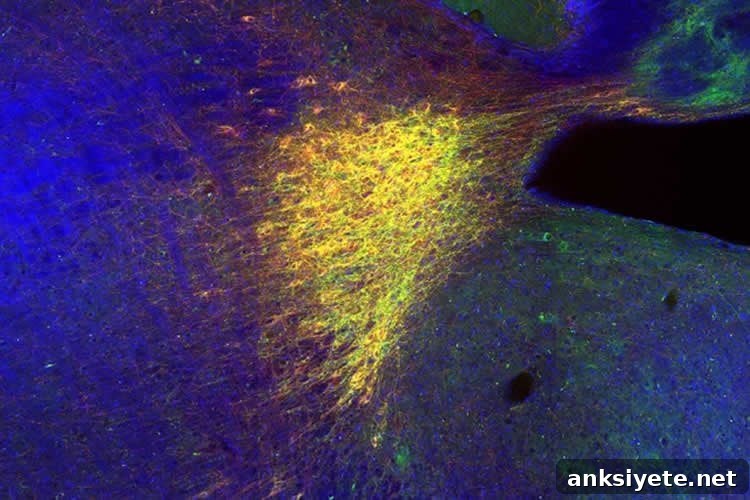
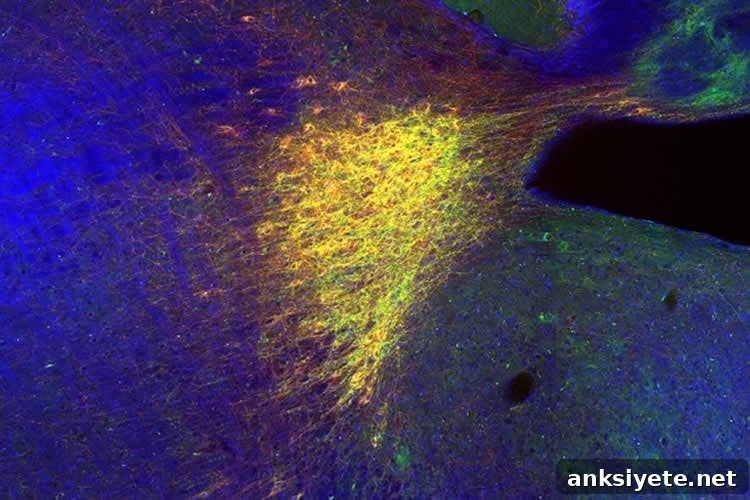
Researchers at MIT have revealed a key mechanism behind this swift memory formation. They found that the locus coeruleus, a small but influential region in the brainstem, becomes active in response to novel sensory stimuli and triggers a surge of dopamine into the CA3 area of the hippocampus. This dopamine release bolsters synaptic changes that allow the brain to encode and store a memory of the new environment.
“We have the remarkable ability to memorize some specific features of an experience in an entirely new environment, and such ability is crucial for our adaptation to the constantly changing world,” says Susumu Tonegawa, Picower Professor of Biology and Neuroscience and director of the RIKEN-MIT Center for Neural Circuit Genetics at the Picower Institute for Learning and Memory. He is the senior author of the study.
New places
About 15 years ago, Tonegawa’s lab showed that the hippocampal subregion CA3 plays a central role in forming memories of novel environments. They proposed that, when an animal encounters a new place, CA3 receives a neuromodulatory signal from elsewhere in the brain that promotes memory formation.
CA3 receives neuromodulatory input from both the locus coeruleus (LC) and the ventral tegmental area (VTA). The LC was a compelling candidate because it sends extensive projections to CA3 and responds to many forms of novelty and sensory input, including sights, sounds, and odors.
To test the LC–CA3 connection, the team used genetically engineered mice in which they could suppress neural transmission between the LC and CA3 with light-sensitive proteins. Mice were placed in a large, unfamiliar open arena for an initial exposure, then returned to the same arena the following day. Mice with intact LC–CA3 signaling explored the space much less on the second day, indicating they had formed a memory of the environment. By contrast, mice in which LC input to CA3 had been inhibited during the first exposure continued to explore the arena on the second day as if it were still novel, suggesting they had not encoded a long-term memory of that location.
Surprisingly, the researchers found that the LC’s effect depended on dopamine release into CA3. Although the LC is well known as a major source of norepinephrine to the hippocampus, it can also release dopamine. The dopamine influx appears to enhance CA3’s ability to strengthen synaptic connections and stabilize representations of the new environment, supporting single-trial learning of a novel context.
Importantly, this LC–CA3 mechanism seems selective for spatial memories of new places: it was not required for other kinds of memory such as fear memory. In other words, the LC–CA3 pathway is specifically necessary for forming persistent spatial memories in CA3 when encountering a novel context.
“The selectivity of successful memory formation has long been a puzzle,” comments Richard Morris, professor of neuroscience at the University of Edinburgh, not involved in the study. “This work goes a long way toward identifying the brain mechanisms of this process. Activity in the pathway between the locus coeruleus and CA3 occurs most strongly during novelty, and it seems that activity fixes representations of everyday experience, helping to register and retain what’s been happening and where we’ve been.”
Choosing to remember
The researchers suggest this mechanism likely evolved to help animals conserve cognitive resources while prioritizing important new information. Rather than storing redundant details about familiar places, the brain selectively encodes novel environments that may be relevant for survival or future behavior.
Akiko Wagatsuma, the study’s lead author and a former MIT research scientist, emphasizes the selective nature of this process: “When we are exposed to sensory information, we unconsciously choose what to memorize. For an animal’s survival, certain things are necessary to remember, while familiar details can be ignored.”
One key unanswered question is how the LC detects that a context is novel. The researchers hypothesize that other brain regions may compare incoming sensory input with stored memories or with predictions about the environment and then signal novelty to the LC, but further studies are needed to clarify how novelty detection is implemented across brain networks. “That’s the next big question,” Tonegawa says. “Hopefully new technology will help to resolve that.”
About this research
Funding: RIKEN Brain Science Institute, Howard Hughes Medical Institute, and the JPB Foundation.
Source: Anne Trafton — MIT
Publisher: NeuroscienceNews.com
Image credit: Akiko Wagatsuma, Tonegawa Lab
Original research: “Locus coeruleus input to hippocampal CA3 drives single-trial learning of a novel context” by Akiko Wagatsuma, Teruhiro Okuyama, Chen Sun, Lillian M. Smith, Kuniya Abe, and Susumu Tonegawa. Published in Proceedings of the National Academy of Sciences (PNAS), online November 27, 2017. DOI: 10.1073/pnas.1714082115
Abstract
The hippocampal network is essential for rapidly forming memories of single, novel experiences, and novelty promotes prompt memory acquisition. Which circuits convey that novelty signal to the hippocampus has been unclear. This study demonstrates that neuromodulatory input from the locus coeruleus (LC) to CA3 — but not to CA1 or the dentate gyrus — is necessary for encoding novel contextual memories. Silencing LC activity during exposure to a new context reduced later reactivation of CA3 engram ensembles and diminished downstream CA1 reactivation on reexposure. Calcium imaging showed that suppressing LC input at encoding produced more variable place fields in CA3 neurons. These findings indicate that LC input to CA3 is critical for forming persistent hippocampal memories after a single exposure to a new environment.
“Locus coeruleus input to hippocampal CA3 drives single-trial learning of a novel context” — Wagatsuma et al., PNAS, 2017. DOI: 10.1073/pnas.1714082115
Feel free to share this article.