
Why does the promise of a reward—any kind of excitement—lead teenagers to toss caution aside?
Many current theories argue that teenagers take more risks because they seek the pleasurable surge of dopamine, the neurotransmitter linked to the brain’s reward and pleasure circuits. However, much of that idea stems from studies of adult brains. New research from the University of Pittsburgh suggests the adolescent brain operates differently than commonly assumed.
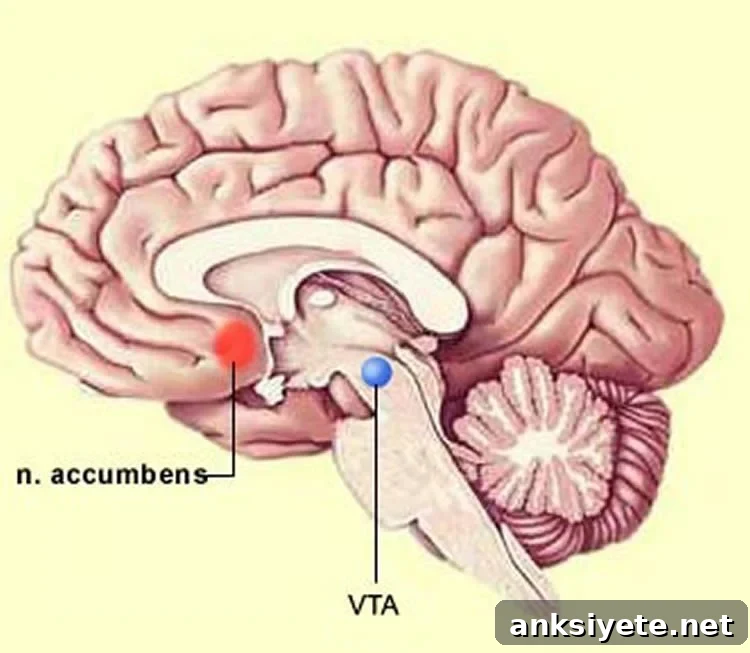
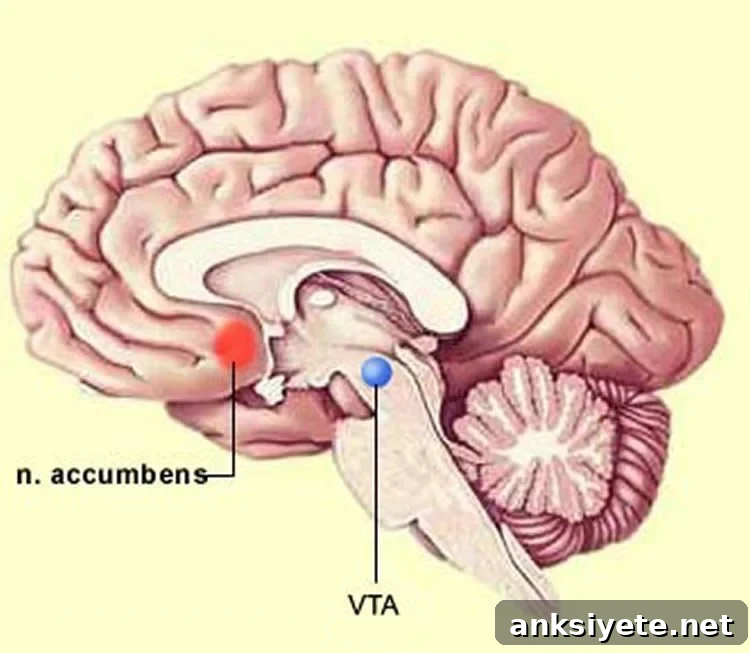
Neuroscientist Bita Moghaddam and her team studied the adolescent brain using a rat model and found results that challenge prevailing explanations. Their findings indicate that, when faced with the prospect of a reward, adolescent dopamine neurons in the ventral tegmental area (VTA) are actually less active than those of adults.
At first glance this seems counterintuitive: if adolescents take more risks for reward, wouldn’t their dopamine neurons be more reactive? According to Moghaddam, the answer lies in how anticipation and action are represented differently in adolescent brains. In adult rats, simply anticipating a reward produces a modest dopamine response. Adolescent rats, by contrast, show less dopamine activity during anticipation. As a result, anticipation alone does not deliver the same satisfaction for adolescents; they often need to act—sometimes impulsively or riskily—to obtain the dopamine surge.
“The adolescent brain doesn’t work the way we think it does,” Moghaddam explains. “We often predict that adolescents seek pleasure because dopamine is more active, but our data show that’s not necessarily true. They may have less anticipatory activation and yet be driven to pursue rewards more actively.”
The study also identifies a subtle timing difference in neuronal behavior. Adult dopamine neurons show a brief moment of preactivation—a pause of a millisecond or two—before action, which supports preparatory attention and may temper impulsive choices. Adolescents lack that preactivation pause, moving more directly from cue to action. Without that split-second hold, they may begin seeking rewards without the brief check that can discourage risky behavior.
Another important finding relates to how adolescent neurons respond after rewards disappear. In adult animals, dopamine neurons quickly stop responding when a previously rewarded cue no longer predicts reward. In adolescents, however, dopamine neurons can retain the memory of past rewards and continue to respond strongly to cues that once signaled opportunity, even after the reward is no longer available. That persistent response helps explain why teens sometimes repeat behaviors that no longer pay off.
From an evolutionary perspective, this bias toward persistent reward seeking may have been advantageous. During adolescence, being motivated to revisit places or opportunities that once yielded food, shelter, or social advantage could increase chances of survival and reproductive success. “At that age, ‘This did something good, and maybe it will again’ is very important,” Moghaddam notes. That same trait that once encouraged proactivity now makes adolescents more susceptible to maladaptive patterns such as drug seeking or disadvantageous risk taking.
The paper, published in the journal Biological Psychiatry, reports daily neuronal recordings from the ventral tegmental area of adolescent and adult rats as they learned and performed a cued, reward-motivated instrumental task and then underwent extinction. The research team includes postdoctoral researchers and collaborators who contributed to study design, data collection, and analysis.
Funding: This work was supported by the National Institute of Mental Health.
Abstract
Reward Anticipation Is Encoded Differently by Adolescent Ventral Tegmental Area Neurons
Background
Understanding how the adolescent brain develops is essential for explaining the onset of psychiatric disorders such as addiction and schizophrenia, which often appear during this life stage. Dopamine neurons in the ventral tegmental area are closely linked to adolescent behavioral patterns and psychiatric vulnerability, yet how these neurons encode motivated behavior during adolescence has been unclear.
Methods
Researchers recorded neuronal activity daily from the ventral tegmental area in adolescent and adult rats as animals learned and maintained a cued, reward-motivated instrumental task and then experienced extinction of that behavior.
Results
The same external events were encoded differently by adult and adolescent VTA neurons. Neurons with dopamine-like properties in adolescents lacked an anticipatory signal and produced a smaller response to reward delivery than adult neurons. After extinction, adolescent neurons retained strong phasic responses to cues that had previously predicted reward, whereas adult neurons reduced their responses.
Conclusions
Anticipatory activity in the VTA supports preparatory attention and is involved in signaling prediction errors. The absence of anticipatory activity combined with persistent representations of previously rewarded experiences may underlie impulsive and repetitive decision-making typical of adolescence.