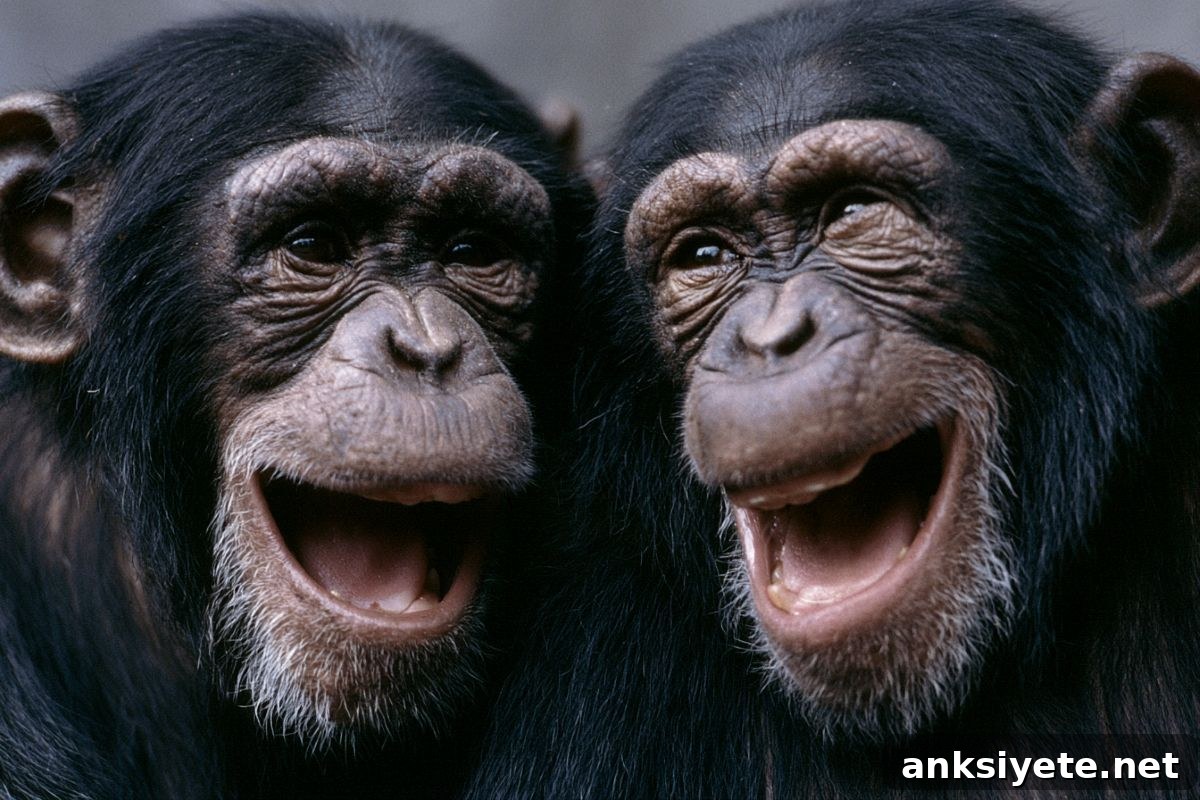
Summary: Laughter is a shared trait among all living great apes — chimpanzees, bonobos, gorillas, and orangutans — and this commonality offers a rare window into how human vocal abilities evolved. A new comparative study traced the acoustic structure of laughter across species and identified a conserved rhythmic pattern that likely dates back about 15 million years. That rhythmic foundation appears to have provided key neurobiological building blocks that gradually enabled the precise vocal control required for human speech.
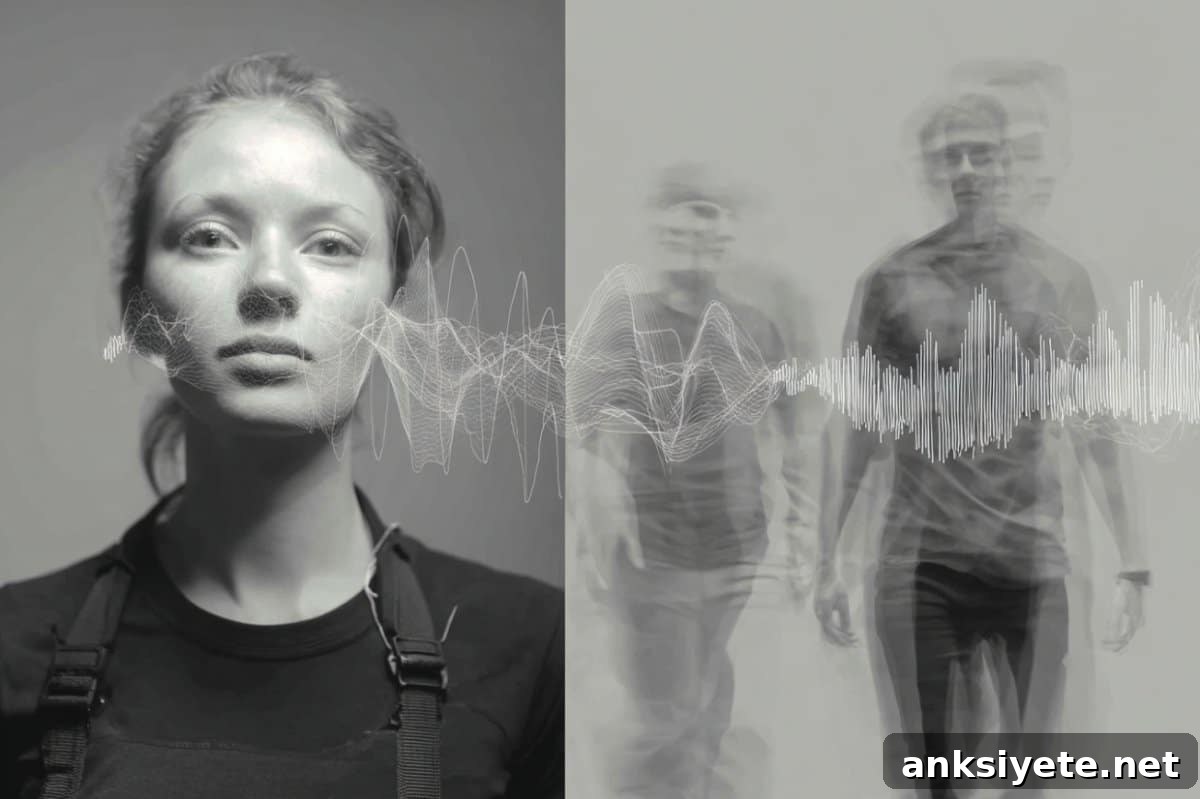
Researchers performed detailed acoustic analyses on 140 laughter sequences gathered from four orangutans, two gorillas, three bonobos, four chimpanzees, and four humans. Across these recordings they found a single consistent structural feature: laughter in every species is organized by evenly spaced, rhythmic intervals between successive vocal elements. This shared timing signature suggests the basic rhythm of vocalization was already present in a common ancestor and has remained highly conserved throughout hominid evolution.
Key Facts
- Deeply conserved rhythm: All living great apes produce laughter with the same isochronous, evenly spaced timing between vocal events.
- 15-million-year continuity: The identical rhythmic structure implies a shared ancestral origin roughly 15 million years ago rather than a sudden, recent innovation in humans.
- Human differentiation: Humans retain the ancestral rhythm but have evolved faster tempo and greater structural variability in laughter.
- Contextual vocal control: Only humans show advanced, conscious modulation of laughter depending on social context — from involuntary tickle giggles to polite or nervous laughs.
- Foundations for speech: Incremental gains in timing precision and vocal-cord control across hominid evolution likely created the neurological groundwork for spoken language.
- Vocal fossil approach: Because speech leaves no physical fossils, conserved vocalizations like laughter act as living proxies for investigating vocal evolution in extinct hominids.
Source: University of Warwick
The study, published in Communications Biology, compared laughter from orangutans, gorillas, bonobos, chimpanzees, and humans. The consistent rhythmic spacing observed across species led the authors to propose that the last common ancestor already produced laughter with an isochronous rhythm. Over subsequent millions of years, that rhythm persisted while lineage-specific changes — especially in humans — increased speed, variability, and voluntary control.
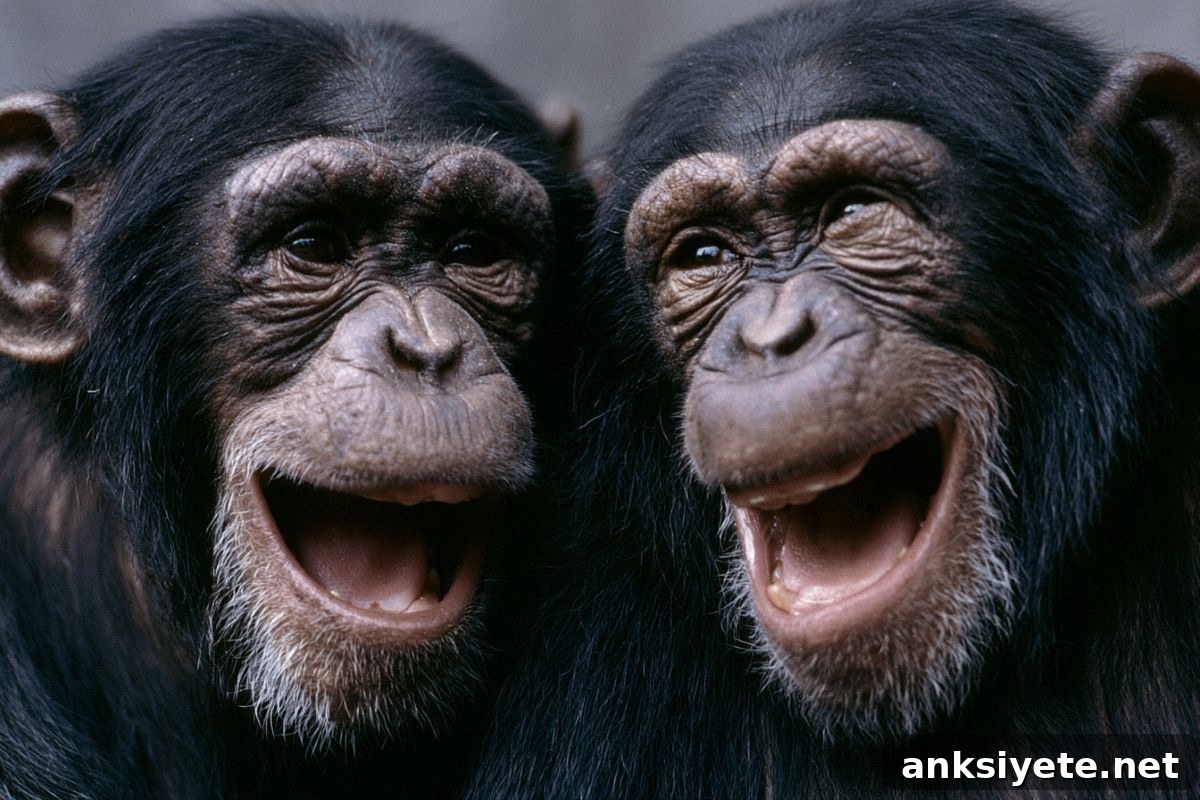
Dr. Chiara De Gregorio, Honorary Research Associate in the Department of Psychology at the University of Warwick, noted that laughter offers a rare, measurable vocal trait shared across great apes. Unlike spoken language, which leaves no fossil trace and exists only in our species, laughter provides a biological record of timing and rhythm that can be compared across living relatives. Finding the same rhythmic architecture in all species is a powerful clue to continuity in vocal motor control.
The researchers report that human laughter has become more rapid and more flexible, enabling people to use different laugh types to convey distinct social meanings. Where nonhuman apes typically laugh reflexively during play or physical stimulation, humans can intentionally modulate laughter to signal politeness, embarrassment, amusement, or social bonding.
According to Dr. Adriano Lameria of the University of Warwick, laughter provides an evolutionary window into vocal change because it predates language and remains common to all extant great apes. The findings challenge models that propose a sudden, unique emergence of human vocal control and instead support a gradual, cumulative enhancement of timing and motor control across the hominid lineage.
Key Questions Answered
A: Spoken language leaves no fossil evidence, so researchers turn to conserved vocal behaviors shared with other great apes. Laughter is an evolutionarily older, measurable vocalization that reveals how primate brains learned to time and shape sounds — essential steps that eventually supported language.
A: While the basic isochronous rhythm is shared, human laughter is typically faster and more variable in pitch and structure. Humans also uniquely exercise voluntary, context-sensitive control, enabling intentional or suppressed laughter to serve diverse social functions.
A: The results argue against a single sudden leap in vocal control exclusive to early humans. Instead, they indicate a prolonged evolutionary trajectory in which vocal timing and control were gradually refined over millions of years, setting the stage for the emergence of speech.
Editorial Notes:
- This article was edited by a Neuroscience News editor.
- The full journal paper was reviewed for accuracy.
- Additional explanatory context was added by editorial staff.
About this evolutionary neuroscience research news
Author: Matt Higgs
Source: University of Warwick
Contact: Matt Higgs – University of Warwick
Image: Image credited to Neuroscience News
Original Research: Open access. “Rhythm and timing in laughter reveal that human vocal plasticity falls on a hominid continuum” by Chiara De Gregorio, Marina Davila-Ross & Adriano R. Lameira. Communications Biology. DOI: 10.1038/s42003-026-10499-z
Abstract
Rhythm and timing in laughter reveal that human vocal plasticity falls on a hominid continuum
Laughter is a universal, non-linguistic vocal behavior shared by all living great apes and thus serves as a valuable proxy for tracing the evolution of vocal control that eventually enabled speech. Comparative analysis across orangutans, gorillas, bonobos, chimpanzees, and humans shows that the last common ancestor produced isochronous laughter. Over hominid evolution this rhythm became faster, more variable, and increasingly sensitive to social context. These changes document a progressive increase in vocal rhythmic plasticity, with humans following the trajectory toward enhanced voluntary vocal control.