
Summary: Unexpected sensory events — such as a sudden sound — make people more likely to stop an ongoing action than when no such cue is present. New research explains how surprising cues speed the brain’s communication with the motor system, improving the ability to halt movements rapidly.
Source: University of Iowa.
Imagine reaching to pet your cat and it hisses. How does your brain register that sound and tell your hand to pull back?
Neuroscientists study how the brain signals the motor system to stop an action. Rapid action stopping is crucial for avoiding danger and adapting to unexpected events. A recent study from the University of Iowa examined how an unexpected sensory cue changes the likelihood and neural mechanisms of stopping a movement.
In behavioral tests, researchers asked volunteers to tap a foot pedal when the letter “W” appeared on a screen: right-foot taps for a right-sided letter, left-foot taps for a left-sided letter. When the letter “M” appeared as a stop signal, participants were instructed to withhold the tap and stop the action. On some stop trials, an unanticipated bird sound was played at the same time as the stop signal.
When the bird sound accompanied the stop signal, participants successfully stopped their action 80 percent of the time, compared with 65 percent success when the stop signal occurred without a sound — a clear 15 percent improvement in stopping performance. The study shows that an unexpected, task-unrelated sensory event reliably increases the chance of halting an ongoing movement.
Jan Wessel, assistant professor in the UI Department of Psychological and Brain Sciences and corresponding author of the study in the Journal of Neuroscience, emphasizes that the effect arises from the element of surprise rather than the auditory quality itself. “It’s not that stopping requires a sound — it’s the unexpected event. A surprising visual event or an unexpected tactile input would likely produce a similar effect,” Wessel explains. The central idea is that surprise triggers an automatic, rapid stop signal from the brain to the motor system.
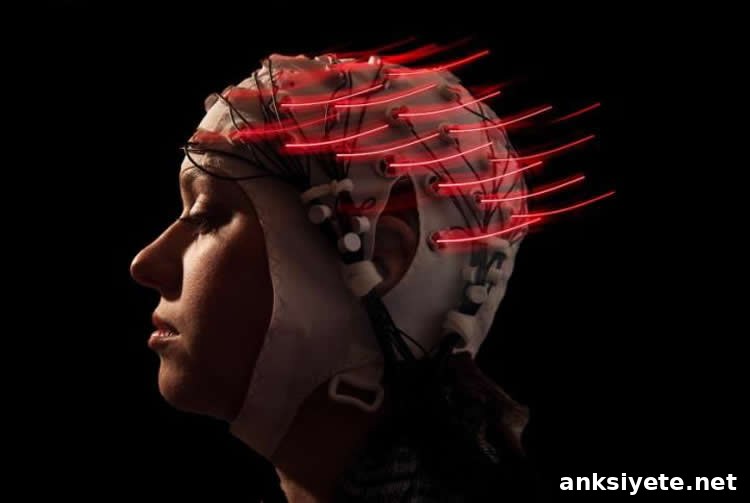
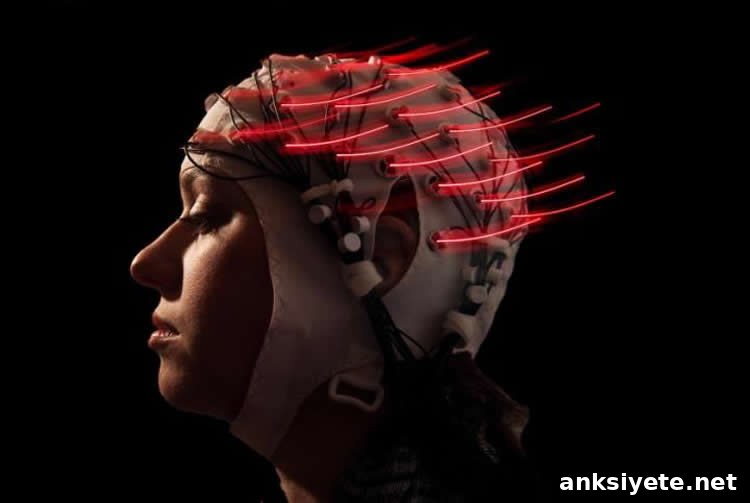
To identify the neural changes behind this behavioral improvement, the team ran a second set of experiments measuring brain activity. Participants wore caps that recorded electrical signals from brain regions implicated in motor inhibition. The researchers observed that when the unexpected sound accompanied the stop instruction, a neural signature linked to stopping increased in amplitude. In other words, surprise amplified the brain’s inhibitory signal directed at the motor system.
In complementary experiments measuring corticospinal excitability with transcranial magnetic stimulation and electromyography, the investigators found that successful stopping normally coincides with a nonselective suppression of motor excitability — meaning suppression occurs even in muscles not directly involved in the task. Importantly, unexpected sounds further enhanced this motor-system inhibition in a way that correlated with the behavioral improvement in stopping.
The communication between the brain’s stopping mechanisms and the motor system acts within fractions of a second. Wessel suggests that these rapid, hard-wired interactions are evolutionarily conserved survival mechanisms: the brain is adapted to halt ongoing behavior when something unexpected occurs in the environment.
The lead author on the paper is Isabella Dutra, a junior psychology major at the University of Iowa, who gained research experience through a fellowship from the Iowa Center for Research by Undergraduates. Graduate student Darcy Waller is a co-author. Funding for the work included support from the Roy J. Carver Foundation and a training grant from the U.S. National Institutes of Health.
The study provides converging behavioral and physiological evidence that surprise enhances motor inhibition. Presenting unexpected, task-irrelevant sounds when stopping is required increases both the neural index of motor inhibition and the physical suppression of motor excitability, improving stopping success. These results highlight a functional interaction between neural systems for processing surprise and those mediating rapid action stopping.
Abstract
Perceptual surprise improves action stopping by non-selectively suppressing motor activity via a neural mechanism for motor inhibition.
Motor inhibition enables rapid stopping of initiated actions and supports flexible, adaptive behavior. The present experiments tested whether surprising, task-unrelated sensory events enhance motor inhibition and thereby improve stopping. In Experiment 1, corticospinal excitability (CSE) was measured using transcranial magnetic stimulation and electromyography during a hybrid surprise–Go/NoGo task. Consistent with prior work, successful stopping produced nonselective CSE suppression across effectors. Unexpected sounds significantly increased this motor suppression, and the magnitude of increased suppression was related to improved stopping behavior. In Experiment 2, scalp electroencephalography (EEG) identified a well-characterized frontocentral, low-frequency component that indexes motor inhibition. Activity of this component increased when NoGo signals were followed by unexpected sounds. Together, the experiments provide convergent evidence that unexpected events improve action-stopping by automatically triggering a neural mechanism for motor inhibition that suppresses motor-system excitability.
Significance statement: Rapid action stopping is essential in everyday situations and is impaired in a range of neuropsychiatric and neurodegenerative disorders. Demonstrating that perceptual surprise enhances a neural mechanism for motor inhibition identifies a potential route for improving stopping performance and suggests promising directions for future research into clinical interventions addressing deficits in motor control.
Funding: Roy J. Carver Foundation; National Institutes of Health training grant support.
Publisher: Organized by NeuroscienceNews.com.
Original research: Published in the Journal of Neuroscience. DOI: 10.1523/JNEUROSCI.3091-17.2017