
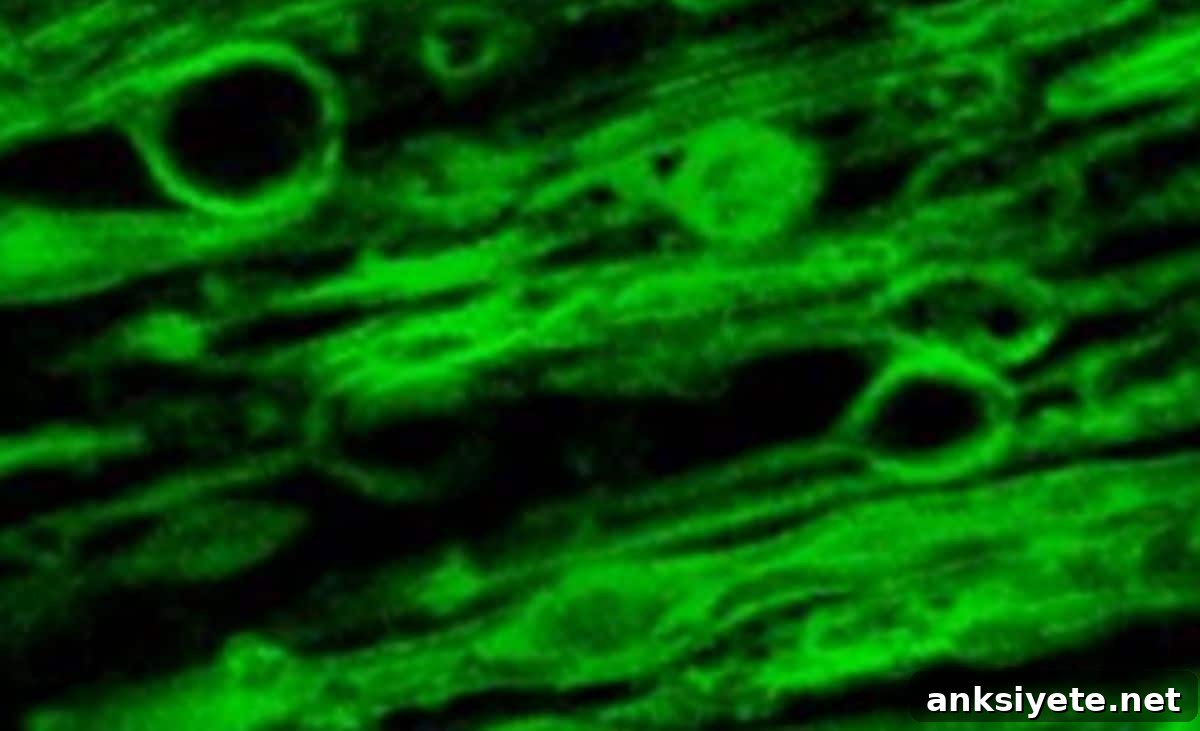
Summary: New research shows that myelin swellings—the early structural changes that can lead to lesions in multiple sclerosis (MS)—are not fixed, irreversible damage but highly dynamic structures. Using advanced three-dimensional live imaging, researchers observed that these swellings can expand, shrink and, in many cases, disappear entirely.
Importantly, the study links these changes to the electrical activity of the underlying nerve fiber: higher neuronal activity drives larger and more frequent swellings, while reduced activity promotes shrinkage and recovery. This insight suggests that the earliest stages of MS-related myelin damage may be reversible, creating a potential window for preventative interventions before protective myelin is lost.
Key Facts
- Reversible early damage: Myelin swellings can regress and sometimes resolve completely, rather than inevitably progressing to permanent lesions.
- Activity-dependent vulnerability: The size and occurrence of swellings correlate with nerve-fiber activity—more firing increases swelling, while dampening activity encourages recovery.
- Three-dimensional live imaging: Third-harmonic generation (THG) and two-photon microscopy allowed researchers to follow myelin structure over time in intact tissue, overcoming the limitations of fixed, static samples.
Source: KNAW
An international team from Amsterdam UMC, VU LaserLab, the Netherlands Institute for Neuroscience and the University of Edinburgh reports new findings on myelin swelling dynamics.
Myelin swellings are considered an early sign of damage in the brains of people with multiple sclerosis (MS) and can precede the formation of classic inflammatory lesions.
The full study appears in the journal Science.
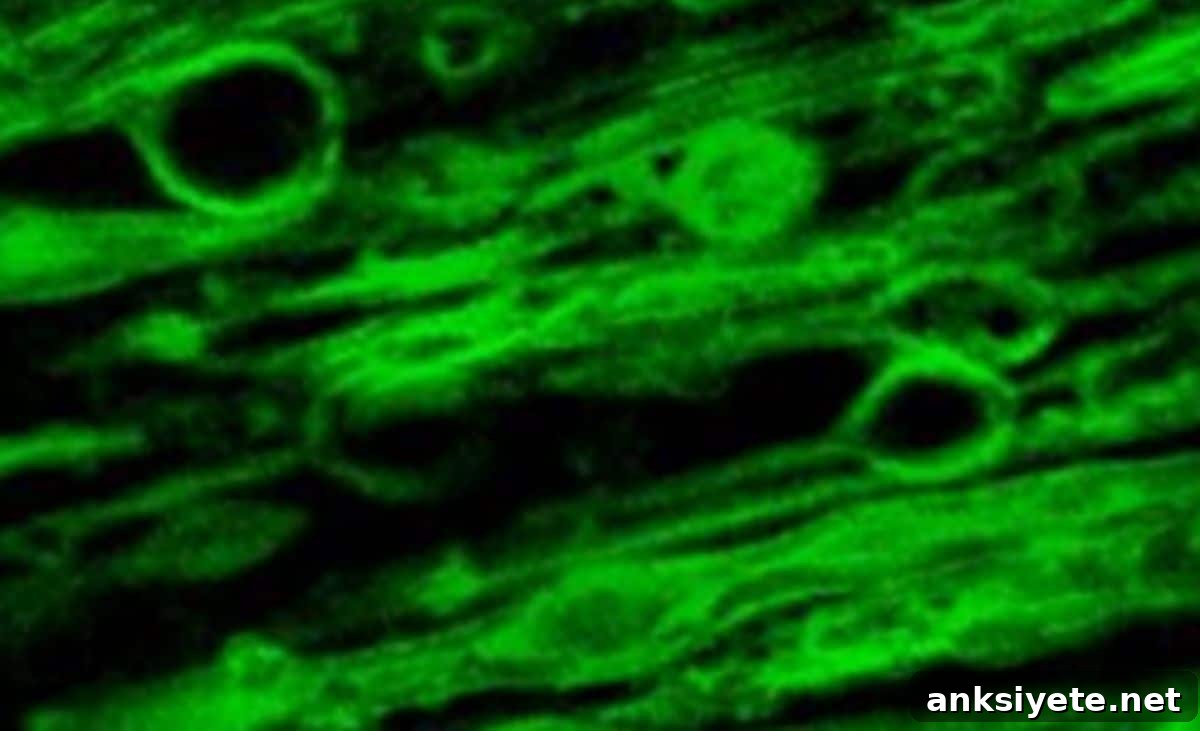
MS is defined by lesions in the brain and spinal cord, but damage also occurs at the level of myelin—the insulating layer that wraps axons. Myelin swellings are increasingly recognised as an early and potentially reversible form of damage to this protective sheath.
Dynamic damage
The research combined multiple experimental systems—from live zebrafish and rodent slice cultures to human postmortem tissue—and leveraged high-resolution live imaging to track myelin behavior over time. Contrary to the traditional view that swelling inevitably progresses to myelin loss, the team found that swellings frequently fluctuate: they can grow, decline and in many cases resolve without apparent permanent sheath loss.
A central finding is the role of neuronal activity. Manipulations that increased nerve firing amplified swelling size and frequency and reduced oligodendrocyte survival. By contrast, interventions that lowered neuronal activity reduced swelling and promoted stability of the myelin sheath. These observations identify neuronal activity as a modifiable risk factor for early myelin pathology.
Advanced models
A major strength of the study is its parallel use of different models and imaging approaches, which enabled consistent observation of myelin dynamics across species and preparations. Traditional histology uses fixed tissue, which captures only a static snapshot and misses transient changes. By applying third-harmonic generation (THG) microscopy at VU LaserLab and two-photon imaging at the Netherlands Institute for Neuroscience, the teams visualised myelin in three dimensions and followed its structural changes in real time.
Origins and mechanisms of myelin swelling
The next research steps will investigate how neuronal activity alters ion and fluid balance to trigger swelling and what roles different brain cells—especially oligodendrocytes and glia—play in either promoting recovery or driving progression to irreversible damage. Using the established model systems, groups led by Maarten Kole (NIN), Antonio Luchicchi (MS Center Amsterdam, Amsterdam UMC) and David Lyons (Edinburgh) plan to probe these mechanisms further.
If early myelin damage can be halted or reversed before sheath loss occurs, new therapeutic strategies could aim to preserve myelin and delay or prevent lesion development in MS.
Source: Science
Funding: MS Centrum Amsterdam, Nationaal MS Fonds, Progressive MS Alliance, The Friends Foundation of the Netherlands Institute for Neuroscience and NWO
Key Questions Answered:
A: Yes. The study shows that myelin swellings—the earliest visible signs of damage—are not necessarily a one-way path to lesion formation. Because swellings can shrink or disappear depending on neuronal activity, there is potential to develop therapies that intervene while myelin is still recoverable.
A: While the exact molecular cascade remains under investigation, the data indicate that increased firing disrupts ion and fluid homeostasis around the axon, promoting swelling. Modulating neuronal activity or the tissue response to activity could therefore reduce swelling and protect myelin.
A: Standard methods often rely on chemically fixed tissue, which provides only a static image. By using live, high-resolution laser microscopy, the researchers observed myelin behavior over time and revealed a previously hidden lifecycle of swelling and recovery.
Editorial Notes:
- This article was edited by a Neuroscience News editor.
- The original journal paper was reviewed in full by the editorial team.
- Additional context and clarification were provided by staff writers.
About this neurology and myelin research news
Author: Eline Feenstra
Source: KNAW
Contact: Eline Feenstra – KNAW
Image: The image is credited to Science
Original Research: Closed access.
“Myelin sheaths in the central nervous system can withstand damage and dynamically remodel” by Donia Arafa, Julia van de Korput, Philipp N. Braaker, Kieran P. Higgins, Niels R. C. Meijns, Katy L. H. Marshall-Phelps, Julia Meng, Daniel Soong, Eleonora Scalia, Kyle Lathem, Marcus Keatinge, Claire Richmond, Anna Klingseisen, Marja Main, Sarah A. Neely, David W. Hampton, Greg J. Duncan, Geert J. Schenk, Marie Louise Groot, Siddharthan Chandran, Ben Emery, Antonio Luchicchi, Maarten H. P. Kole, Anna C. Williams, and David A. Lyons. Science
DOI:10.1126/science.adr4661
Abstract
Myelin sheaths in the central nervous system can withstand damage and dynamically remodel
INTRODUCTION
Myelin is essential for rapid and reliable signal transmission in the central nervous system (CNS) and is disrupted in diseases such as multiple sclerosis (MS). When myelin is lost, the CNS can initiate remyelination, largely through the generation of new oligodendrocytes. Despite understanding many aspects of oligodendrocyte biology, relatively little is known about how existing myelin responds immediately after damage—whether it is necessarily lost or able to repair itself.
RATIONALE
Building on evidence that myelin and the glial environment can remodel, the investigators asked whether CNS myelin can tolerate damage and undergo structural recovery rather than being permanently eliminated. Demonstrating such capacity would highlight new opportunities to protect myelin and promote repair in human disease.
RESULTS
Across zebrafish and rodent demyelination models, the teams identified myelin swelling as a consistent early feature that often precedes overt sheath loss. Longitudinal live imaging showed that swelling does not always predict permanent loss: many swollen sheaths shrank and recovered over time. Because cellular swelling reflects disturbed ion and fluid balance, the study tested whether neuronal activity influences this process. Behavioral stimulation, optogenetic activation and pharmacological manipulation revealed that increased neuronal activity worsened swelling and reduced oligodendrocyte survival, while decreasing activity mitigated swelling in both zebrafish and mammalian slice models. Postmortem MS tissue analysis showed swellings in active and chronic active lesions, and live THG imaging of acute human tissue demonstrated that these swellings can be dynamic and show signs of resolution.
CONCLUSION
These findings reveal that early myelin damage, marked by swelling, is dynamic and can remodel across species, including humans. This capacity for structural recovery may represent an evolutionarily conserved mechanism protecting compromised myelin. Targeting such early, reversible damage—before sheath loss and overt lesion formation—could open new therapeutic avenues to preserve myelin and slow disease progression in demyelinating disorders and aging.