
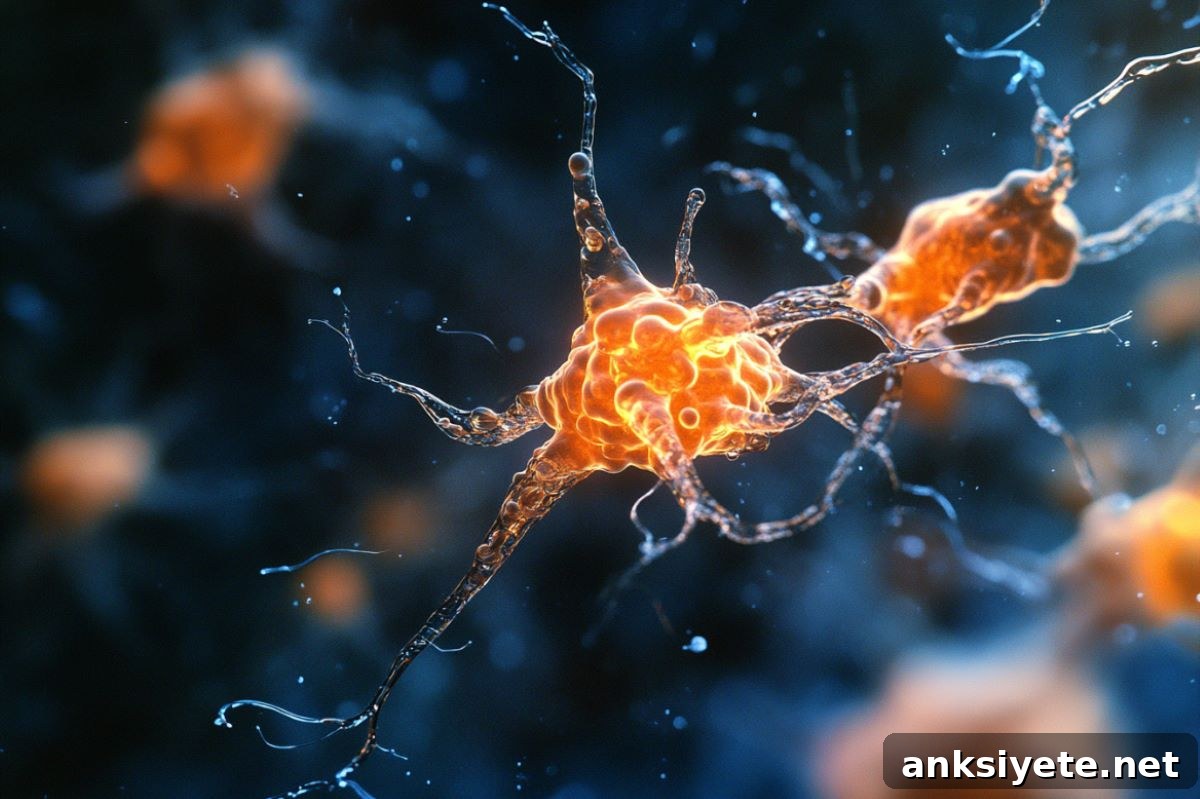
Summary: Researchers have identified a protective function for the Tau protein in the brain. In addition to its well-known association with neurodegenerative disorders such as Alzheimer’s disease, Tau supports the brain’s defense against oxidative stress by enabling glial cells to form lipid droplets that sequester toxic peroxidated lipids and shield neurons from damage.
When Tau is missing or carries disease-associated mutations, this protective mechanism breaks down, leaving neurons more vulnerable to oxidative injury. These results point to new therapeutic directions that could enhance or restore Tau’s neuroprotective roles to slow or prevent neurodegeneration.
Key Facts:
- Tau enables glial cells to form lipid droplets that capture harmful peroxidated lipids, reducing oxidative stress on neurons.
- Disease-linked mutations or abnormal levels of Tau impair this protective process, contributing to neuronal damage.
- Targeting Tau’s beneficial activity in glia may offer novel strategies to treat or prevent neurodegenerative disease.
Source: Baylor College of Medicine
A collaborative study from Baylor College of Medicine and the Jan and Dan Duncan Neurological Research Institute at Texas Children’s Hospital reveals that Tau, a protein traditionally associated with pathology in tauopathies, also plays a beneficial role in brain health.
The investigators show that Tau reduces neuronal injury caused by excess reactive oxygen species (ROS) — chemically reactive molecules that can damage lipids, proteins and DNA — and that Tau supports mechanisms that promote healthy brain aging.
The study appears in the journal Nature Neuroscience.
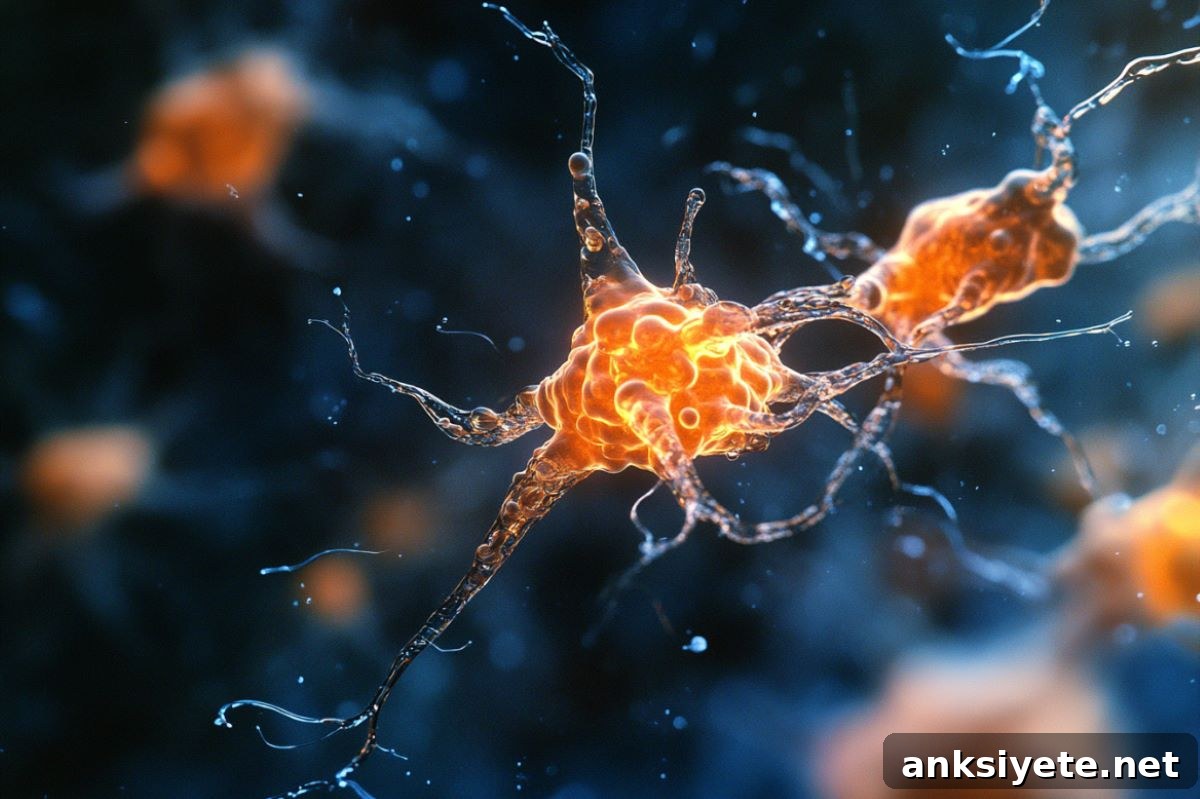
“ROS are produced as part of normal cellular activity. At low levels they participate in signaling, but when they accumulate they generate toxic molecules such as peroxidated lipids that cause oxidative stress,” said lead author Dr. Lindsey Goodman, a postdoctoral fellow in Dr. Hugo Bellen’s laboratory. “Neurons are especially sensitive to oxidative damage, and uncontrolled peroxidated lipids can lead to neuronal death.”
Lipid droplets protect the brain from oxidative damage
There is growing evidence that the brain uses several protective strategies to neutralize ROS and limit oxidative injury. One such strategy, first described by this research team in 2015, involves neurons exporting peroxidated lipids to neighboring glial cells. Those glia incorporate the harmful lipids into lipid droplets for safe storage and later metabolism, thereby preventing the lipids from damaging neurons.
“Enclosing toxic lipids within lipid droplets effectively detoxifies them and prevents neuronal harm,” Goodman explained. “In this study we asked whether Tau contributes to the formation of these protective lipid droplets in glia.”
Using genetic models in flies and experiments with rat and human glial cells, the researchers found that normal, endogenous Tau is necessary for glial lipid droplet formation and for protecting neurons from ROS-induced lipid peroxidation. Introducing normal human Tau into flies that lack Tau rescued the glial lipid droplet pathway and restored protection.
By contrast, when human Tau carried mutations known to increase risk for Alzheimer’s and related disorders, it failed to support lipid droplet formation in glia exposed to neuronal ROS. This indicates that certain disease-associated Tau variants lose the protein’s normal defensive function in addition to promoting pathological protein accumulation.
“These results suggest that Tau mutations may contribute to disease through a dual mechanism: damaging neurons directly and impairing Tau’s protective role in glia,” said Goodman. “Overall, our findings uncover a new neuroprotective function for Tau in limiting ROS toxicity.”
Additional experiments in fly and rat models that overexpress disease-related human Tau in glia showed disrupted lipid droplets and increased glial cell loss when neurons produced elevated ROS. The data indicate that Tau’s effects are dosage-sensitive: both too little and too much Tau can be harmful to glial lipid droplet function and neuronal resilience.
“Discovering a protective role for Tau changes how we think about its function in the brain and suggests new approaches to treat neurodegenerative disease by restoring or enhancing Tau’s beneficial activity in glia,” said Dr. Hugo Bellen, corresponding author. Bellen is a distinguished service professor in molecular biology and genetics at Baylor and holds a Chair in Neurogenetics at the Duncan NRI.
In short, this study shows that Tau is not only implicated in the hallmarks of neurodegeneration but also acts as a guardian in glial cells by helping sequester toxic lipids, reducing oxidative damage and protecting neurons. When Tau is absent or its normal function is lost through mutation or misregulation, this protective pathway fails and contributes to disease processes.
Funding: This work was supported by grants from the National Institutes of Health, the Canadian Institutes of Health Research, the Alfred P. Sloan Foundation, the Canada Research Chairs program, and other competitive research awards.
About this neurology research news
Author: Molly Chiu
Source: Baylor College of Medicine
Contact: Molly Chiu – Baylor College of Medicine
Image: Image credited to Neuroscience News
Original Research: Closed access. “Tau is required for glial lipid droplet formation and resistance to neuronal oxidative stress” by Lindsey Goodman et al., Nature Neuroscience.
Abstract
Tau is required for glial lipid droplet formation and resistance to neuronal oxidative stress
Accumulation of reactive oxygen species (ROS) is common in tauopathies, which are characterized by Tau aggregates in neurons and glia. Elevated neuronal ROS drives lipid peroxidation and export of toxic peroxidated lipids (LPOs). Glial cells take up these LPOs and incorporate them into lipid droplets (LDs) for storage and catabolism.
The authors report that overexpression of Tau in glia disrupts LDs in flies and in rat neuron–astrocyte co-cultures, making glia more vulnerable to neuronal LPO toxicity. Using a novel fly tau loss-of-function allele and RNA interference, they show that endogenous Tau is required for glial LD formation and for resistance to neuronal LPOs.
Similarly, endogenous Tau is necessary in rat astrocytes and human oligodendrocyte-like cells for LD formation and for breaking down LPOs. Flies lacking glial Tau exhibit reduced lifespan and motor impairments, which can be partially rescued by the antioxidant N-acetylcysteine amide.
Together, these findings highlight an important role for Tau in glial cells to mitigate ROS and protect the brain from oxidative damage.