
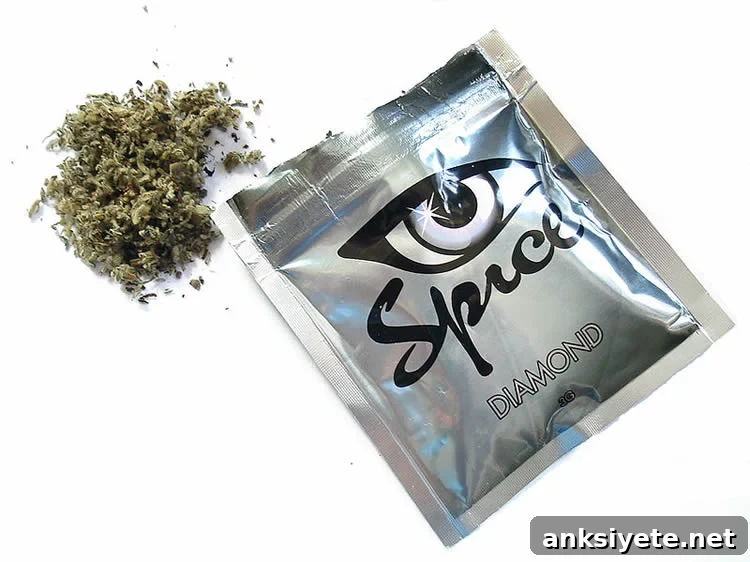
Summary: Researchers report that synthetic marijuana products sold under names such as K2 or Spice can cause severe health problems — including psychosis, seizures, kidney and heart injury, dependence, and even death. These products are chemically different from cannabis and are not safe substitutes.
Source: Cell Press.
Synthetic marijuana compounds are promoted as legal, undetectable alternatives to cannabis, but they differ chemically from marijuana and are linked to serious adverse effects — including seizures, psychosis, dependence, and death — according to a review by University of Arkansas for Medical Sciences (UAMS) researchers published February 2 in Trends in Pharmacological Sciences.
Decades of research revealed that Δ9-tetrahydrocannabinol (Δ9-THC), the main psychoactive component in cannabis, acts primarily at two receptors: CB1, abundant in the brain and central nervous system, and CB2, found mainly in the immune system. To study those receptors, scientists isolated natural cannabinoids and created numerous synthetic cannabinoid (SCB) molecules that also bind CB1 and CB2. Although SCBs can activate the same receptors, they are chemically distinct from Δ9-THC and from one another.
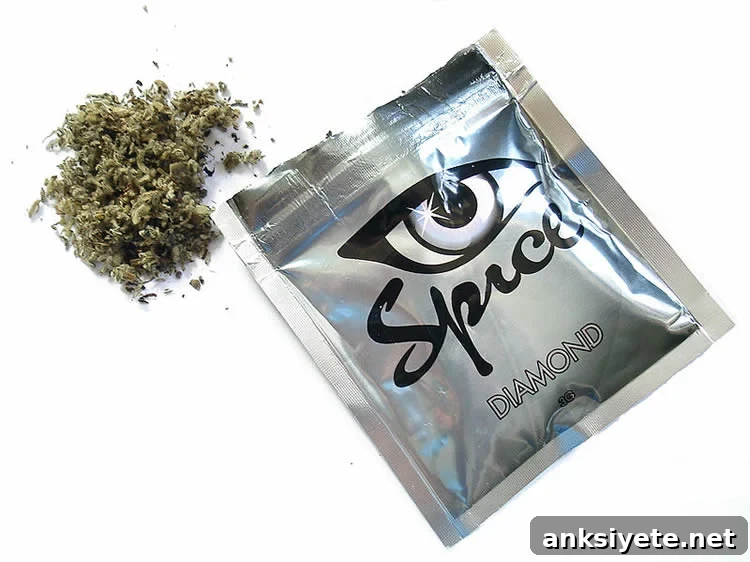
SCBs have been sold as “synthetic marijuana” under brand names such as K2 and Spice. “It began in the early 2000s in Europe, and by about 2007 in the U.S. emergency rooms were seeing people who said they had smoked marijuana but then developed bizarre symptoms not seen with cannabis,” explains Paul L. Prather, a cellular and molecular pharmacologist at UAMS.
One major reason SCBs gained popularity is that their different chemical structures often escape standard drug tests, making them attractive to adolescents, military personnel, and others who want to avoid detection. SCBs are frequently far more potent than Δ9-THC; “these are highly efficacious drugs that tend to activate the CB1 receptor more strongly than natural THC,” says William E. Fantegrossi, a behavioral pharmacologist at UAMS. That increased potency can drive users to seek a more intense high, but it also raises risk.
Clinical case reports link SCB use to a broad range of acute and chronic harms: seizures and convulsions, acute kidney injury, cardiac toxicity, strokes, severe anxiety, and psychosis in susceptible individuals. Repeated use can produce tolerance, withdrawal symptoms, and dependence. The review also notes at least twenty deaths associated with SCB products.
Prather and his co-authors emphasize that SCBs pose risks beyond their strong activation of CB1. Because SCBs are structurally different from Δ9-THC, they may interact with other cellular targets in addition to CB1 and CB2, and those off-target interactions could explain many of the unusual and dangerous effects observed after SCB exposure.
Another major concern is product inconsistency. SCBs sold online or in informal markets often contain unknown and variable ingredients. “Not only can the quantity of active chemical vary between batches and manufacturers, but the active compound itself may change from one package to the next,” Fantegrossi notes. Prather adds that single products commonly contain multiple synthetic cannabinoids — three, five, or more — increasing unpredictability and toxicity.
The authors caution against dismissing the potential medical value of cannabinoid-based therapies. As with opioids, properly regulated medical use can offer benefits, while misuse or abuse can produce harms and fatalities. However, they stress a clear distinction: “The public often assumes anything labeled ‘marijuana’ is safe. These synthetic compounds are not marijuana, you never know what they contain, and they are not safe,” Prather warns.
Source: Trina Arpin, Cell Press.
Image credit: NeuroscienceNews.com image used for illustration and listed as public domain.
Original review: Benjamin M. Ford, Sherrica Tai, William E. Fantegrossi, and Paul L. Prather, “Synthetic Pot: Not Your Grandfather’s Marijuana,” Trends in Pharmacological Sciences. Published online February 2, 2017. DOI: 10.1016/j.tips.2016.12.003
Cell Press. “Synthetic Marijuana Linked to Serious Health Problems.” Neuroscience News. February 2, 2017.
Abstract
Synthetic Pot: Not Your Grandfather’s Marijuana
Beginning in the early 2000s in Europe and shortly afterward in the United States, products marketed as legal marijuana replacements appeared under names such as K2 and Spice. The active ingredients in these products were found to be synthetic cannabinoids (SCBs) that act on CB1 receptors to produce psychotropic effects similar to those of Δ9-THC, the primary active compound in cannabis. SCBs have been abused by adolescents and military personnel seeking to avoid detection in drug tests because these compounds lack the structural similarity to Δ9-THC targeted by standard screens. Despite marketing that implies safety and legality, K2/Spice products are a chemically diverse group of easily synthesized compounds that can cause severe adverse effects through mechanisms that remain incompletely understood. Current evidence indicates K2/Spice products are unsafe substitutes for marijuana.
Key points
SCBs represent a large and varied family of man-made chemicals that can bind CB1 and CB2 cannabinoid receptors. K2 and Spice products typically consist of multiple SCBs sprayed on plant material to mimic the appearance and psychoactive effects of marijuana. These products are falsely marketed as safe and legal, and they often evade standard drug tests. SCB exposure carries a higher risk of severe acute and chronic outcomes — including psychosis, seizures, cardiovascular and renal injury, tolerance, dependence, and death — than seen with marijuana use. The unique toxic profile of SCBs likely reflects actions at CB1 and at non-CB1 targets, but precise mechanisms remain under investigation.
“Synthetic Pot: Not Your Grandfather’s Marijuana” by Benjamin M. Ford, Sherrica Tai, William E. Fantegrossi, and Paul L. Prather. Trends in Pharmacological Sciences. Published online February 2, 2017. DOI: 10.1016/j.tips.2016.12.003