
Summary: A new Drexel University study finds that while more people are turning to AI chatbots for emotional and mental health support, most users treat these systems as supplements—not replacements—for human therapy. Researchers analyzed more than 4 million Reddit posts to map how people interact with large language models and to identify benefits and risks.
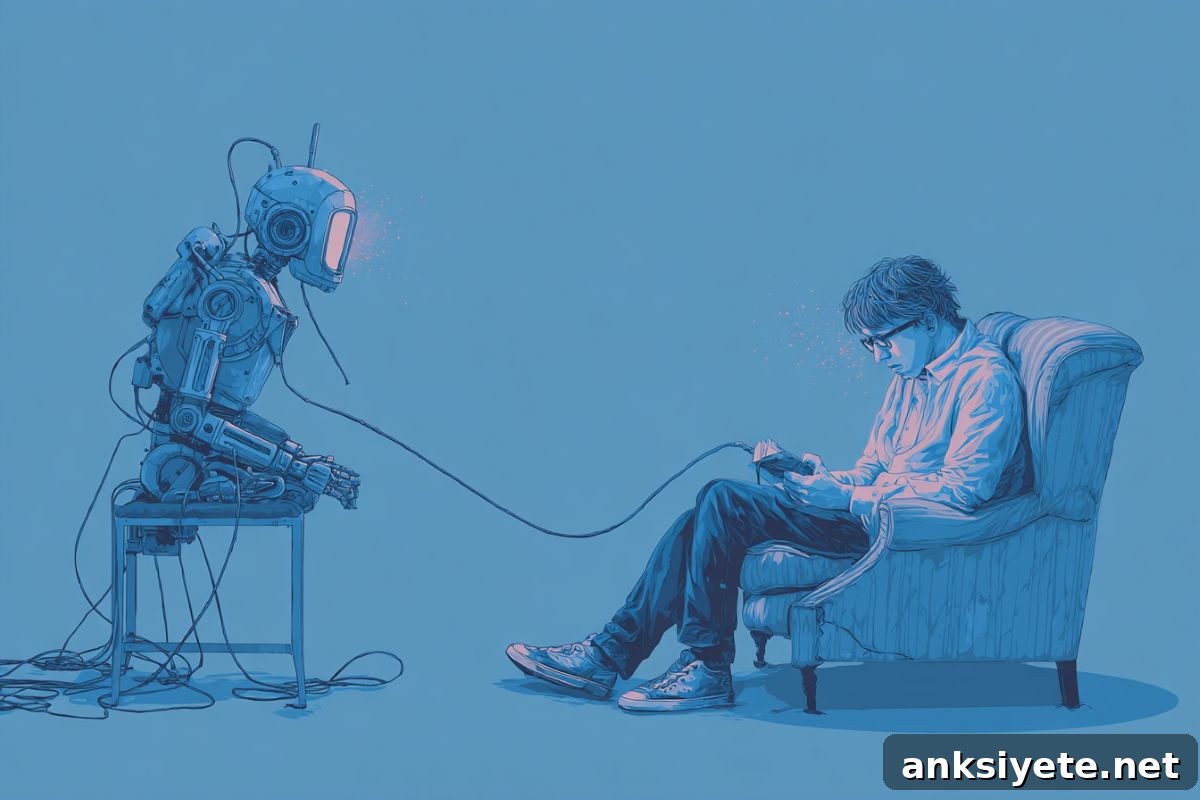
The study exposes a critical “bond paradox”: AI tools deliver clear value for goal-directed, practical support, but deep emotional attachment to chatbots often accelerates psychological risks, including emotional dependence, worsening symptoms, and intense feelings of shame or guilt.
Key Facts
- Rapid adoption for mental health: Surveys and related research indicate wide use of general-purpose AI for psychiatric support. One 2025 survey found nearly half of U.S. adults aged 18–80 used AI large-language models for mental-health purposes in the past year, and other studies estimate that about 1 in 8 young adults now seek mental-health guidance from AI programs.
- Large-scale Reddit analysis: Researchers led by Dr. Shadi Rezapour used natural language processing to analyze over 4 million posts across 47 mental-health-related subreddits, then focused on a core sample of 5,126 posts to study how human–AI relationships evolve.
- Two main uses: People commonly turn to AI for emotional reassurance, anxiety management, and companionship, while many also rely on AI for practical, executive-functioning help—such as organizing, planning, and managing ADHD or autism-related challenges.
- The “bond paradox”: Task-oriented AI interactions (planning, reflection, learning coping skills) were associated with positive outcomes. In contrast, interactions focused mainly on emotional bonding or repeated reassurance without a clear goal tended to correlate with increased dependency and worsening mental-health symptoms.
- Cautious user attitudes: Despite heavy use, many users recognize limits and risks: 51% of analyzed posts explicitly discussed therapeutic limitations or safety concerns. Across contexts, users framed AI as complementary to human therapy or a temporary bridge while clinical care is inaccessible.
- Design implications: General-purpose chatbots are not clinically validated psychiatric tools. The study’s authors urge designers to add clear boundaries, safeguards, and evidence-based structures rather than simply making systems feel more human or emotionally warm.
Source: Drexel University
Overview
Drexel University researchers examined how people use AI chatbots for mental-health support and how those interactions affect well-being. Using AI-powered natural language processing, the team scanned more than 4 million posts across 47 subreddits focused on mental health, then selected a representative sample of 5,126 posts for detailed qualitative analysis. They evaluated conversations through two sociological frameworks: one used for therapist-client bonds and another used to understand technology adoption.
Overall, the study finds a nuanced picture. People appreciate AI for immediate accessibility, nonjudgmental responses, and help with concrete tasks. Many users described AI as a stopgap when human clinicians are unavailable due to cost, wait times, or other barriers. Yet users also reported concerns about becoming emotionally dependent, receiving inaccurate guidance, or relying on nonclinical systems for therapy.
Dr. Shadi Rezapour, the study lead, emphasized that these chatbots were not designed or clinically validated for therapeutic intervention. The research team—specializing in online narratives and socially aware AI—wanted to understand real-world usage and where AI shows benefit or harm.
The analysis revealed consistent patterns: AI interactions tied to concrete goals—planning, practicing coping techniques, or organizing tasks—were experienced positively. By contrast, interactions that centered on companionship, repeated reassurance, or building an emotional bond without functional goals were more likely to lead to dependence, worsening symptoms, or difficulty disengaging.
Lead author Elham Aghakhani, a doctoral student involved in the research, argued that AI mental-health systems should be designed with boundaries and safeguards. She warned against engineering systems simply to feel warm and human-like, because that design choice can deepen attachment and increase risk for people seeking companionship or constant reassurance.
The researchers conclude that the most beneficial AI tools will be those optimized for supportive, task-oriented interactions and built on evidence-based frameworks that encourage safe use and clear disengagement strategies. As AI adoption rises, public understanding of both the benefits and limits of these systems is essential.
Key Questions Answered:
A: AI chatbots are instantly accessible, nonjudgmental, and available around the clock. Users often seek immediate reassurance for anxiety, step-by-step coping strategies, or help with organization and executive functioning—especially when human therapy is unaffordable or unavailable.
A: The bond paradox describes a split in outcomes: task-focused AI use tends to help users, while attempts to form deep emotional bonds or seek endless comfort from a chatbot often lead to harmful dependence, worsening symptoms, and strong feelings of shame or guilt.
A: The study indicates that AI is viewed by most users as a supplement, not a replacement, for human therapy. Many users explicitly acknowledge the risks and limitations of AI and continue to rely on human clinicians for validated, clinical care.
Editorial Notes:
- Edited by a Neuroscience News editor.
- Journal paper reviewed in full by the editorial team.
- Additional contextual reporting provided by staff.
About this AI and psychology research news
Author: Britt Faulstick
Source: Drexel University
Contact: Britt Faulstick – Drexel University
Image: The image is credited to Neuroscience News
Original Research: Findings to be presented at the 2026 Annual Meeting of the Association for Computational Linguistics.