
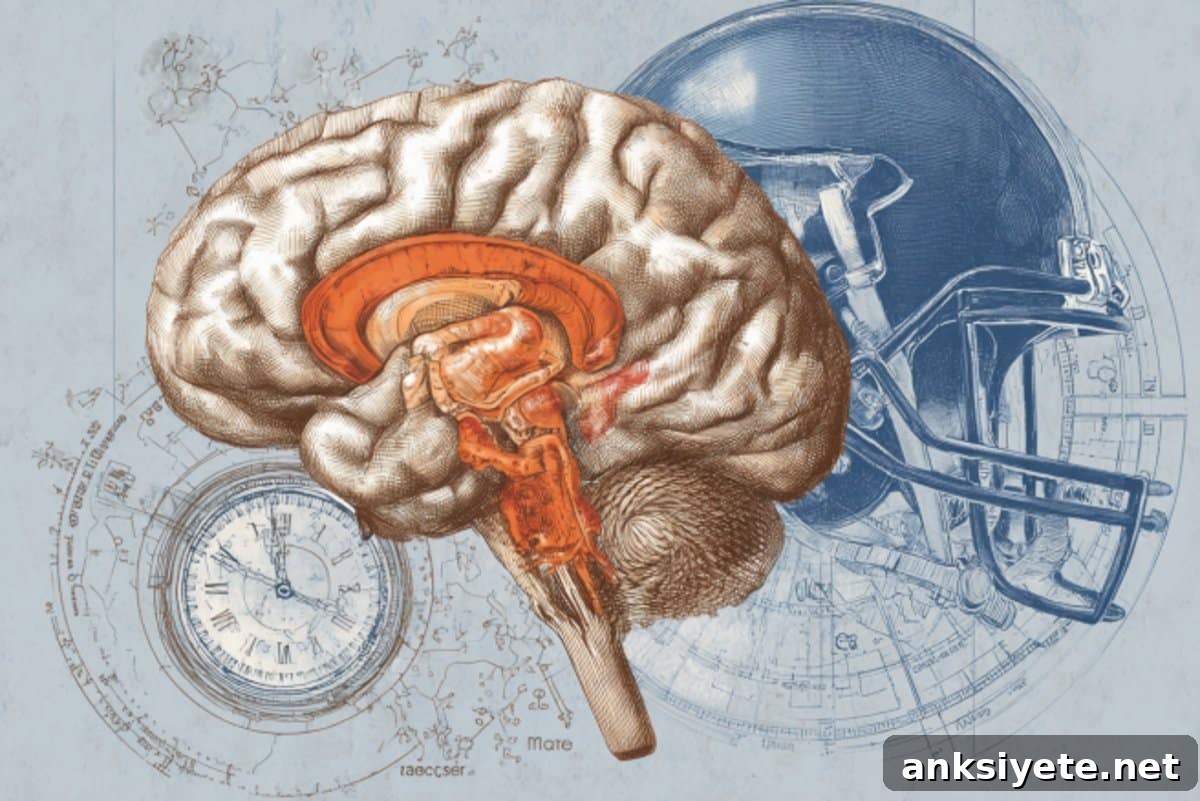
Summary: A new Northwestern Medicine study questions whether participation in youth football leads to harmful accumulation of tau protein in the brain. Researchers examined 174 donated brains, including samples from men who played football at the high school or college level, and found no evidence linking amateur contact sports participation to elevated phosphorylated tau (p-tau) in a key hippocampal subregion involved in memory.
Instead, the study found that p-tau accumulation in that region correlated more closely with advancing age than with a history of youth football. The results caution against overinterpreting subtle neuropathological findings as definitive signs of disease without clear clinical correlation.
Key Facts
- No link observed: Former youth football players did not show increased p-tau in the CA2 subfield of the hippocampus compared with men who never played contact or collision sports.
- Aging association: Preferential p-tau in CA2 was significantly associated with older age and with measures of Alzheimer’s disease neuropathologic change, rather than with amateur football history.
- Careful interpretation needed: The findings underscore the difficulty of distinguishing normal age-related brain changes from disease-related pathology in postmortem studies.
Source: Northwestern University
Background and context: In recent years, some researchers and public advocates have suggested that repetitive head impacts from contact sports such as football and hockey might increase the risk of neurodegenerative conditions—most notably chronic traumatic encephalopathy (CTE) and Alzheimer’s disease—through accumulation of abnormal tau protein. This new analysis provides a focused examination of that hypothesis in a cohort of donated brains from older adults.
The study, led by corresponding author Dr. Rudolph Castellani of Northwestern University Feinberg School of Medicine, analyzed 174 postmortem brain samples obtained from the Lieber Institute for Brain Development. The cohort consisted of older adult men with a median age at death of 65 years. Among them, 48 had participated in American-style football during high school or college; 126 had no known history of playing contact or collision sports. Brains from professional athletes were not included in this research.
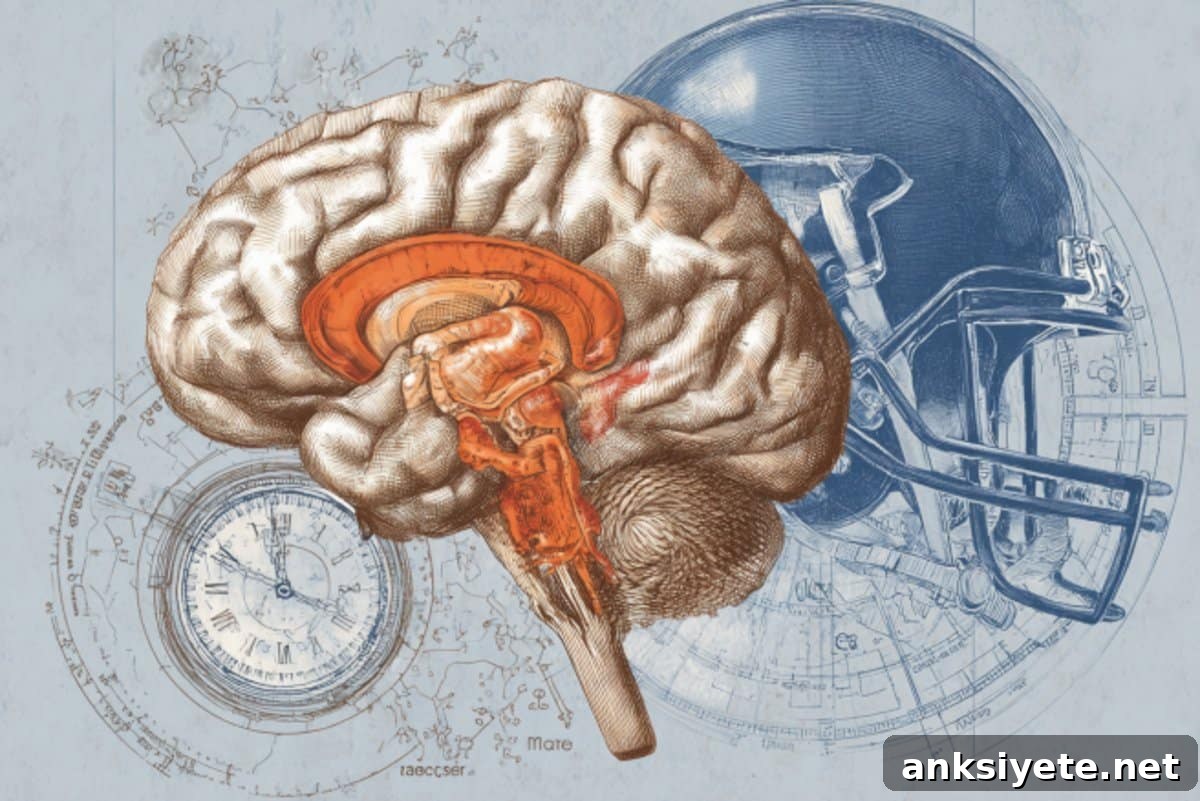
The investigators focused on the CA2 subfield of the hippocampus, a small but important memory-related region that has been reported to accumulate phosphorylated tau (p-tau) in several settings: normal aging, early Alzheimer’s disease, and in some cases associated with repetitive head impacts. Using standardized neuropathological rating scales, the team assessed the presence and preferential accumulation of p-tau in CA2 and examined its relationship to age, Alzheimer’s disease neuropathologic change, and prior participation in youth football.
Their findings showed that preferential p-tau in CA2 was present in roughly 30% of the sample. Importantly, the average age of individuals with CA2-predominant p-tau was substantially higher (mean age 75) than that of those without this pattern (mean age 63). Statistical analysis identified older age and greater measures of Alzheimer’s-related pathology (modified CERAD scores) as significant predictors of preferential CA2 p-tau, while a history of playing high school or college football was not significantly associated with CA2 p-tau presence.
“The long and short of it is no: this protein accumulation in this particular brain region is not increased in people who played football at the amateur level,” said Dr. Castellani, who also directs the neuropathology core at the Northwestern University Alzheimer’s Disease Research Center. “These results temper some interpretations of the current CTE narrative and invite a return to the null hypothesis: that p-tau in CA2 may often reflect aging or other non-specific processes rather than repetitive head trauma alone.”
The authors emphasize the broader methodological and conceptual challenges facing neurodegeneration research. Assigning clinical significance to subtle, localized neuropathological findings is difficult, and expert groups have struggled to define CTE in terms that reliably map to clinical symptoms. The paper stresses caution when expanding the boundaries of what is considered pathological without robust clinical-pathological correlation.
Given these uncertainties, the researchers call for larger, well-characterized studies to clarify how p-tau deposition in hippocampal subfields relates to normal aging, Alzheimer’s disease neuropathology, and a history of head impacts. They also urge the scientific community to critically evaluate assumptions about which patterns of tau accumulation should be considered markers of neurodegenerative disease versus features of aging or diverse environmental exposures.
About this CTE and neurology research news
Author: Kristin Samuelson
Source: Northwestern University
Contact: Kristin Samuelson – Northwestern University
Image: The image is credited to Neuroscience News
Original Research: Closed access.
“Postmortem tau in the CA2 region of the hippocampus in older adult men who participated in youth amateur American-style football” by Rudolph Castellani et al., Journal of Alzheimer’s Disease.
Abstract
Postmortem tau in the CA2 region of the hippocampus in older adult men who participated in youth amateur American-style football
Background
Previous reports indicate that hyperphosphorylated tau (p-tau) can accumulate preferentially in the CA2 subfield of the hippocampus with advancing age, in primary age-related tau astrogliopathy, in association with early Alzheimer’s disease, and in some cases identified with chronic traumatic encephalopathy neuropathologic change.
Objective
To evaluate whether preferential p-tau in the CA2 region of the hippocampus is associated with a history of playing American-style football at the high school level.
Methods
Postmortem brain tissue from 174 men (median age at death = 65 years; range 50–96) was obtained from the Lieber Institute for Brain Development. Of these, 126 had no known history of participation in contact or collision sports, while 48 (27.6%) had participated in football at the high school or collegiate amateur level.
Results
Approximately half the sample were rated modified Braak stage I (47.1%) and modified CERAD stage 0 (52.0%). Preferential CA2 p-tau was identified in 29.9% of cases. The mean age for those with preferential CA2 p-tau was 75 years versus 63 years for those without (Cohen’s d = −1.27, indicating a large effect). Sport history groups did not differ by age. In both univariate and multivariate logistic regression models, older age groups (odds ratios ~3.2–3.4) and higher modified CERAD scores (odds ratios ~1.48–1.78) were significantly associated with preferential CA2 p-tau, while a history of football participation was not a significant predictor.
Conclusions
The study found no significant association between participation in high school football and preferential p-tau accumulation in the CA2 region at autopsy. These results align with other evidence suggesting that CA2-predominant p-tau is more closely related to aging and Alzheimer’s disease neuropathologic change than to youth amateur football exposure.