
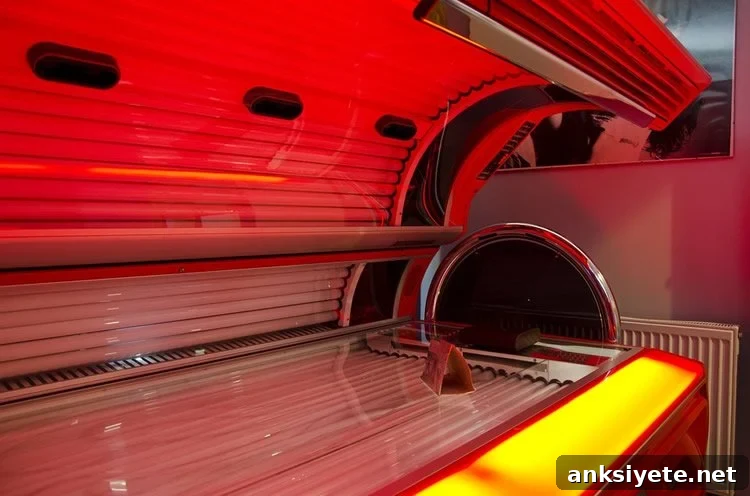
Tanning Activates Addictive Pathways in the Brain
Researchers at the University of Colorado Anschutz Medical Campus have identified a clear association between indoor tanning and substance use among Colorado high school students. Their analysis, published in JAMA Dermatology, suggests that motivations for indoor tanning and overlapping biological mechanisms may help explain why tanning is linked with other risky behaviors in adolescents.
Lead author Robert Dellavalle, MD, associate professor of dermatology at the University of Colorado School of Medicine, notes that indoor tanning appears driven by a mix of psychological and physiological factors. “For example, indoor tanning and use of steroids may both stem from the motivation to enhance one’s appearance,” he said. “Data also implicate addictive physiological pathways in indoor tanning that may be similar to those of substance abuse.”
The study used data from the Healthy Kids Colorado Survey, a statewide health survey administered in Colorado public schools. A total of 12,144 students answered the survey question: “During the last 12 months, how many times did you use an indoor tanning device such as a sunlamp, sunbed or tanning booth?”
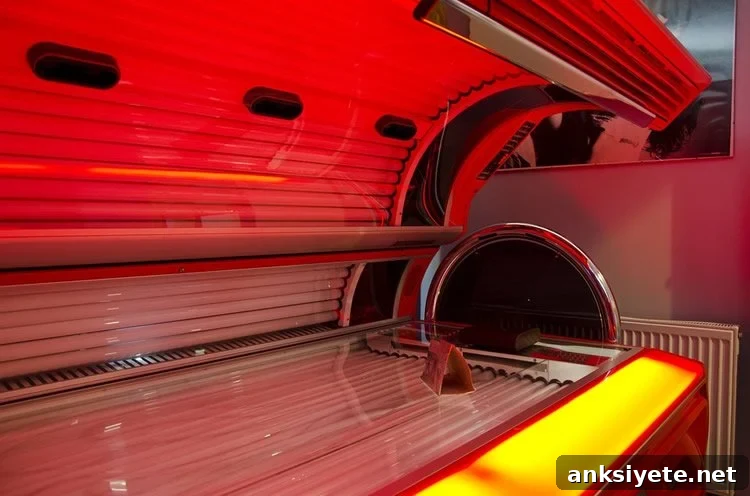
The researchers found several notable patterns. Female students were nearly twice as likely as males to report indoor tanning. Among the variables evaluated, any lifetime use of anabolic steroids showed the strongest association with indoor tanning, with this link particularly pronounced among male students. Recent alcohol use (within the prior 30 days), marijuana use, and lifetime use of certain illicit drugs also correlated with indoor tanning behavior.
Biologically, indoor tanning can trigger the release of endorphins — natural opioids the body produces — which may reinforce tanning behavior and contribute to dependence-like patterns. The study authors describe addictive physiological pathways in indoor tanning that resemble pathways implicated in substance abuse, offering a possible mechanism for the observed associations.
Medical authorities have long warned about the health risks of ultraviolet (UV) exposure from tanning devices. The World Health Organization classifies UV radiation as a Group 1 carcinogen, and the use of UV-emitting tanning devices is a recognized risk factor for melanoma, basal cell carcinoma, and squamous cell carcinoma. Despite these risks, surveys indicate that roughly one in five adolescents has used a UV tanning bed at least once in their lifetime.
Dellavalle and colleagues emphasize that risky behaviors often cluster: adolescents who engage in one risky activity, such as indoor tanning, are more likely to engage in additional risky behaviors, including illicit drug use. Because of these links, the researchers recommend that clinicians who treat adolescents who indoor tan consider screening for other substance use, especially anabolic steroid use in male patients.
Parents are also encouraged to be attentive. “If you are a parent and your child is tanning,” Dellavalle said, “you should also check for drug abuse.” Early recognition and open communication about both tanning and substance use can help families and clinicians address potentially harmful behaviors before more serious consequences develop.
The study’s co-authors include Myra Sendelweck, ME; Eric Bell, PhD; Amy Marie Anderson, MPH; Kurt Ashack, BA; Talia Pindyck, MD; and Cate Townley, MURP, MUD, along with Robert P. Dellavalle, MD, PhD, MSPH. The research appears in JAMA Dermatology under the title “Associations Between Indoor Tanning and Substance Use Among Colorado High School Students,” published online January 20, 2016.
Abstract
This study analyzes survey results from Colorado high school students to explore state-level associations between substance use and indoor tanning. The World Health Organization classifies UV radiation as a Group 1 carcinogen and recognizes tanning devices that emit UV radiation as risk factors for melanoma, basal cell carcinoma, and squamous cell carcinoma. Nevertheless, about one in five adolescents report lifetime use of a UV tanning bed. The research identifies significant associations between indoor tanning and several forms of substance use, highlighting the importance of clinical screening and parental awareness for adolescents who tan indoors.
Source: David Kelly – University of Colorado Anschutz Medical Campus
Image credit: The image is in the public domain