
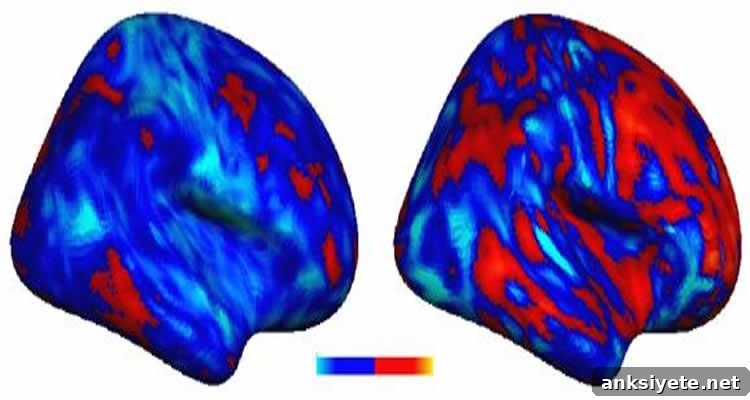
Autism Spectrum Disorder (ASD) continues to challenge researchers: studies of brain connectivity in people with autism have reported seemingly contradictory findings—some describe reduced synchronization between brain regions, while others report increased synchronization. New work clarifies these discrepancies by revealing a deeper principle underlying brain organization in ASD.
A recent study by teams at the Weizmann Institute and Carnegie Mellon University, published in Nature Neuroscience, examined resting-state functional magnetic resonance imaging (fMRI) data to compare spontaneous brain connectivity patterns in individuals with autism and typically developing controls. By analyzing a large, multi-site dataset aggregated in the ABIDE database, the researchers identified a distinct signature of autism in how brain regions synchronize at rest.
Resting-state fMRI captures the brain’s spontaneous activity when a person is not engaged in a specific task. These patterns of synchronization, or functional connectivity, often reflect how brain networks develop and interact with everyday experiences. According to Avital Hahamy, a Ph.D. student in the Weizmann Institute’s Neurobiology Department, resting-state studies are valuable because “patterns emerge spontaneously, allowing us to see how various brain areas naturally connect and synchronize their activity.”
The study’s central finding is that while connectivity profiles among typically developing control participants tended to be similar to one another, individuals with ASD showed highly individualized, variable connectivity patterns. The authors describe the control group’s profiles as “conformist,” with shared features across people, whereas the ASD group’s profiles were “idiosyncratic,” with each person exhibiting a unique deviation from the typical pattern.
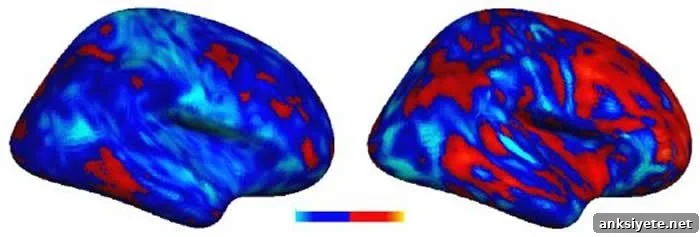
These idiosyncratic connectivity profiles provide a plausible explanation for previous contradictory reports of both over-connectivity and under-connectivity in autism research: group-averaged analyses can obscure large individual differences, producing inconsistent results across studies. When each person with ASD departs from the typical connectivity pattern in their own way, averaging across participants may yield mixed findings depending on the sample and methods used.
Marlene Behrmann, the George A. and Helen Dunham Cowan Professor of Cognitive Neuroscience at Carnegie Mellon and co-director of the Center for the Neural Basis of Cognition, emphasizes the importance of recognizing multiple altered brain profiles within the autism umbrella. She notes that identifying differing brain patterns helps researchers understand the range of neural organization that falls under “autism” or “autisms.”
The researchers propose that these individualized connectivity patterns may relate to differences in early social interaction and environmental exposure. In typical development, shared experiences and intensive social interactions may shape brain networks in similar ways across individuals, producing more uniform resting-state connectivity. In ASD, disruptions in social engagement or sensory experiences could lead to more divergent, individualized patterns of brain organization. The team stresses that this explanation is tentative and that many biological and developmental factors may contribute to idiosyncratic connectivity.
Beyond resolving apparent contradictions in prior studies, the discovery of idiosyncratic brain organization in ASD has practical implications. Characterizing individual connectivity patterns could improve early detection by highlighting deviations from typical network organization specific to each person. It may also guide personalized intervention strategies by linking distinct connectivity profiles to behavioral symptoms and treatment responses. However, the authors caution that further longitudinal and mechanistic research is needed to determine how and when these patterns emerge, and how they relate to developmental trajectories and clinical outcomes.
The research team included Avital Hahamy, Marlene Behrmann, and Rafael Malach. Funding for the study was provided by the Simons Foundation (Autism Research Initiative).
Contact: Shilo Rea – Carnegie Mellon University
Source: Carnegie Mellon University press release
Image Source: Image credited to Carnegie Mellon University and adapted from the press release
Original Research: Hahamy A., Behrmann M., Malach R., “The idiosyncratic brain: distortion of spontaneous connectivity patterns in autism spectrum disorder,” Nature Neuroscience. Published online January 19, 2015. doi:10.1038/nn.3919