
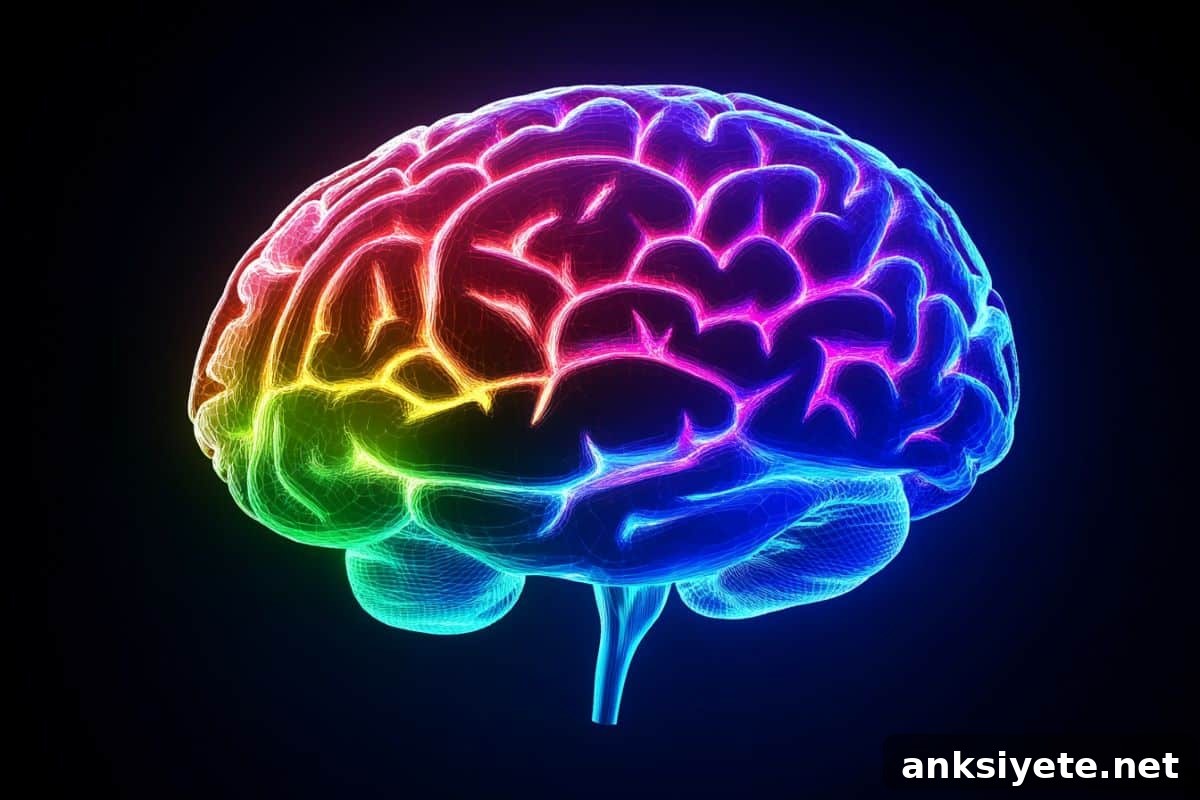
Summary: New research identifies serotonin within the cerebellum as an influential regulator of anxiety. In mice, lower cerebellar serotonin levels were associated with heightened anxiety-like behavior, while higher levels corresponded with reduced anxiety. By selectively stimulating or suppressing serotonin-releasing neurons that target the cerebellum, scientists were able to control anxiety responses in both directions. These findings shift assumptions about serotonin’s uniform effects and highlight the cerebellum as an important hub for emotional regulation, opening potential avenues for more targeted anxiety treatments.
Researchers used targeted neural manipulation to examine how cerebellar serotonin influences behavior. When serotonergic inputs to the cerebellum were activated, mice displayed fewer anxiety-like behaviors; inhibiting those same inputs produced the opposite effect. This bidirectional control supports a model in which cerebellar serotonin acts as a modulatory “brake” on anxiety-related circuits, rather than simply increasing anxiety across the brain as earlier work sometimes suggested.
While serotonin has long been linked to mood and anxiety, much of that work focused on forebrain regions such as the amygdala and prefrontal cortex. This study directs attention to the cerebellum, a brain structure traditionally associated with motor coordination, showing it also contributes to emotional regulation via specific neuromodulatory pathways. The results suggest that different serotonin-releasing populations and their target regions can have distinct—and even opposite—effects on behavior.
Beyond advancing basic understanding of anxiety circuits, the findings carry translational implications. By identifying a circuit-specific role for cerebellar serotonin, the study points to new, more precise therapeutic targets for anxiety disorders. Rather than broadly increasing or decreasing serotonin throughout the brain, treatments that selectively influence cerebellar serotonergic signaling could potentially reduce anxiety with fewer side effects. Future work will need to determine whether the same mechanism operates in humans and how it might be safely modulated for clinical benefit.
Key Facts
- Cerebellar Serotonin’s Role: In mice, higher serotonin levels in the cerebellum are associated with decreased anxiety-like behaviors.
- Bidirectional Control: Activating serotonin-releasing neurons projecting to the cerebellum reduces anxiety, while inhibiting them increases anxiety-like responses.
- Treatment Potential: Targeting cerebellar serotonin pathways offers a promising strategy for developing more precise anxiety therapies that focus on specific neural circuits.
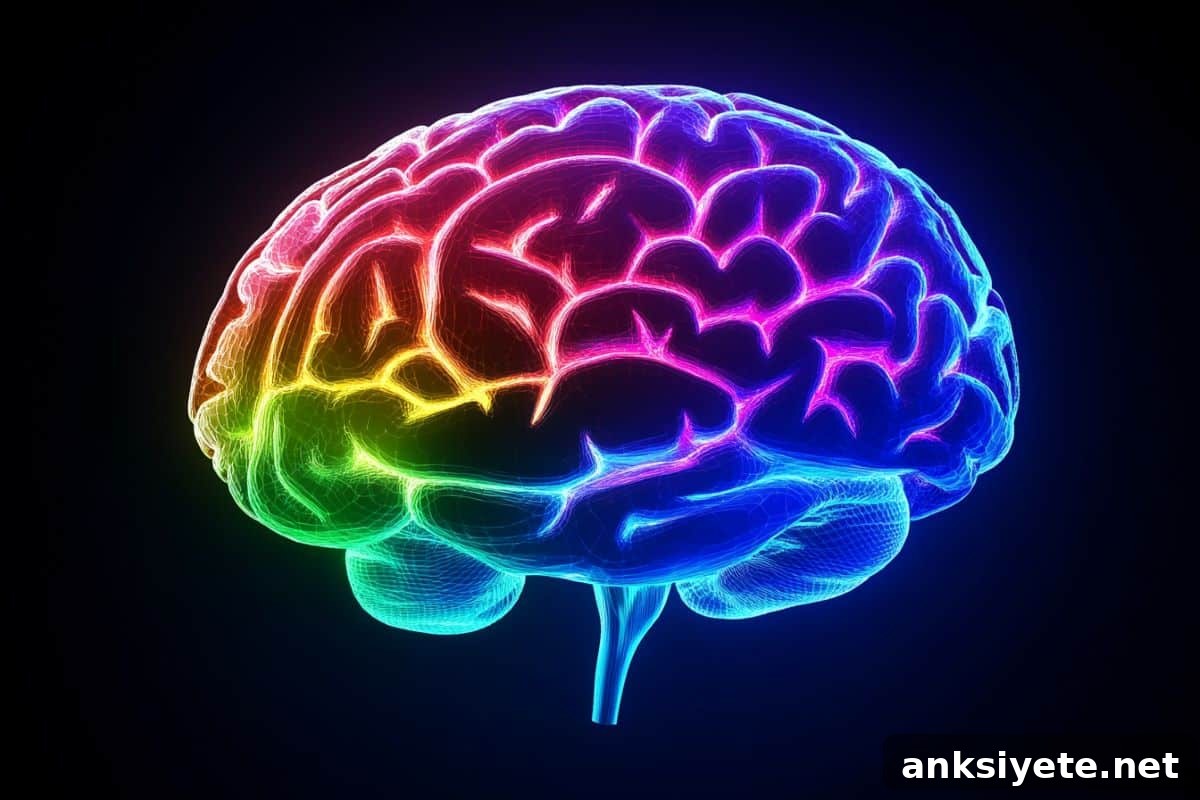
The study was led by Pei Chin at the University of Pennsylvania and George Augustine at Temasek Life Sciences Laboratory. Their experiments carefully measured serotonin levels in the cerebellum and used precise neural stimulation and inhibition techniques to test causal effects on behavior. By combining biochemical measurements with behavioral assays and targeted manipulation of serotonergic neurons, the team established a direct link between cerebellar serotonin and anxiety-like behaviors in mice.
Importantly, these results do not suggest that serotonin universally reduces anxiety throughout the brain; rather, they emphasize regional specificity. Different brain regions receive serotonergic input from different neuronal populations, and the behavioral outcome depends on which circuits are modulated. Understanding these distinctions is crucial for translating basic findings into clinical practice.
Looking ahead, further studies will be needed to map the downstream pathways by which cerebellar serotonin modulates emotional responses, examine how these circuits interact with other anxiety-related networks, and determine whether similar mechanisms are present in humans. Such research could guide the development of targeted neuromodulation techniques or pharmacological agents that selectively influence cerebellar serotonergic signaling.
About this neuroscience and anxiety research news
Author: Paige McKeon
Source: SfN
Contact: Paige McKeon – SfN
Image: The image is credited to Neuroscience News
Original Research: The findings are scheduled to appear in Journal of Neuroscience.