
Summary: Researchers report that the nucleus accumbens — a brain area typically linked to reward and motivation — can also trigger slow-wave sleep. These findings may explain why people often fall asleep when unmotivated or bored.
Source: University of Tsukuba.
University of Tsukuba researcher identifies a brain circuit that encourages sleep when motivation is low
We all have experienced staying alert while deeply engaged in a favorite activity, and conversely, drifting off during dull lectures or monotonous tasks. Although sleep is commonly described by homeostatic and circadian processes, cognitive and emotional states clearly shape sleep–wake behavior. New research from the University of Tsukuba and collaborators reveals that neurons in the nucleus accumbens, a region best known for processing reward and motivation, can actively induce natural slow-wave sleep. This discovery helps explain why lack of motivating stimuli — the state we experience as boredom — often leads to sleepiness.
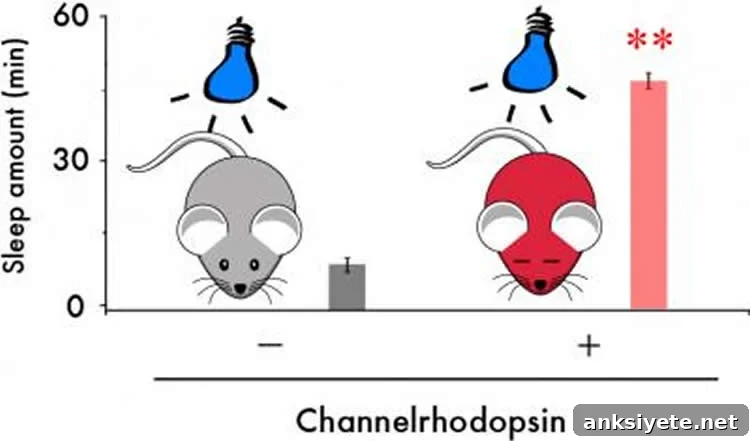
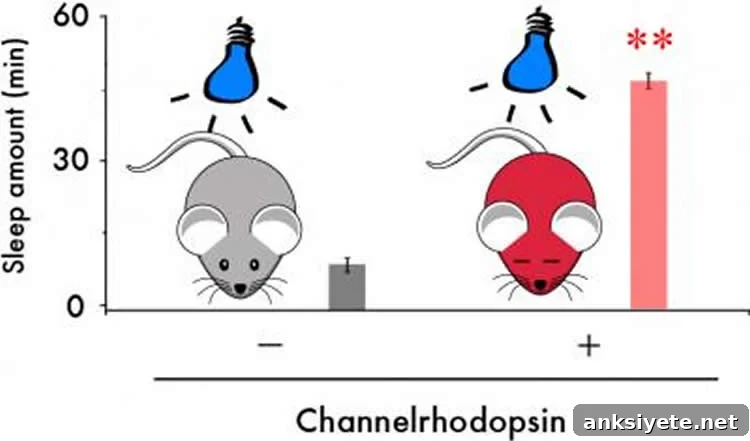
Scientists at the International Institute for Integrative Sleep Medicine (WPI-IIIS) at the University of Tsukuba, together with researchers from Fudan University’s Department of Pharmacology, used chemogenetic and optogenetic methods to manipulate specific populations of neurons in the nucleus accumbens remotely. By selectively activating or inhibiting these cells, the team demonstrated that a subset of nucleus accumbens core neurons has a very strong capacity to trigger slow-wave sleep, the deep, restorative phase of sleep characterized by high-amplitude, low-frequency brain waves.
Lead author Yo Oishi and colleagues point to adenosine, a well-known somnogen, as a likely mediator of this sleep-promoting effect in the nucleus accumbens. Adenosine accumulates during wakefulness and signals a relative energy deficit, promoting sleep through its receptors. In particular, the A2A subtype of adenosine receptors is densely expressed in the nucleus accumbens. The stimulant caffeine promotes wakefulness in part by blocking A2A receptors in this region. Conversely, pharmacological activation of A2A receptors in the nucleus accumbens could enhance sleep and might represent a safer therapeutic strategy for treating insomnia — a common condition affecting an estimated 10–15% of the general adult population and a higher proportion of older adults.
Source: Masataka Sasabe, University of Tsukuba
Image credit: University of Tsukuba
Original research: “Slow-wave sleep is controlled by a subset of nucleus accumbens core neurons in mice” by Yo Oishi et al., published in Nature Communications (published online September 29, 2017). DOI: 10.1038/s41467-017-00781-4.
MLA: University of Tsukuba. “Why Do We Fall Asleep When We’re Bored?.” NeuroscienceNews, 29 September 2017.
APA: University of Tsukuba (2017, September 29). Why Do We Fall Asleep When We’re Bored?. NeuroscienceNews. Retrieved September 29, 2017.
Chicago: University of Tsukuba. “Why Do We Fall Asleep When We’re Bored?.” Accessed September 29, 2017.
Abstract
Slow-wave sleep is controlled by a subset of nucleus accumbens core neurons in mice
Traditional models of sleep regulation emphasize two dominant influences: the homeostatic need for sleep and the circadian timing system. Yet cognitive and emotional factors — such as motivation and reward expectation — also modulate sleep–wake states, and the underlying neural circuits remain poorly defined. Prior work suggested that adenosine can alter behavioral arousal through actions in the nucleus accumbens (NAc), a brain region critical for reinforcement and reward. In this study, chemogenetic and optogenetic activation of excitatory neurons that express adenosine A2A receptors within the NAc core robustly induced slow-wave sleep in mice. Conversely, chemogenetic inhibition of these indirect pathway neurons prevented sleep induction but did not disrupt homeostatic sleep rebound, indicating a distinct role in motivationally linked sleep control. Furthermore, presentation of motivational stimuli suppressed the activity of NAc neurons that project to the ventral pallidum and correspondingly reduced sleep. These results reveal that a defined indirect pathway in the NAc contributes prominently to sleep regulation associated with motivational state.
The research demonstrates that reward-related circuits can directly influence sleep architecture, providing a physiological explanation for the common experience of falling asleep when motivation is low. By pinpointing nucleus accumbens A2A receptor-expressing neurons as a sleep-promoting population, the study opens new avenues for targeted treatments that may help manage insomnia or other sleep disorders without disrupting normal homeostatic mechanisms.