
Summary: Researchers report that a routine MRI scan can help detect and monitor vascular cognitive disorder by revealing microscopic damage in the brain’s white matter.
Source: RSNA.
Routine brain MRI shows promise for improving diagnosis of a common vascular cognitive disorder, according to a new study published in Radiology.
Vascular cognitive disorder results from disease of the blood vessels that supply the brain. Strokes and transient ischemic attacks (so-called mini-strokes) raise the risk. When blood flow is compromised, healthy brain tissue is lost and cognitive abilities such as concentration, planning, organization and decision-making decline. The condition becomes more common with age and can be difficult to distinguish clinically from other causes of dementia, including Alzheimer’s disease.
“When cognitive decline follows a major stroke, the change is often sudden and readily recognized,” said Dewen Meng, M.Sc., co-author of the study from the University of Nottingham. “However, in most cases there is no single clear event, which makes detecting vascular cognitive disorder a diagnostic challenge.”
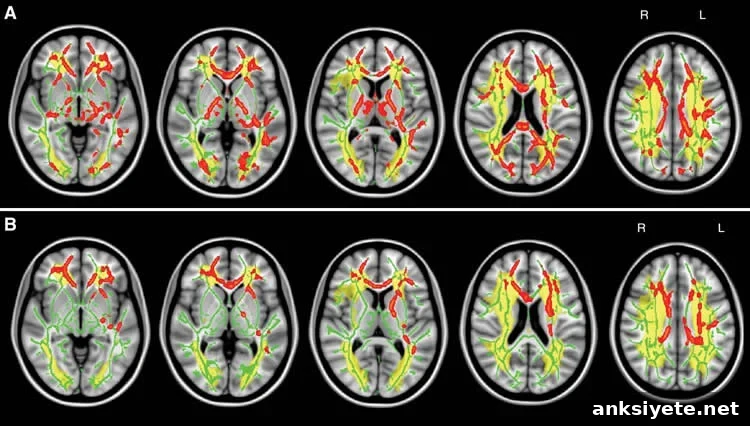
Researchers continue to search for reliable imaging biomarkers that can predict and track vascular cognitive disorder. One promising approach focuses on the brain’s white matter, the tissue that carries signals between regions. Diffusion tensor imaging (DTI), an MRI technique, quantifies microscopic integrity of white matter by measuring how water moves through tissue. Two key DTI measures are mean diffusivity (MD), which reflects overall water movement and is sensitive to breakdown of nerve fibers and their protective myelin, and fractional anisotropy (FA), which reflects directional water diffusion aligned with fiber tracts.
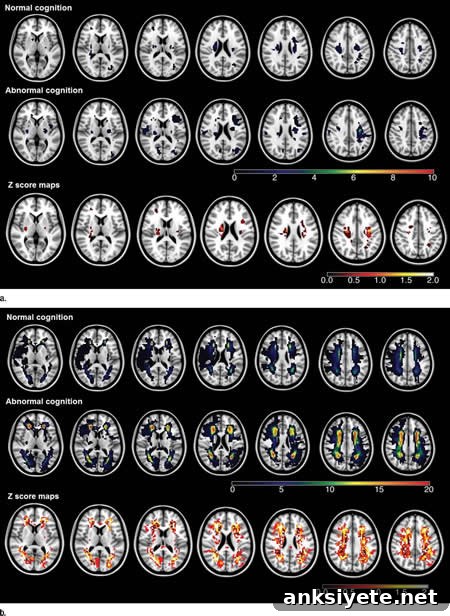
In this study, the research team analyzed MRI scans and cognitive test results from 108 patients who had symptomatic carotid artery disease, a known risk factor for vascular cognitive disorder. Of those patients, 53 (49.1%) were classified as cognitively impaired according to the Addenbrooke’s Cognitive Examination–Revised. The investigators compared lesion location and volume as well as microscopic white matter tract damage with global cognitive performance and specific cognitive domains.
The key finding was a clear relationship between cognitive performance and chronic ischemic lesions located within specific subcortical white matter tracts. Among the imaging measures evaluated, mean diffusivity in the white matter tract skeleton correlated most strongly with impaired cognition. This ultrastructural DTI marker provided the best discrimination between patients with symptomatic carotid disease who were cognitively impaired and those who remained cognitively intact.
“Using standard clinical MRI, we found that microscopic damage to major white matter tracts distinguished patients with symptomatic carotid artery disease and cognitive impairment from those without impairment,” said senior author Dorothee P. Auer, Ph.D., also from the University of Nottingham. “Our results suggest that a simple MRI assessment could strengthen the diagnostic evaluation of people with suspected vascular cognitive disorder and may offer a way to monitor disease progression.”
The study supports a model in which subcortical disconnection — a breakdown of communication across large-scale brain networks caused by white matter injury — is a central mechanism of vascular cognitive disorder. Dr. Auer compared the concept to a disruption on a major subway line: if the links between network nodes are impaired, information flow falters and system-wide coordination suffers.
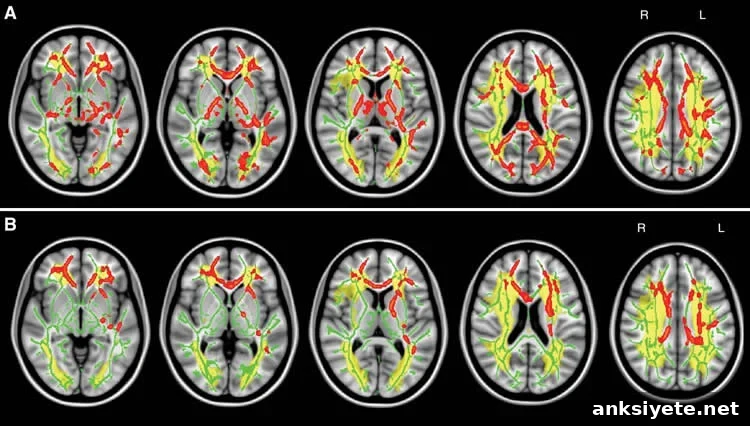
In statistical analyses, cognitively impaired patients were older and had more frequent medial temporal lobe atrophy, more cortical infarctions and larger volumes of both acute and chronic subcortical ischemic lesions. However, lesion volume alone did not reliably predict global cognitive performance. Instead, the presence of chronic ischemic lesions within interhemispheric tracts and thalamic radiations and increased mean diffusivity across the white matter skeleton showed stronger associations with lower cognitive scores. Skeleton mean diffusivity explained a substantial portion of variance in cognition and achieved promising diagnostic accuracy for vascular cognitive disorder.
The investigators confirmed these findings in a subgroup of participants with a low likelihood of preclinical Alzheimer’s disease, defined by absence of medial temporal lobe atrophy. This strengthens the case that the observed white matter changes relate specifically to vascular mechanisms rather than Alzheimer pathology.
The research team plans to expand the work with longitudinal studies to determine whether MRI markers of subcortical disconnection can track progression over time and identify individuals at higher risk of developing vascular dementia. Such longitudinal imaging could also help evaluate interventions aimed at preventing cognitive decline in people with cerebrovascular disease.
Funding: This work was supported by the National Institute for Health Research.
Source: Linda Brooks, RSNA. Image credit: RSNA.
Abstract
Lesion Topography and Microscopic White Matter Tract Damage Contribute to Cognitive Impairment in Symptomatic Carotid Artery Disease
Purpose
To investigate associations between neuroimaging markers of cerebrovascular disease — including lesion topography and the extent and severity of strategic and global cerebral tissue injury — and cognition in carotid artery disease (CAD).
Materials and Methods
One hundred eight patients with symptomatic CAD but without dementia underwent brain MRI and the Addenbrooke’s Cognitive Examination–Revised. Cognitive impairment was defined as a score below 82. Voxel-based statistics examined group differences and relationships among global cognition, fluency, lesion topography, and ultrastructural white matter damage measured by increased mean diffusivity. Regression analyses controlled for age to test associations between cognition, medial temporal lobe atrophy, lesion volumes, and global white matter ultrastructural damage. Diagnostic performance of selected imaging markers was evaluated using receiver operating characteristic analysis.
Results
Fifty-three patients (49.1%) were classified as cognitively impaired and showed higher age, more medial temporal lobe atrophy, more cortical infarctions, and larger acute and chronic subcortical ischemic lesion volumes. Lesion volume alone did not correlate significantly with global cognitive performance. In contrast, chronic ischemic lesions located within interhemispheric tracts and thalamic radiations and increased skeleton mean diffusivity correlated with poorer cognition. Skeleton mean diffusivity explained a notable share of cognitive variance (R2 = 0.311) and showed promising diagnostic accuracy (area under the curve = 0.82). Findings persisted in subjects without medial temporal lobe atrophy.
Conclusion
Subcortical white matter ischemic lesion location and the severity of microscopic tract damage contribute to cognitive impairment in symptomatic carotid artery disease. These results support subcortical disconnection within large-scale cognitive networks as a key mechanism of vascular cognitive disorder.
Study: Dewen Meng, Akram A. Hosseini, Richard J. Simpson, Quratulain Shaikh, Christopher R. Tench, Robert A. Dineen, and Dorothee P. Auer. Published online in Radiology, September 6, 2016.