
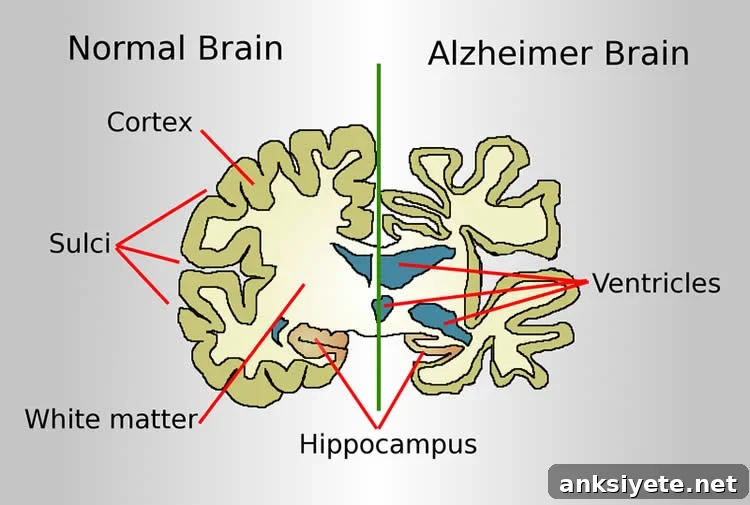
By the time most people receive a diagnosis of Alzheimer’s disease—based on clinical signs of cognitive decline—their brains have often experienced a decade or more of progressive damage. Although the exact mechanisms that drive neuronal loss in Alzheimer’s are not fully resolved, two well-established features of the disease are accumulation of the amyloid-β peptide (the principal component of the plaques found in affected brains) and persistent inflammation. New research from Rockefeller University, published March 16 in the Proceedings of the National Academy of Sciences, identifies a molecular link between these two hallmarks. This link, a cascade called the contact system, may offer a route to earlier detection of Alzheimer’s through a routine blood test.
“Researchers have long sought reliable markers for Alzheimer’s disease,” says Sidney Strickland, head of the Patricia and John Rosenwald Laboratory of Neurobiology and Genetics. Current methods to detect pre-symptomatic Alzheimer’s are limited: measuring amyloid-β in cerebrospinal fluid (CSF) requires a spinal tap, which is invasive and impractical for widespread screening.
Daria Zamolodchikov, the study’s first author and a postdoctoral associate in the Strickland laboratory, emphasizes the potential of a blood-based marker. “A simple blood test that could indicate whether someone is on the path to developing Alzheimer’s would be a major advance,” she says.
The research builds on the lab’s investigations into how blood vessels and blood-borne processes contribute to Alzheimer’s. Prior work demonstrated that amyloid-β can activate factor XII, a protein in plasma that initiates the contact system. Activation of this pathway triggers the release of bradykinin, a small peptide that promotes vascular permeability and inflammatory responses. Although fragments of this pathway have been observed in patient brain tissue and cerebrospinal fluid, the activity of the contact system in patient plasma had not been systematically evaluated.
In the new study, researchers measured contact system activation in plasma samples from people diagnosed with Alzheimer’s disease and from control individuals without the disease. They found significantly increased activation of the contact system in the plasma of Alzheimer’s patients, suggesting the pathway may contribute to systemic and brain inflammation associated with the disease. In a subgroup of participants with known CSF amyloid-β measurements, the team observed a positive correlation between contact system activation in plasma and changes in CSF amyloid-β, a biomarker associated with Alzheimer’s pathology.
The team also examined mouse models that overproduce amyloid-β and found similar activation of the contact system in their plasma. To test whether amyloid-β alone could trigger this response in a normal organism, the researchers injected wild-type mice with amyloid-β and observed activation of the contact system, demonstrating a direct effect in a living system.
While these results are promising, the authors stress that larger patient cohorts and longitudinal studies are needed to confirm whether blood-based measures of contact system activation can reliably predict the onset or progression of Alzheimer’s disease. If validated, such biomarkers could transform early detection and monitoring, allowing interventions at an earlier stage of disease development.
Beyond diagnostics, the contact system suggests a potential therapeutic target. Inhibiting elements of this pathway might reduce inflammation driven by amyloid-β. A possible concern is that the contact system also participates in coagulation, so its inhibition might raise bleeding risk. However, individuals with genetic defects in this pathway do not experience hemophilia, indicating that careful modulation could potentially reduce harmful inflammation without causing major bleeding complications. Further research will be required to weigh therapeutic benefits against safety considerations.
Contact: Press Office – Rockefeller University
Source: Rockefeller University press release
Image Source: The image is credited to Garrondo and is in the public domain
Original Research: Abstract for “Activation of the factor XII-driven contact system in Alzheimer’s disease patient and mouse model plasma” by Daria Zamolodchikov, Zu-Lin Chen, Brooke A. Conti, Thomas Renné, and Sidney Strickland in PNAS. Published online March 16, 2015, doi:10.1073/pnas.1423764112