
Self-Reflection Triggers Increased Brain Activity During Depressive Episodes
New research from the University of Liverpool shows that people going through major depressive episodes display heightened brain activity when they think about themselves. Using functional magnetic resonance imaging (fMRI), the study found that individuals in a depressive episode process self-relevant information in the brain differently than those who are not depressed.
Study design and task
Researchers scanned the brains of two groups of volunteers while they performed a simple but revealing task. Participants were presented with positive, negative and neutral adjectives and asked to decide whether each word described either themselves or a well-known public figure — the British Queen. The Queen served as a familiar but personally distant comparison target, allowing investigators to separate broadly social or semantic judgments from genuinely self-referential processing.
Behavioral and neural findings
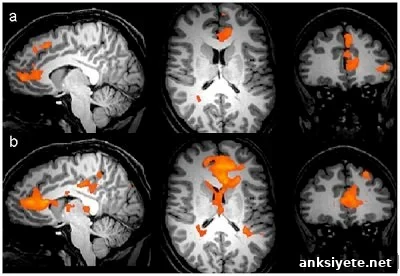
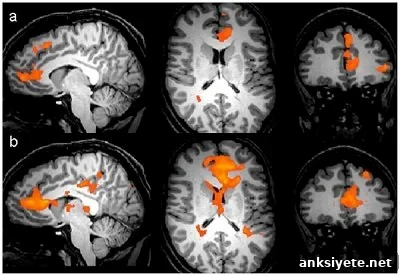
Behaviorally, participants experiencing depressed mood selected significantly fewer positive words and significantly more negative and neutral words to describe themselves compared with non-depressed participants. While those choices are consistent with existing psychological descriptions of depression, the neural data revealed an additional and important layer: when depressed participants judged whether descriptors applied to themselves, there was a clear increase in blood oxygen level–dependent (BOLD) signal in the medial superior frontal cortex, a brain region strongly associated with processing self-related information.
Crucially, this heightened brain activity was specific to self-referential judgments. When the same participants evaluated words in relation to the Queen or performed other types of judgments, the depressed and non-depressed groups did not show the same differences in neural activation. This pattern suggests that changes in brain activity in depression are closely tied to altered self-evaluation rather than reflecting a general increase in brain reactivity.
Interpretation and implications
Professor Peter Kinderman, Head of the University’s Institute of Psychology, Health and Society, highlighted the dual importance of these findings: they corroborate psychological observations about negative self-evaluation in depression while also pinpointing a neural correlate in the medial superior frontal cortex. The results encourage further research into how self-related thought patterns and underlying neural processes interact during depressive episodes.
Dr May Sarsam, from the Mersey Care NHS Trust, noted that the data support an integrated view of depression that includes both thought patterns and neurochemistry: brain activity differed specifically when depressed people reflected on themselves, aligning well with psychological theory about altered self-focus in depression.
Context and collaboration
The study was conducted in collaboration with the Mersey Care NHS Trust and the Universities of Manchester, Edinburgh and Lancaster. The research is published in PLOS ONE and lists the investigative team and full methods in the open-access article titled “The Queen and I: Neural Correlates of Altered Self-Related Cognitions in Major Depressive Episode” by May Sarsam, Laura M. Parkes, Neil Roberts, Graeme S. Reid, and Peter Kinderman. Published online October 30, 2013. DOI: 10.1371/journal.pone.0078844.
Broader relevance
Depression commonly involves pervasive negative feelings and self-critical thoughts. Nearly one-fifth of adults experience anxiety or depression at some point, with a higher reported prevalence in women. Studies that link behavioral patterns of self-evaluation to specific neural signatures help bridge psychological and biological perspectives and may ultimately inform more targeted approaches to assessment and treatment.
Understanding the ways depressed individuals evaluate themselves — and the brain systems that are involved when they do — may lead to improved therapeutic strategies, whether psychological, pharmacological, or combined approaches that address both thinking patterns and underlying neural function.
Contact and credits
Contact: Sarah Stamper – University of Liverpool
Source: University of Liverpool press release
Image credit: May Sarsam, Laura M. Parkes, Neil Roberts, Graeme S. Reid, and Peter Kinderman / PLOS ONE. The image is adapted from the published paper.
Keywords: psychology, neuroimaging, depression, open science, open access