
Stanford Study Identifies Melanocortin Pathway That Drives Anhedonia in Depression
Researchers at Stanford University School of Medicine have identified a molecular mechanism that links chronic stress to anhedonia—the loss of the ability to feel pleasure—by acting on a conserved brain reward circuit. Although the experiments were performed in mice, the circuit involved is largely similar in rodents and humans, suggesting these results could point toward new therapeutic approaches for depression and related disorders.
Key discovery: melanocortin disrupts reward signaling
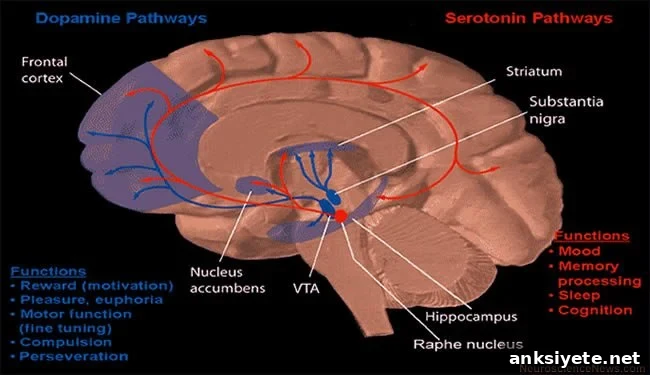
The study, led by Robert Malenka, MD, PhD, Nancy Friend Pritzker Professor in Psychiatry and Behavioral Sciences, shows that the hormone melanocortin can diminish synaptic signaling in the nucleus accumbens, a central node of the brain’s reward circuit. That weakening of synaptic strength produces behavioral anhedonia in chronically stressed mice. By tracing the pathway from melanocortin release to changes in specific synapses, the team identified a druggable molecular target that had not previously been tied directly to depression-related loss of pleasure.
Why this matters for antidepressant development
Current antidepressant medications often target a small set of neurotransmitter systems, and many patients—up to half by some estimates—do not respond adequately or lose benefit over time. Malenka emphasizes the need to expand understanding of the brain biology underlying core symptoms of depression so that new, mechanistically distinct treatments can be developed. This study highlights melanocortin signaling within the nucleus accumbens as a candidate pathway that could be modulated to restore reward function and treat anhedonia.
Improved behavioral model: measuring pleasure, not just despair
Unlike many traditional preclinical assays that infer antidepressant action from brief stress challenges, Malenka’s team focused on behaviors that directly reflect the capacity to experience pleasure. They exposed mice to chronic, mild stress over several days and then measured reward-directed behavior, such as preference for a sugar solution versus plain water. Chronically stressed mice reliably lost their preference for sweetened water—an operational measure of anhedonia—mirroring human deficits in enjoying food, social interaction, sex and comfort that occur in depression.
Experts have criticized older behavioral screens, such as the forced-swim test, for being quick, cheap screens that do not necessarily model the core symptoms of human depression. The current study’s emphasis on reward-related behavior after chronic stress better models the human condition and may provide a more predictive platform for testing compounds that specifically restore pleasure.
Methods and mechanistic evidence
Malenka’s laboratory subjected mice to a daily stress routine of mild physical confinement for several hours over eight days. Stressed animals showed reduced sugar preference and modest weight loss. Using electrophysiology, biochemical assays and targeted gene manipulation, the group examined melanocortin-responsive neurons in the nucleus accumbens. They found that both increased melanocortin signaling and chronic stress diminished the strength of specific synapses on those neurons.
When the investigators selectively removed melanocortin receptors from those accumbens neurons, the synaptic changes induced by stress no longer occurred. Behaviorally, mice lacking those receptors maintained normal sugar preference and did not lose weight despite the chronic stress exposure. Substituting cocaine for sugar as a measure of reward produced the same pattern, supporting the interpretation that melanocortin-driven synaptic adaptations specifically impair the capacity to experience pleasure.
Circuit specificity and implications
Importantly, the melanocortin-driven pathway that causes anhedonia operates independently from neural circuits involved in behavioral responses measured by assays like the forced-swim test. Manipulating melanocortin signaling in the nucleus accumbens did not change mice’s performance in the forced-swim paradigm. This dissociation highlights that different depression-related behaviors arise from distinct circuits and that targeting the melanocortin–nucleus accumbens axis addresses the anhedonia component specifically.
Because melanocortin signaling has already attracted pharmaceutical interest for appetite disorders, there are existing receptor agonists and antagonists that could be repurposed or optimized to test whether modulating melanocortin relieves anhedonia in humans. Beyond major depressive disorder, anhedonia appears in other neuropsychiatric conditions such as schizophrenia and in cases of severe medical illness where patients experience profound loss of interest and pleasure.
Expert perspective
Independent commentators praised the study’s methodological rigor and its focus on a translationally relevant symptom. By combining chronic-stress behavioral paradigms with circuit-level and molecular interventions, the research presents a clear, testable hypothesis: targeting MC4R-mediated synaptic adaptations in the nucleus accumbens can prevent or reverse anhedonia.
Study details and acknowledgements
The paper, with Byung Kook Lim, PhD, as first author and Robert C. Malenka as senior author, was published in Nature and includes contributions from Kee Wui Huang, Brad A. Grueter, and Patrick E. Rothwell. The work received funding from the National Institutes of Health and the Davis Foundation Program in Eating Disorders Research.
Notes about this depression research and article
Article written by Bruce Goldman. Contacts: Bruce Goldman and M.A. Malone, Stanford University. Source: Stanford School of Medicine press release. Image source: human brain image in the public domain. Original research: “Anhedonia requires MC4R-mediated synaptic adaptations in nucleus accumbens” by Byung Kook Lim et al., Nature online, July 2012.