
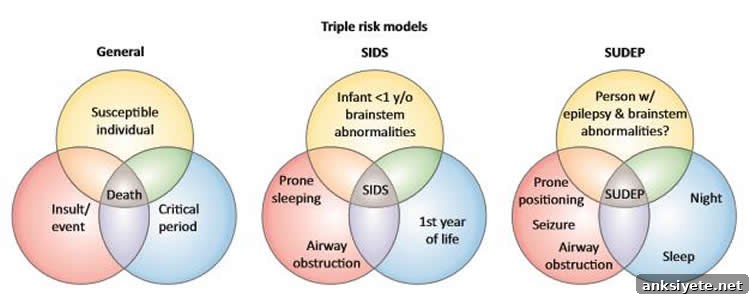
Summary: This opinion piece explores a possible shared mechanism behind Sudden Infant Death Syndrome (SIDS) and Sudden Unexpected Death in Epilepsy (SUDEP): a failure to arouse when blood carbon dioxide (CO2) levels rise, potentially due to dysfunction of serotonin-sensitive neurons in the midbrain.
Source: Cell Press
Sudden Infant Death Syndrome (SIDS) and Sudden Unexpected Death in Epilepsy (SUDEP) present similar clinical features but remain poorly understood in terms of underlying physiology. In an opinion article published March 21 in the journal Trends in Neuroscience, researcher Gordon Buchanan proposes that impaired arousal in response to rising CO2 may be a common factor linking both conditions.
Buchanan, an associate professor of neurology at the University of Iowa, explains the proposed mechanism: when breathing is compromised—by airway obstruction from bedding, for example—CO2 accumulates in the blood. In typical circumstances, rising CO2 acts as a powerful stimulus that triggers a cascade of physiological and behavioral responses. These include increased respiratory drive and arousal from sleep, prompting a person to change position, cry out, or otherwise restore a clear airway.
“When this wake-up response fails, the accumulation of CO2 can continue unchecked,” Buchanan says. “That failure to arouse appears to be a critical step in both SIDS and SUDEP cases under study.”
The exact reason some individuals do not wake when CO2 levels climb remains uncertain. Buchanan highlights evidence pointing to abnormalities in the brain’s serotonin system as a plausible cause. Serotonin-producing neurons located in the medulla help regulate breathing, while those in the midbrain are thought to play a role in controlling arousal and wakefulness.
Autopsy studies in some SIDS and SUDEP victims have revealed irregularities in serotonin signaling pathways. Buchanan suggests a model in which CO2 is detected by serotonin-sensitive receptors in the midbrain; when this chemosensory pathway is intact, elevated CO2 produces arousal. If the pathway is defective, however, the arousal response may be blunted or absent, leaving the individual vulnerable to fatal respiratory compromise.
“A direct CO2-sensing pathway involving midbrain serotonin neurons would be a significant finding because it points to testable mechanisms and, eventually, targeted interventions,” Buchanan notes. He emphasizes that demonstrating this pathway definitively, and developing a safe clinical test to detect serotonin-system dysfunction in living individuals, are essential next steps before any preventive therapies can be deployed.
At present, reliable identification of serotonin-system abnormalities is largely limited to postmortem examination. Until noninvasive biomarkers or diagnostic tests are available, prevention must rely on established safety practices. Buchanan reiterates longstanding recommendations for infant care that have consistently reduced SIDS risk: place infants under six months on their backs to sleep, avoid loose bedding and soft toys in the crib, and dress babies in snug, appropriate sleepwear. These measures reduce the chance of airway obstruction and overheating—both factors that can worsen CO2 retention.
For people with epilepsy, particularly those with a history of nocturnal seizures who may be at greater risk for SUDEP, similar precautions can help. Sleeping on the back when possible, using safe sleep environments, and employing seizure-monitoring methods that allow caregivers to detect and assist after a seizure may reduce risk. While seizure-prone individuals may move during the night and cannot be guaranteed to remain in any one position, increased monitoring and supervision during sleep are practical steps caregivers can take.
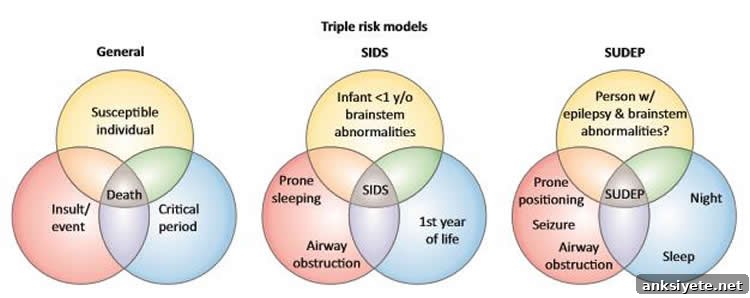
Translating the hypothesis into clinical practice will require multiple advances: confirming the role of midbrain serotonin signaling in CO2-triggered arousal, creating noninvasive tests for serotonin or CO2-arousal dysfunction, and identifying safe interventions that can restore or compensate for defective arousal responses. Until such advances are achieved, public health guidance focused on safe sleep and vigilant monitoring remains the most effective means of reducing preventable deaths related to SIDS and SUDEP.
Funding: Buchanan’s work is supported by the NIH/NINDS, the Pappajohn Biomedical Institute and Iowa Neuroscience Institute at the University of Iowa, and the Beth Levitt Tross Professorship in Epilepsy Research.
Source:
Cell Press
Media Contacts:
Brianne Fagan – Cell Press
Image Source:
Image credited to Buchanan et al., Trends in Neurosciences.
Original Research: The opinion and synthesis will appear in Trends in Neurosciences.