
Summary: Researchers have identified a genetic mutation that impairs the brain’s ability to cope with stress at synapses, contributing to the development of Parkinson’s disease.
Source: VIB Flanders.
New research led by Professor Patrik Verstreken (VIB-KU Leuven) reveals that a faulty stress-coping mechanism at neuronal synapses is a key contributor to Parkinson’s disease. Mutations linked to Parkinson’s can prevent synapses—the contact points where neurons exchange electrical signals—from managing the intense activity they sometimes experience. When synapses cannot handle this stress, they become damaged, disrupting neural communication and ultimately contributing to neurodegeneration. The findings appear in the journal Neuron.
Professor Verstreken’s laboratory focuses on synapses, the microscopic junctions where neurons communicate. Proper synaptic function is essential for brain health, and disruptions at these sites are implicated in several neurological disorders, including Parkinson’s disease. This study pinpoints a specific breakdown in the mechanisms synapses use to cope with activity-induced stress.
Patrik Verstreken (VIB-KU Leuven): “Synapses transmit huge volumes of electrical signaling. Certain neurons can fire more than 800 signals per second. We discovered that synapses possess specialized mechanisms to withstand such intense activity. When one of these mechanisms fails, cellular stress accumulates, synapses sustain damage, and progressive neurodegeneration follows.”
How synaptic stress is managed
The research team examined several synaptic stress-response mechanisms and found that one in particular is disrupted in Parkinson’s disease. This disruption involves multiple known genetic risk factors and specifically affects presynaptic terminals, the parts of neurons that release neurotransmitters to communicate with neighboring cells.
Patrik Verstreken (VIB-KU Leuven): “Our work is the first to place dysfunctional synapses so centrally in Parkinson’s disease. Much of our mechanistic insight comes from studies in fruit fly models, which allowed us to dissect synapse-specific processes. Collaborators at the European Neuroscience Institute in Göttingen, led by Ira Milosevic, have observed similar patterns in mouse neurons. Together, these results emphasize that preserving synaptic health is crucial for developing effective treatments for Parkinson’s.”
Molecular players: LRRK2 and EndophilinA
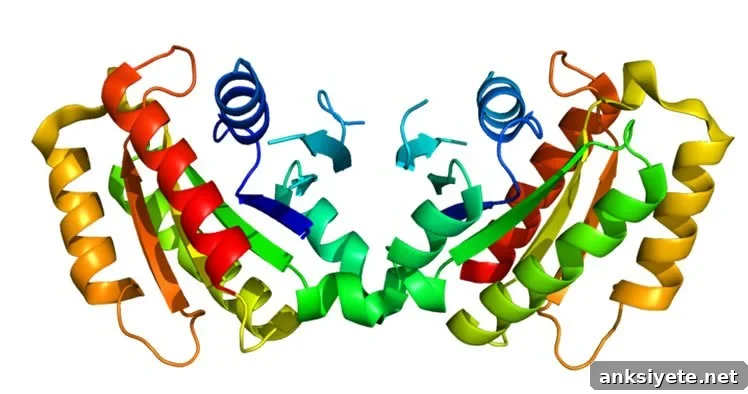
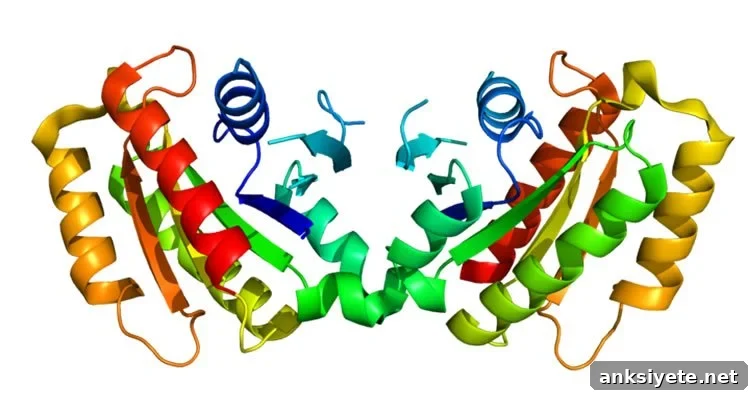
The study identifies a molecular pathway centered on the kinase LRRK2 and the synapse-enriched protein EndophilinA. EndophilinA, previously known for its role in endocytosis, is shown to initiate macroautophagy at presynaptic terminals—a process that clears damaged proteins and membranes. LRRK2 phosphorylates EndophilinA, triggering membrane curvature and recruiting autophagy machinery including Atg3. When this phosphorylation is disrupted by Parkinson’s-linked mutations, presynaptic autophagy is impaired, leading to an accumulation of cellular stress and degeneration of vulnerable dopaminergic neurons.
The authors highlight that EndophilinA connects to at least three Parkinson’s-related genes—LRRK2, Parkin, and Synaptojanin—suggesting that dysfunction in EndophilinA-dependent synaptic macroautophagy may be a common pathological mechanism across different genetic forms of Parkinson’s disease.
Future directions
Building on these findings, the researchers aim to determine how broadly this stress-coping mechanism is disrupted across Parkinson’s patients and models. Their next steps include searching for ways to restore normal EndophilinA phosphorylation or otherwise reactivate presynaptic autophagy. If successful, such interventions could repair damaged synapses and slow or prevent the progression of synaptic dysfunction and neurodegeneration. These therapeutic strategies will require further validation in mammalian models and, ultimately, in patient-derived tissues.
Patrik Verstreken (VIB-KU Leuven): “Our goal is to correct the dysfunction caused by Parkinson’s mutations and identify strategies that re-establish normal synaptic communication. Reactivating the synapse’s coping mechanism could repair damaged synapses, but that will take additional research.”
Source: VIB Flanders
Image Source: NeuroscienceNews.com image is in the public domain
Original Research: Abstract for “A LRRK2-Dependent EndophilinA Phosphoswitch Is Critical for Macroautophagy at Presynaptic Terminals” by Sandra-Fausia Soukup et al., published in Neuron, 2016.
Abstract
A LRRK2-Dependent EndophilinA Phosphoswitch Is Critical for Macroautophagy at Presynaptic Terminals
Highlights
• Autophagosomes at synapses have a distinct morphology.
• EndophilinA functions in both endocytosis and synaptic autophagy by recruiting Atg3.
• LRRK2-dependent phosphorylation of EndophilinA at S75 promotes autophagy.
• Imbalances in EndophilinA phosphorylation accelerate degeneration of dopaminergic neurons.
Summary
Synapses often lie far from the neuron’s soma and must independently cope with proteotoxic stress resulting from intense activity. How presynaptic compartments maintain protein quality control has been unclear. This study shows that EndophilinA, a protein enriched at synapses and previously associated mainly with endocytosis, also induces macroautophagy at presynaptic terminals. EndophilinA-driven autophagy operates at least partly independently of synaptic vesicle endocytosis. Phosphorylation of EndophilinA by the Parkinson’s disease kinase LRRK2 promotes formation of highly curved membranes that serve as docking sites for autophagic factors such as Atg3. Blocking EndophilinA phosphorylation impairs autophagy and accelerates activity-induced neurodegeneration. Because EndophilinA interfaces with multiple Parkinson’s genes (LRRK2, Parkin, Synaptojanin), disruption of synaptic macroautophagy may be a shared disease mechanism.