
Findings could prove helpful in understanding and resolving learning and memory disorders.
Researchers at the University of California, Irvine have demonstrated that specific memories can be generated by directly manipulating cells in the cerebral cortex, a discovery that offers new insight into how memories form and suggests potential paths for treating learning and memory disorders. The study, led by research professor Norman M. Weinberger of UC Irvine’s Department of Neurobiology & Behavior, provides the first direct evidence that altering cortical circuitry can produce a predicted, content-specific memory.
The research team focused on the interaction between sensory input and cholinergic signaling in the brain. In their experiments with rodents, the scientists presented a particular auditory tone while simultaneously stimulating the nucleus basalis, a deep-brain structure known to release the neurotransmitter acetylcholine (ACh). This targeted pairing produced a measurable increase in the number of neurons within the auditory cortex that responded to that specific tone.
To assess whether these cortical changes corresponded to an actual memory trace, the researchers tested the animals the following day with a range of sounds. The animals showed a selective physiological response—an increased respiration rate—when the previously paired tone was played. This behavioral change indicates that the cortical modification had created a lasting, content-specific memory. Importantly, the artificially induced memories exhibited hallmark features of natural memories, including long-term retention.
Weinberger, who is also affiliated with the Center for the Neurobiology of Learning & Memory and the Center for Hearing Research at UC Irvine, emphasized the clinical relevance of the findings: “Disorders of learning and memory affect millions of people worldwide. Demonstrating both the mechanism by which the brain forms specific memories and a method to create those memories directly in cortex could help guide future strategies to prevent, repair, or compensate for memory deficits.”
The study builds on several years of work from Weinberger’s laboratory that implicates the nucleus basalis and acetylcholine in cortical plasticity and memory formation. Earlier findings from the group showed that the strength of a memory correlates with the number of cortical neurons devoted to processing a particular stimulus. The current results extend that framework by showing causal control—manipulating cholinergic input during sensory experience can reshape sensory cortical maps and implant discrete behavioral memory.
These findings carry implications for multiple areas of neuroscience and medicine. They clarify a mechanism by which attention-related neuromodulators like acetylcholine can drive selective cortical reorganization, a process fundamental to learning across sensory modalities. In addition, by establishing that cortical map remodeling can result in predictable behavioral memory, the work suggests experimental approaches to restore or enhance memory when normal encoding processes fail—as in age-related cognitive decline, traumatic brain injury, or certain neurodegenerative conditions.
While the current experiments were performed in animal models and focused on auditory cortex, the basic principles of neuromodulator-driven cortical plasticity are broadly relevant. Future research will be needed to explore translation of these mechanisms to other sensory systems, to complex forms of memory, and to safe therapeutic interventions in humans. Nonetheless, demonstrating that specific memory content can be created by targeted cortical change represents a substantial advance in understanding how the brain encodes experience.
Notes about this neuroscience and memory research
Contributors to the study included UC Irvine postdoctoral scholar Kasia Bieszczad and research associate specialist Alexandre A. Miasnikov. The research was supported by the National Institute on Deafness and Other Communication Disorders, part of the National Institutes of Health (grant DC-010013).
Contact: Andrea Burgess – University of California – Irvine
Source: University of California – Irvine press release
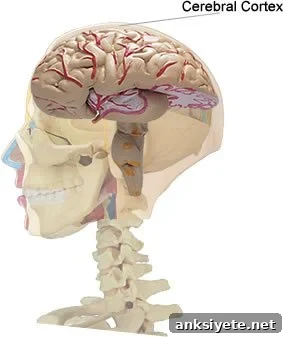
Image Source: The cerebral cortex image is credited to the US Government and is in the public domain.
Original Research: Abstract for “Remodeling sensory cortical maps implants specific behavioral memory” by K.M. Bieszczad, A.A. Miasnikov, and N.M. Weinberger in Neuroscience. Published online August 29, 2013 doi:10.1016/j.neuroscience.2013.04.038