
Ryk and Wnt Signaling Control Neural Remodeling and Improve Recovery After Spinal Cord Injury
Neurobiologists at UC San Diego have shown that the same molecular signals that guide nervous system wiring during development also shape how neurons repair and reorganize after traumatic injury—and that manipulating these signals can enhance functional recovery.
Many people with traumatic spinal cord injuries have incomplete lesions. In such cases, spared neural circuits can sometimes be reconfigured through rehabilitative training to restore lost function, but the molecular mechanisms that enable this plasticity are not well understood. New work from UC San Diego identifies a clear genetic and pharmacological target—Ryk, a receptor for Wnt signaling proteins—that limits adult axon remodeling after injury. Reducing Ryk function allows more effective rewiring and faster recovery of skilled motor control in animal models.
Wnt proteins are a family of signaling molecules essential to cell-cell communication during development. They influence cell fate decisions and the spatial organization of emerging neural networks. Over a decade ago the UC San Diego team discovered that gradients of Wnt proteins guide axon growth in the developing embryo. In healthy adult mice, Wnts and their receptors are largely absent or expressed at very low levels in the spinal cord and motor cortex. However, following spinal cord injury the authors found that Wnt proteins reappear near the lesion and that the Wnt receptor Ryk is upregulated in motor cortex neurons that send axons to the spinal cord.
To determine whether Ryk limits adult axon regrowth and functional remapping after injury, the researchers created a genetically engineered mouse line that permits conditional removal of the Ryk gene from the motor cortex in adulthood. This approach preserves normal development while isolating the adult role of Ryk in response to injury.
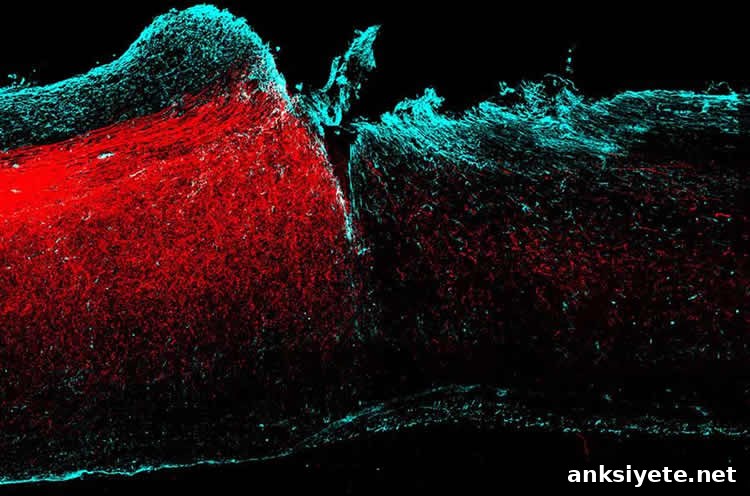
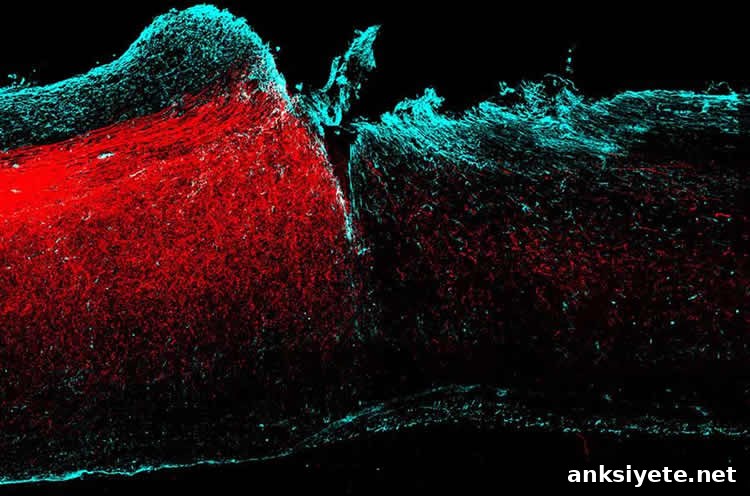
The team modeled a partial spinal cord injury by lesioning the dorsal column at the C5 level, severing descending corticospinal (motor) and ascending sensory axons while leaving surrounding gray matter and other white-matter tracts intact. Because this lesion is incomplete, mice—like humans with partial injuries—retain the potential for recovery when provided with targeted rehabilitative training.
To measure skilled motor recovery, the researchers trained mice on a forepaw reaching-and-grasping task that depends on motor cortex control. Rodents do not naturally use their forepaw to grasp pellets, so proficient performance on this task demonstrates motor cortex-dependent skilled movement. After training to proficiency, the animals received the dorsal column lesion and then underwent rehabilitative training while the investigators tracked recovery of fine motor control.
Mice lacking Ryk in motor cortex showed significantly improved recovery of skilled forepaw use beginning about one month after injury and sustained superior performance for months afterward. In addition to producing larger gains, Ryk deletion accelerated the time course of recovery. These outcomes indicate that the adult expression of Ryk hinders axon remodeling and that reducing Ryk activity promotes functional circuit remapping after spinal cord injury.
To test translational potential, the investigators also developed a monoclonal antibody that blocks Ryk function. Delivery of this Ryk-blocking antibody to injured rats significantly improved recovery on the same reaching-and-grasping task, demonstrating that pharmacological inhibition of Ryk can enhance motor recovery across species and injury models.
Importantly, the study shows that maximal functional recovery requires both molecular intervention and rehabilitative training. Manipulating Ryk alone improved the biological capacity for axon growth and circuit remodeling, but combining Ryk inhibition with targeted training produced the best behavioral outcomes. This combined strategy highlights the need to integrate molecular therapies with rehabilitation when designing treatments for spinal cord injury, stroke, or traumatic brain injury.
The study was led by Yimin Zou in the Neurobiology Section of UC San Diego’s Division of Biological Sciences. Other UC San Diego co-authors include Edmund Hollis, Ting Yu, Chin-Chin Lu, Ariela Haimovich, Kristine Tolentino, Alisha Richman and Maysam Pessian. Additional collaborators were Shih-Hsiu Wang and Alex Kolodkin from The Johns Hopkins School of Medicine.
Funding: Research support came from the National Institutes of Health (RO1 NS047484, R21 NS081738), Wings for Life Foundation and the International Foundation for Research in Paraplegia.
Source: Kim McDonald – UCSD
Original research: Hollis et al., “Ryk controls remapping of motor cortex during functional recovery after spinal cord injury,” Nature Neuroscience. Published online April 11, 2016. DOI: 10.1038/nn.4282