
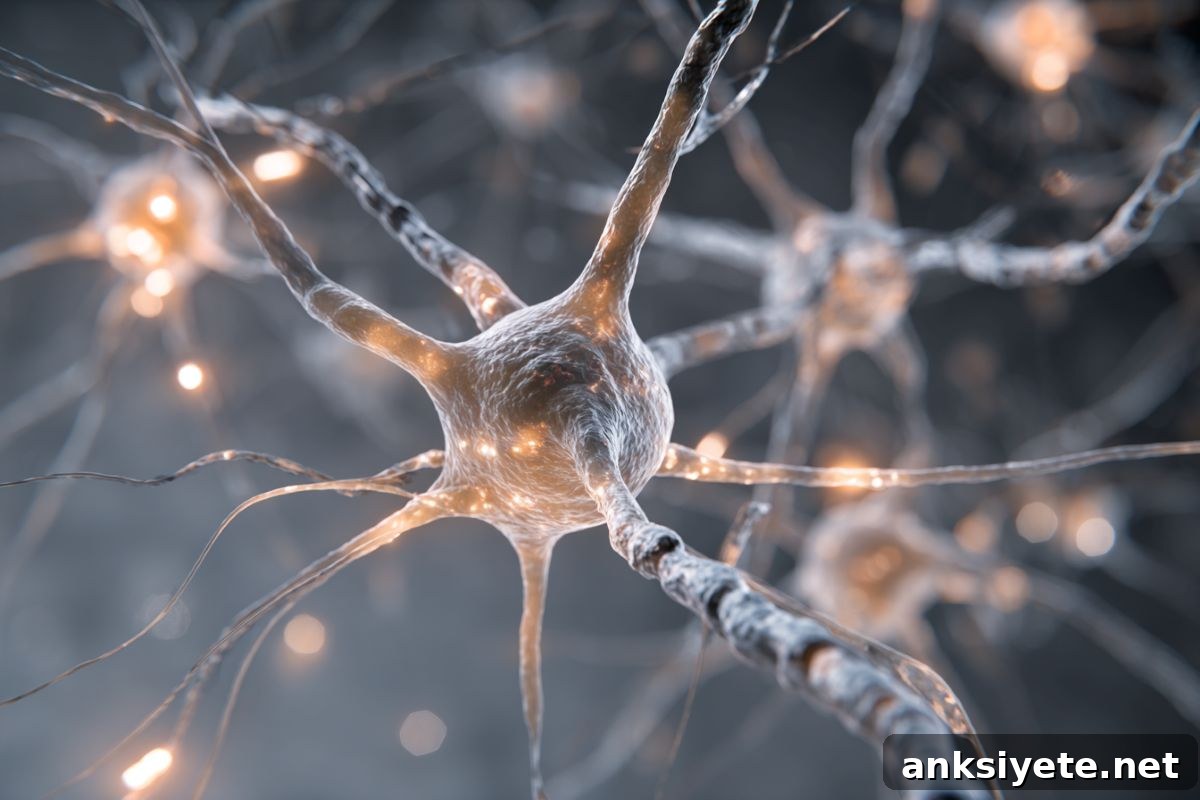
Summary: Engineers report a major advance in bio-electronics: they have printed artificial neurons capable of directly communicating with biological brain tissue. The team produced flexible, low-cost devices that generate electrical signals realistic enough to trigger responses in mouse brain slices, demonstrating a new level of biocompatibility and pointing toward improved neuroprosthetics and more energy-efficient neuromorphic hardware.
Unlike conventional silicon chips, these printed neurons emulate the brain’s energy efficiency and complex signaling. That combination could enable brain–machine interfaces and AI hardware that require far less power and cooling than current data centers.
Key findings
- Biological compatibility: In experiments with the lab of Indira M. Raman, electrical spikes from the printed devices reliably elicited responses from neurons in mouse cerebellar slices, behaving like biological inputs.
- Exceptional energy efficiency: The human brain is roughly five orders of magnitude more energy-efficient than typical digital computers. Devices that mimic its signaling could dramatically reduce power and cooling demands for AI and large-scale data processing.
- Structural realism: Rather than the billions of identical, fixed transistors on silicon chips, these printed neurons are heterogeneous and dynamic, resembling the soft, three-dimensional networks of biological nervous tissue.
- Additive manufacturing benefits: The aerosol-jet printing process places material only where needed, lowering cost and material waste and simplifying scalable production of neuromorphic components.
Source: Northwestern University
Northwestern engineers printed artificial neurons that can interact directly with living brain tissue.
A Northwestern University team demonstrated flexible, printed devices that generate neuron-like electrical activity. When coupled to slices of mouse cerebellum, the artificial neurons produced voltage spikes that matched biologically relevant timing and shapes and reliably evoked activity in living neurons. This is an important proof of concept for biohybrid interfaces and neuromorphic electronics.
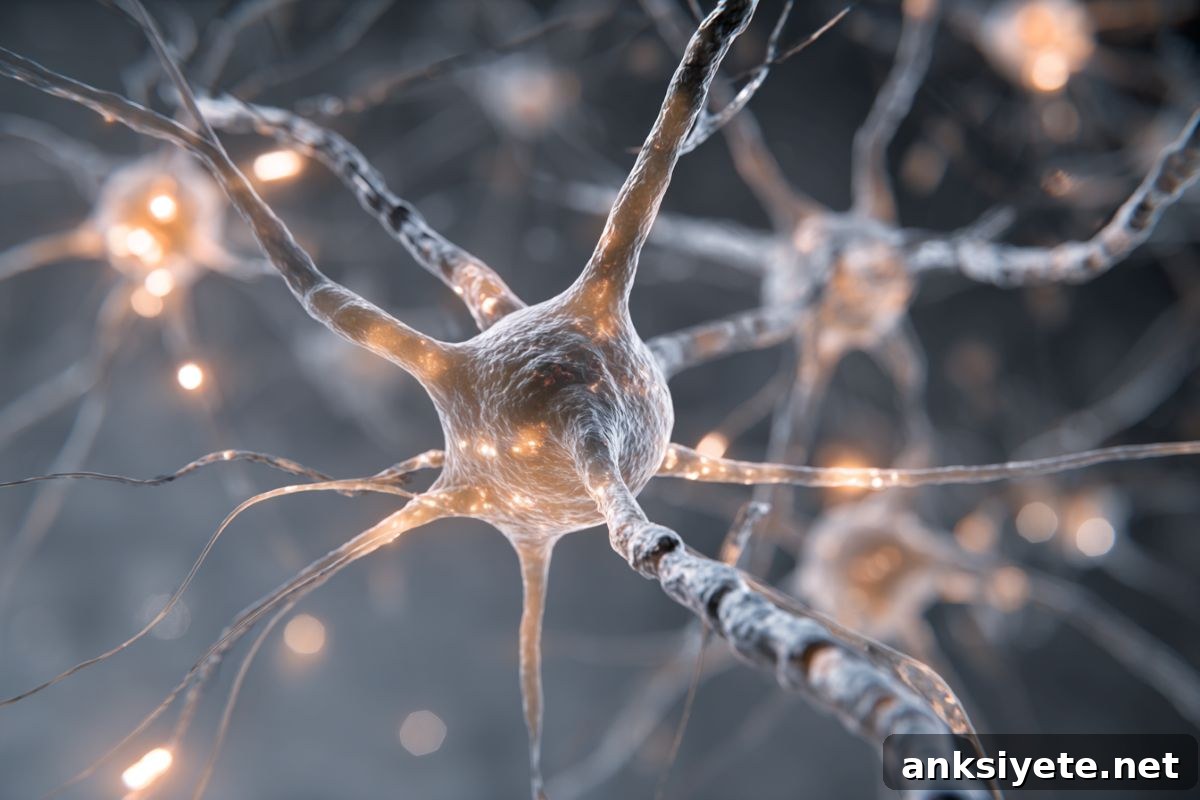
This work advances electronics that can communicate with the nervous system and lays groundwork for devices such as improved cochlear implants, visual prosthetics and implantable interfaces to restore movement. It also suggests a path to brain-like computing systems that perform complex operations using far less energy than conventional AI hardware.
The study is scheduled for publication in Nature Nanotechnology. Mark C. Hersam, who led the project, emphasized the energy challenge facing modern AI: training larger models requires immense power. Because biological brains operate far more efficiently, creating hardware that mimics neural signaling is a promising route to reduce the energy and water footprint of large-scale computing.
Hersam holds appointments across Northwestern’s engineering, medicine and science schools and co-led the study with Vinod K. Sangwan.
From rigid silicon to dynamic neural architectures
Modern computing scales complexity by packing billions of identical transistors onto flat silicon wafers. Those components are uniform and fixed after fabrication. The brain is fundamentally different: it relies on diverse neuron types organized in soft, three-dimensional networks that continually change as connections form and reorganize. To approach that flexibility, new materials and manufacturing techniques are required.
Previous artificial neurons often produced simplified signals that required large, power-hungry networks to emulate biological behavior. The Northwestern team focused on creating devices that reproduce a wider range of neural dynamics in compact, printed form.
Turning an imperfection into functional complexity
The researchers formulated electronic inks from nanoscale flakes of molybdenum disulfide (MoS2) as the semiconductor and graphene as the conductor. Using aerosol jet printing, they deposited these inks onto flexible polymer substrates to build memristive nanosheet networks.
A key innovation was exploiting partial decomposition of the polymer stabilizer in the ink. Rather than fully removing the polymer after printing, controlled decomposition during device operation forms a localized conductive filament. Constriction of current into this narrow region produces sudden, neuron-like electrical responses and enables a broad repertoire of spiking behaviors.
These printed devices generate not only single spikes but also continuous firing and complex bursting patterns that closely resemble biological spiking. Capturing this diversity means each printed neuron can encode more information and perform richer computations, potentially reducing the number of components needed for neuromorphic systems and improving efficiency.
Biological testing and performance
To validate bio-interfacing, the team collaborated with Indira M. Raman’s neurobiology lab. Applying artificial voltage spikes to mouse cerebellar slices, they observed that the timing and duration of the generated spikes matched physiological characteristics and reliably evoked responses in Purkinje neurons and associated circuits.
Hersam noted that prior organic or metal-oxide artificial neurons were either too slow or too fast. The printed MoS2/graphene devices operate in an intermediate temporal range that aligns with biological signaling, enabling direct interaction with living neurons.
The printed memristive networks also showed robust electrical performance, supporting oscillatory and spiking circuits with tunable frequencies up to 20 kHz and stable operation over more than one million cycles, according to the authors’ characterization.
Manufacturing advantages include low cost, scalability, and reduced material waste because the additive printing process deposits material only where required. Together with improved energy efficiency, these features make printed neuron technology attractive for future neuroprosthetics and neuromorphic computing.
Funding: The study, titled “Multi-order complexity spiking neurons enabled by printed MoS2 memristive nanosheet networks,” was supported by the National Science Foundation.
Key questions answered
A: Not exactly. The printed devices act as electrical translators or interfaces that can speak the same electrical language as biological neurons. They could improve cochlear implants, visual prosthetics, and brain–machine interfaces that let people control assistive devices.
Q: Why is wasting less power important for AI?
A: Modern AI consumes enormous amounts of energy for training and inference. Hardware that mimics the brain’s efficiency could deliver powerful, data-intensive computing while reducing electricity and cooling demands and the associated environmental impact.
Q: How do these devices differ from software neural networks?
A: Software “neural networks” are mathematical models running on conventional hardware. These printed devices are physical neural elements—flexible, memory-bearing components that emulate biological wetware more directly than rigid silicon circuits.
Editorial notes
- This article was edited by a Neuroscience News editor.
- The journal paper was reviewed in full.
- Additional context was added by staff.
About this neurotech research news
Author: Amanda Morris ([email protected])
Source: Northwestern University
Contact: Amanda Morris – Northwestern University
Image: Image credited to Neuroscience News
Original research: Closed access. “Printed MoS2 memristive nanosheet networks for spiking neurons with multi-order complexity” by Shreyash S. Hadke et al., Nature Nanotechnology. DOI: 10.1038/s41565-026-02149-6
Abstract (summary)
The study demonstrates aerosol-jet-printed memristive networks of MoS2 nanosheets with thermally activated filamentary switching that enable volatile threshold behavior in fully printed graphene/MoS2/graphene devices on flexible substrates. Thermal imaging and circuit modeling show that current-constricted filaments formed by Joule heating govern nonlinear switching dynamics. These printed memristors support oscillatory and spiking neuron circuits with tunable frequencies up to 20 kHz and stable operation for more than 106 cycles. Simple neuristor circuits realize first-, second- and third-order spiking complexity—integrate-and-fire behavior, spike latency, tonic firing, class 1 excitability, tonic bursting and phasic dynamics. Generated spike waveforms match physiological timescales and stimulate Purkinje neurons in mouse cerebellar slices. The results establish printed nanosheet memristive networks as a scalable platform for bio-realistic neuromorphic hardware and flexible brain–machine interfaces.