Psilocybin Boosts Mood Without a Hallucinogenic Trip

featured 108398

Summary: Researchers have identified two central brain mechanisms that appear to underlie psilocybin’s durable antidepressant effects: a specific pyramidal cell type in the medial frontal cortex and the serotonin 5-HT2A receptor. The new study points to pyramidal tract neurons as crucial mediators of psilocybin’s therapeutic action, while implicating the 5-HT2A receptor in both the therapeutic … Read more

How to Predict Psychosis Before Symptoms Appear

featured 100000

Summary: Researchers have developed a machine-learning classifier that uses structural MRI scans to identify people at high risk of developing psychosis. Trained on multisite data, the model reached 85% accuracy on its training set and 73% accuracy on independent test data. This approach could enable earlier, more targeted intervention and improve outcomes for individuals at … Read more

First Confirmed Case of CTE Without Head Trauma

featured 39212

First Known Case of CTE Found in Patient Without History of Head Trauma Summary: Researchers report evidence of chronic traumatic encephalopathy (CTE) in the brain of a patient who had no documented history of head trauma or concussion. Source: University Health Network Researchers at Toronto Western Hospital’s Canadian Concussion Centre (CCC) have identified CTE pathology … Read more

Wearable Smart Sticker Detects Emotions Under the Skin

featured 108946

Summary: Researchers have developed a stretchable, rechargeable sticker-style wearable that detects genuine emotional states by monitoring physiological signals such as heart rate, skin temperature, humidity and blood oxygen. The flexible patch transmits real-time, wireless data to mobile devices and cloud services, enabling clinicians to assess emotional well-being remotely even when facial expressions are misleading. This … Read more

Do Addictive Personalities Exist? Signs, Causes, and Facts

featured 59922

Summary: Researchers explore the psychological traits and genetic factors that help explain why some people are more likely than others to develop addiction-like behaviors. Source: The Conversation Is there an “addictive personality”? Many of us know someone who becomes deeply involved in certain behaviors, and it’s common to hear that they must have an “addictive … Read more

Virtual Reality May Treat Autism, Schizophrenia and Parkinson’s

featured 55046

Summary: Virtual reality can be used to recalibrate time perception and sensorimotor actions. Researchers suggest this approach may have therapeutic potential for conditions such as autism spectrum disorder, Parkinson’s disease and schizophrenia. Source: University of Waterloo Playing games in virtual reality (VR) may offer a promising tool to help treat neurological disorders that alter how … Read more

How to Live to 115, According to Research

featured 110133

Summary: New findings from longevity research emphasize that lifestyle choices — not just genetics — play a central role in living longer and healthier lives. While exceptional individuals such as 115-year-old Ethel Caterham may benefit from favorable genes, evidence increasingly points to daily habits like physical activity, diet, sleep and stress management as major determinants … Read more

How Brain Activity Differs in Men vs Women with Obesity

featured 40975

Summary: A new UCLA study reports that men and women show different patterns of brain activity associated with overeating and obesity. Source: UCLA. New research indicates structural and connectivity changes in brain reward networks linked to obesity, and that these changes differ by sex. Researchers at UCLA examined how elevated body mass index (BMI) correlates … Read more

One Brain Area Links Mood, Heart Disease, and Therapy Response

featured 69000

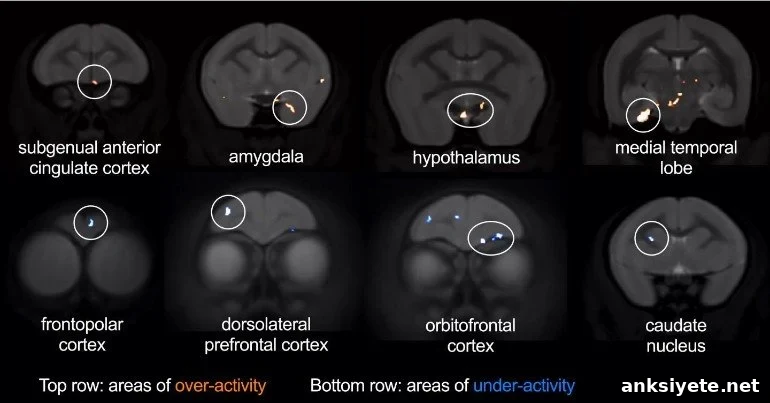
Summary: Overactivity in the subgenual anterior cingulate cortex (sgACC) appears to drive key symptoms of depression, anxiety and cardiovascular dysregulation. Source: University of Cambridge New research identifies over-activity in a single brain region, the subgenual anterior cingulate cortex (sgACC), as a driver of multiple symptoms seen in mood and anxiety disorders. The study also shows … Read more

How Prenatal Sound Exposure Shapes Fetal Hearing Development

featured 83088

Summary: Muffled, low-frequency sounds heard in the womb appear to prime the developing brain for later auditory tasks, suggesting that degraded prenatal input supports healthy auditory development. Source: MIT Fetuses begin to detect some sounds around 20 weeks of gestation, but most of this prenatal input is low-frequency and heavily muffled by amniotic fluid and … Read more