Summary: New findings show that phagocytes associated with brain blood vessels do not reach full maturity until after birth, overturning the prior belief that they finish maturing during embryonic development.
Source: University of Freiburg
The passage of substances into the brain is tightly regulated. Researchers at the Faculty of Medicine, University of Freiburg, have investigated a population of phagocytic immune cells that coat cerebral blood vessels and help maintain the blood–brain barrier.
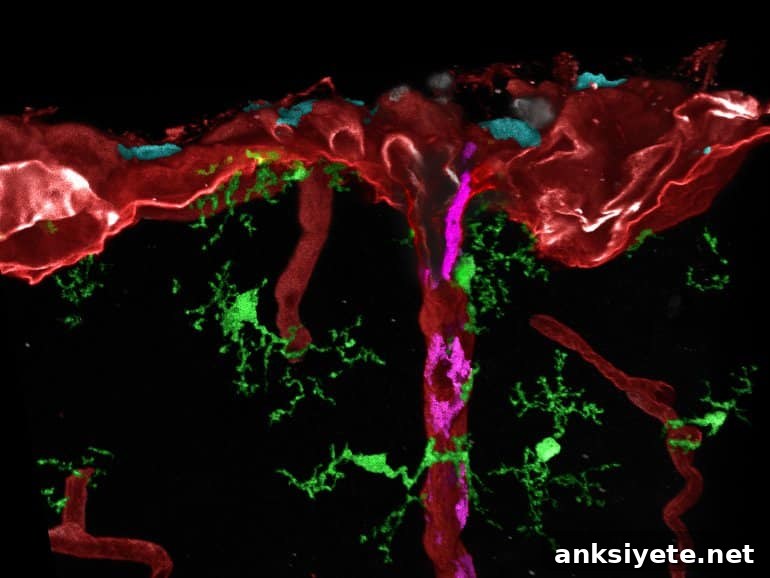
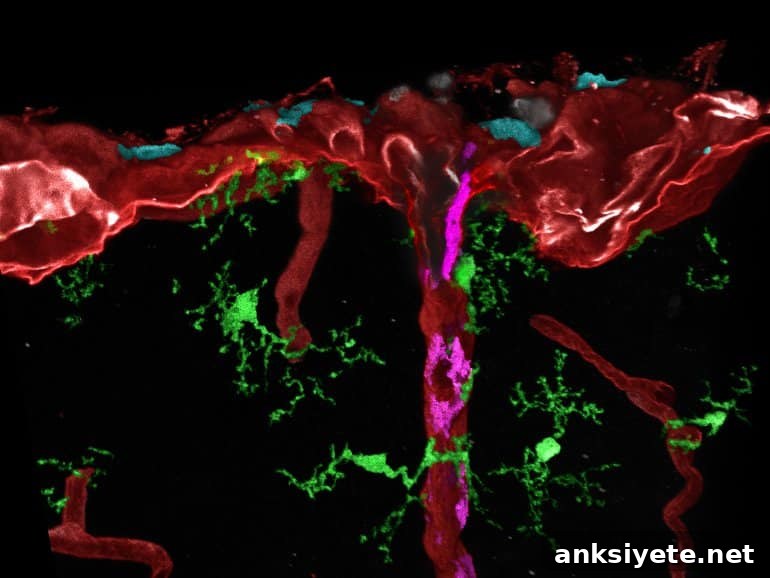
The team from the Institute of Neuropathology at the Medical Center—University of Freiburg, together with international collaborators, demonstrate that these vascular-associated phagocytes follow a stepwise developmental program and only complete their maturation after birth.
This finding contradicts earlier assumptions that maturation was finished during embryogenesis.
Their work, published in Nature on April 20, 2022, was first carried out in genetically modified mouse lines and subsequently validated in human tissue samples. The results offer important insight into how these cells develop and into potential new approaches to treat brain disorders.
“We showed that the immune cells we examined migrate from the meninges to the brain’s blood vessels shortly before birth and then mature at those vascular sites. Maturation appears to continue for weeks after birth and may partly explain why the neonatal brain is particularly vulnerable,” says Prof. Dr. Marco Prinz, Medical Director of the Institute of Neuropathology at the Medical Center—University of Freiburg, head of the Collaborative Research Center/Transregio 167—NeuroMac, and a member of the Cluster of Excellence CIBSS (Centre for Integrative Biological Signalling Studies) at the University of Freiburg.
“The late maturation of these phagocytes, often referred to as macrophages, surprised us because the precursor cells are present in the brain well before birth,” Prinz adds.
The researchers also show for the first time that blood vessels themselves — as structural and signaling elements in the brain — provide essential cues that guide the normal development of these macrophages.
The blood–brain barrier is formed by cells that line cerebral blood vessels and tightly control which substances can enter brain tissue. This barrier protects the brain from harmful molecules and pathogens, but its function can be compromised during infections, certain brain tumors or oxygen deprivation.
Relevance for Alzheimer’s, multiple sclerosis and other diseases
“Beyond maintaining the blood–brain barrier, the vascular-associated immune cells determine what reaches neuronal tissue from the blood, clear pathogens and cellular debris, and help prevent excessive inflammation. They are implicated in processes underlying cancer, Alzheimer’s disease and multiple sclerosis,” Prinz explains. “Understanding when and how these cells mature could therefore be crucial for developing targeted therapies for a range of neurological conditions.”
Color-coded cells, single-cell gene analysis, and high-resolution imaging
To trace cell origins and maturation, the research team led by first authors Dr. Takahiro Masuda (Kyushu University, Japan) and Dr. Lukas Amann (Institute of Neuropathology, Medical Center—University of Freiburg) generated and used several newly developed mouse lines. These genetic tools allowed selective labeling of distinct brain macrophage types and their progenitors, enabling their precise visualization across brain regions with high-resolution microscopy.
In parallel, the team performed single-cell transcriptomic analyses to measure gene expression patterns in individual cells and thereby determine their stage of maturation. These molecular profiles, combined with fate-mapping experiments and cell-specific mutant analyses, revealed the timing and signaling mechanisms that define distinct macrophage subsets.
“We validated our observations in human brain samples, which strengthens the relevance of the mouse-based findings to human biology,” says Dr. Lukas Amann. “This comprehensive picture of timing and molecular control opens the door to exploring new, more specific therapeutic strategies for brain diseases.”
About this neuroscience research news
Author: Press Office
Source: University of Freiburg
Contact: Press Office – University of Freiburg
Image: The image is credited to University of Freiburg / Dr. Lukas Amann
Original Research: Closed access.
“Specification of CNS macrophage subsets occurs postnatally in defined niches” by Lukas Amann et al., Nature
Abstract
Specification of CNS macrophage subsets occurs postnatally in defined niches
Tissue-resident macrophages of the central nervous system (CNS) — including parenchymal microglia and CNS-associated macrophages (CAMs) such as meningeal and perivascular macrophages — form an endogenous innate immune network that acts as a first line of defense during infection or injury.
Previous models proposed that microglia and all CAM subsets arise from prenatal yolk-sac-derived erythromyeloid progenitors. However, precise lineage relationships, the transcriptional programs that drive subset specification, and the local molecular signals that shape CAM development in situ have remained poorly defined.
Using fate-mapping approaches, single-cell profiling and targeted cell-type mutants, the study shows that only meningeal macrophages and microglia share a common prenatal progenitor. In contrast, perivascular macrophages develop from perinatal meningeal macrophages only after birth, in a process that depends on integrin signaling and requires interactions with arterial vascular smooth muscle cells.
Collectively, these data outline a precisely timed, niche-specific program for establishing distinct macrophage subsets in the CNS, highlighting postnatal maturation as a critical phase in the formation of vascular-associated immune populations.