
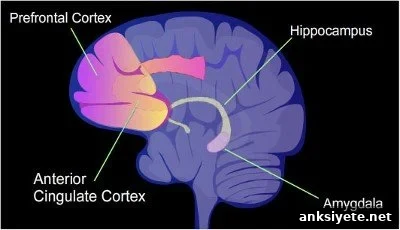
Targeted stimulation of the brain’s prefrontal cortex shows promise as a treatment for addiction
Could treating drug addiction one day be as direct as switching activity on or off in a targeted brain region? New research in rats indicates that stimulating the prefrontal cortex can reduce compulsive cocaine-seeking behavior, pointing to a potential strategy for changing addictive behavior more broadly. The study, conducted by researchers at the National Institute on Drug Abuse (NIDA) Intramural Research Program and the University of California, San Francisco, was published in Nature.
“This exciting study offers a new direction of research for the treatment of cocaine and possibly other addictions,” said NIDA Director Dr. Nora D. Volkow. “We already knew, mainly from human brain imaging studies, that deficits in the prefrontal cortex are involved in drug addiction. Now that we have learned how fundamental these deficits are, we feel more confident than ever about the therapeutic promise of targeting that part of the brain.”
Compulsive drug use — continuing to take drugs despite clear negative consequences — is central to human addiction and difficult to treat. To model this, researchers trained rats to press levers to self-administer cocaine. Some animals developed compulsive cocaine-seeking behavior, continuing to press for cocaine even when the action was followed by a mild foot shock. Other rats did not show this compulsive response.
The team examined neuron firing patterns from the prefrontal cortex in both groups and found that the addicted rats exhibited more pronounced functional deficits in this brain region. To test causality, researchers used optogenetics, a technique that controls genetically modified neurons with light, to either increase or decrease activity in the prefrontal cortex.
When researchers activated prefrontal cortex neurons in addicted rats — effectively reversing the cocaine-induced hypoactivity — the animals reduced their cocaine-seeking behavior. Conversely, when they inhibited the same neurons in non-addicted rats, creating a functional deficit similar to that seen after cocaine exposure, those animals increased compulsive cocaine-seeking. These manipulations demonstrate a direct cause-and-effect link between prefrontal cortex activity and compulsive drug-seeking in this model.
“This is the first study to show a cause-and-effect relationship between cocaine-induced brain deficits in the prefrontal cortex and compulsive cocaine-seeking,” said Dr. Billy Chen, first author of the study. “These results provide evidence for a cocaine-induced deficit within a brain region that is involved in disorders characterized by poor impulse control, including addiction.”
Dr. Antonello Bonci, NIDA scientific director and senior author, emphasized the translational potential of the findings: “What I find to be an exceptional breakthrough is that our results can be immediately translated to clinical research settings with humans, and we are planning clinical trials to stimulate this brain region using non-invasive methods. By targeting a specific portion of the prefrontal cortex, our hope is to reduce compulsive cocaine-seeking and craving in patients.”
The study highlights the prefrontal cortex as a meaningful target for interventions aimed at restoring control over drug-seeking and decision-making processes that are disrupted by cocaine. Because the prefrontal cortex is implicated in impulse control and executive function, therapeutic strategies that normalize its activity could potentially help treat not only cocaine addiction but other conditions marked by impaired self-control.
In 2011, an estimated 1.4 million Americans age 12 and older had used cocaine in the past month, according to the National Survey on Drug Use and Health. Despite the scale of cocaine use and the burden of addiction, there are currently no medications approved by the U.S. Food and Drug Administration specifically for treating cocaine addiction, underscoring the need for new approaches.
Notes about this neurology and addiction research
Contact: Press Office – NIH / National Institute on Drug Abuse (NIDA)
Source: NIH / National Institute on Drug Abuse press release about the study
Image Source: Brain diagram highlighting the prefrontal cortex, credited to the NIH (public domain)
Original Research: Abstract for “Rescuing cocaine-induced prefrontal cortex hypoactivity prevents compulsive cocaine seeking” by Billy T. Chen, Hau-Jie Yau, Christina Hatch, Ikue Kusumoto-Yoshida, Saemi L. Cho, F. Woodward Hopf, and Antonello Bonci, published in Nature, April 3, 2013 (doi:10.1038/nature12024).