
Summary: Cannabidiol (CBD) blocks lysophosphatidylinositol (LPI) from amplifying neural signals in the hippocampus. LPI weakens the signals that normally restrain seizures, offering an explanation for CBD’s effectiveness against many treatment-resistant epilepsies.
Source: NYU
A new study identifies a previously unrecognized mechanism by which cannabidiol (CBD), a non-euphoric cannabis-derived compound, reduces seizures in several treatment-resistant pediatric epilepsies.
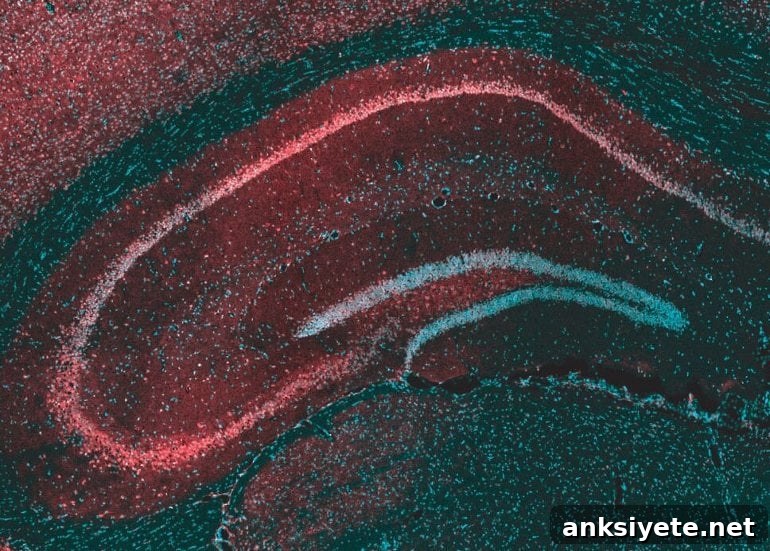
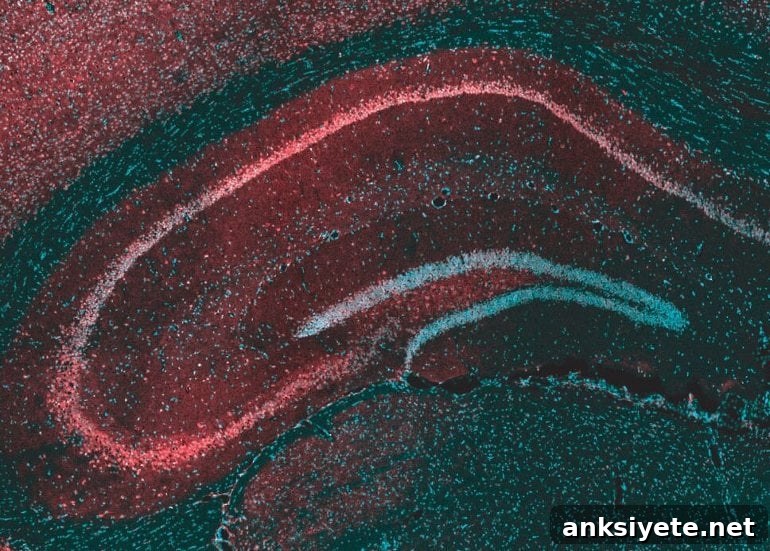
Researchers at NYU Grossman School of Medicine report that CBD prevents a signaling molecule called lysophosphatidylinositol (LPI) from enhancing neural activity in the hippocampus, a brain region commonly involved in seizure initiation and spread. LPI is produced by neurons and under normal conditions can amplify nerve signaling, but in disease states this amplification can be hijacked to promote seizures.
Published online in Neuron on February 13, the study confirms prior evidence that CBD blocks LPI’s ability to boost excitatory transmission. Importantly, the new work shows for the first time that LPI also reduces inhibitory signaling—the synaptic braking mechanism that normally counters excessive excitation—thereby creating a dual threat to neural balance. By blocking both actions, CBD helps restore the excitatory–inhibitory (E:I) balance and reduce hyperactivity that leads to seizures.
“These findings deepen our understanding of a central seizure-promoting mechanism and point to new directions for treatment development,” said Richard W. Tsien, chair of the Department of Physiology and Neuroscience at NYU Langone Health and corresponding author of the study.
“Beyond explaining how CBD can counter seizures, the study also sheds light on how neuronal circuits maintain balance—insights that may be relevant to other conditions, such as autism and schizophrenia,” Tsien added.
Disease-causing loop
Neurons transmit information by firing electrical pulses along axons to synapses, where neurotransmitters cross the small gap to influence the next cell. Signals that increase the likelihood of firing are called excitatory, while signals that decrease firing are inhibitory. Proper brain function depends on a dynamic balance between excitation and inhibition; when excitation dominates, seizures can result.
Using multiple rodent models, the research team measured electrical currents with fine electrodes and probed LPI’s role by removing its primary receptor genetically or by tracking LPI release after induced seizures. Their electrophysiological and molecular experiments revealed how LPI acts at both sides of the synapse to increase network excitability.
At excitatory presynaptic terminals, LPI binds the G-protein-coupled receptor GPR55, triggering intracellular calcium release and promoting glutamate release, the main excitatory neurotransmitter. At inhibitory postsynaptic sites, LPI—again acting through GPR55—disrupted the clustering and availability of essential inhibitory proteins, including GABAA receptor γ2 subunits and gephyrin, thereby weakening inhibition. The combined effect is a two-pronged increase in neuronal excitability.
The investigators showed that either deleting GPR55 genetically or pretreating animals with plant-derived CBD prevented LPI’s effects on both excitatory and inhibitory synaptic transmission. Prior research had implicated GPR55 as a CBD target; this study provides a clearer mechanistic picture of how blocking LPI–GPR55 signaling can reduce seizures.
The authors propose a harmful positive-feedback loop: seizures elevate LPI and GPR55 expression, which in turn promotes more seizures and further increases LPI and receptor levels. Interrupting this loop with CBD could therefore reduce recurrent seizures. The researchers note, however, that additional studies are required to validate this model in clinical contexts.
The study focused on plant-derived CBD, but LPI is part of a broader lipid signaling network that includes endogenous cannabinoids such as 2‑arachidonoylglycerol (2‑AG). While LPI amplifies incoming electrical signals, endocannabinoids like 2‑AG generally act homeostatically to reduce neurotransmitter release when activity rises. Enzymes can interconvert LPI and 2‑AG, suggesting the brain might regulate excitability by shifting lipid signaling between pro-excitatory and restorative states.
“In principle, the brain could toggle between pro-excitatory LPI and the compensatory actions of 2‑AG to control circuit activity,” said first author Evan Rosenberg, Ph.D., a postdoctoral fellow in Tsien’s lab.
From a therapeutic standpoint, the authors suggest several paths for future work: developing drugs that inhibit enzymes responsible for LPI production, promoting conversion of LPI into 2‑AG, or using LPI levels as a biomarker to predict seizure risk or response to CBD. Each approach could offer additional strategies for controlling seizures.
About this neuropharmacology and epilepsy research news
Author: Press Office
Source: NYU
Contact: Press Office – NYU
Image: The image is credited to Tsien et al, Cell Press
Original Research: Open access.
“Cannabidiol modulates excitatory-inhibitory ratio to counter hippocampal hyperactivity” by Richard Tsien et al. Neuron. DOI: 10.1016/j.neuron.2023.01.018
Abstract
Cannabidiol modulates excitatory-inhibitory ratio to counter hippocampal hyperactivity
Highlights
- LPI, a ligand for GPR55, regulates the excitatory:inhibitory (E:I) ratio in the hippocampus.
- LPI weakens postsynaptic inhibition by dispersing GABAA receptor γ2 subunits and gephyrin clusters.
- Acute seizures increase GPR55 and LPI levels, creating a positive feedback loop that can promote recurrent seizures.
- CBD reduces the elevation of the E:I ratio and dampens hippocampal hyperexcitability, countering seizure recurrence.
Summary
Cannabidiol (CBD), a non-euphoric component of cannabis, has demonstrated seizure-reducing effects across several pediatric epilepsies, yet its precise mechanisms remained incompletely understood. One model posits that CBD acts at glutamatergic axon terminals to block the pro-excitatory actions of the endogenous lipid LPI at the G-protein-coupled receptor GPR55. This study extends that model by showing that LPI–GPR55 signaling also disrupts inhibitory synaptic function, thereby shifting the hippocampal E:I ratio toward hyperexcitability.
The experiments reported here show that LPI transiently increases presynaptic glutamate release probability and evoked excitatory strength in hippocampal CA3–CA1 circuits while simultaneously reducing inhibitory postsynaptic strength through loss of GABAA receptor γ2 and gephyrin puncta. These effects are blocked by CBD pretreatment and are absent in animals lacking GPR55. Acute chemically induced seizures raise both GPR55 and LPI, and chronic epileptogenesis potentiates LPI’s excitatory actions. Together, the results support a model in which CBD’s anti-seizure effects arise from blocking LPI’s bidirectional synaptic actions and helping restore circuit balance.