
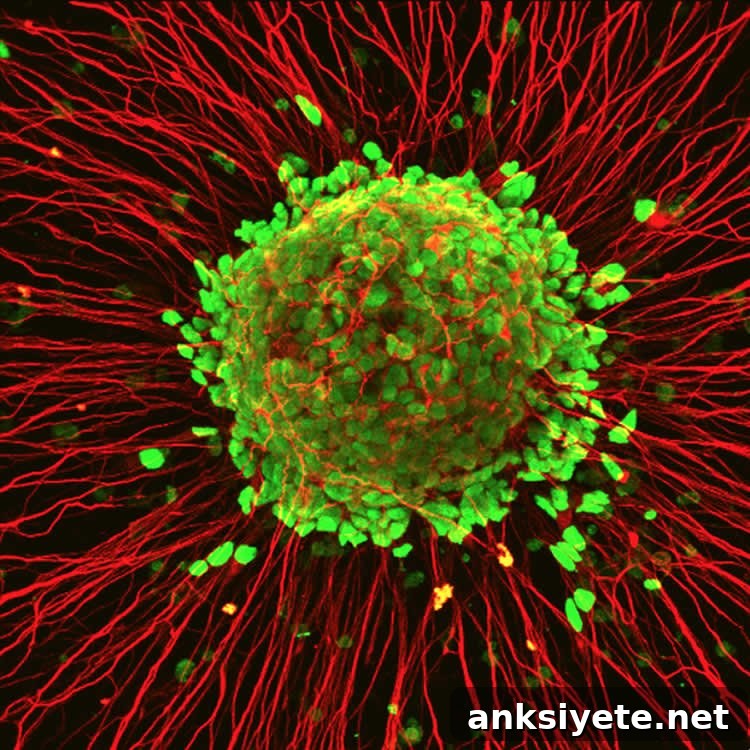
Researchers at the University of Wisconsin–Madison have identified a misstep in protein production inside motor neurons that may be a key initiating event in amyotrophic lateral sclerosis (ALS).
ALS, also known as Lou Gehrig’s disease, is a progressive neurodegenerative disorder that leads to paralysis and, ultimately, death. Tens of thousands of people in the United States live with ALS, and despite advances in genetics and animal models, effective treatments remain elusive.
Rather than relying solely on animal models or on studying a single known genetic cause, Su-Chun Zhang and his team at the Waisman Center have taken a different route: they study human motor neurons grown in the laboratory that were derived from patients’ cells. These motor neurons, the specialized nerve cells that instruct muscles to contract, are the primary cell type lost in ALS.
About a decade ago, Zhang and colleagues were the first to generate human motor neurons from embryonic stem cells. More recently they have refined those methods to convert adult skin cells into induced pluripotent stem (iPS) cells and then differentiate those iPS cells into human motor neurons. Because iPS-derived neurons retain many features of the donor, they provide a faithful disease model for studying ALS mechanisms in human tissue.
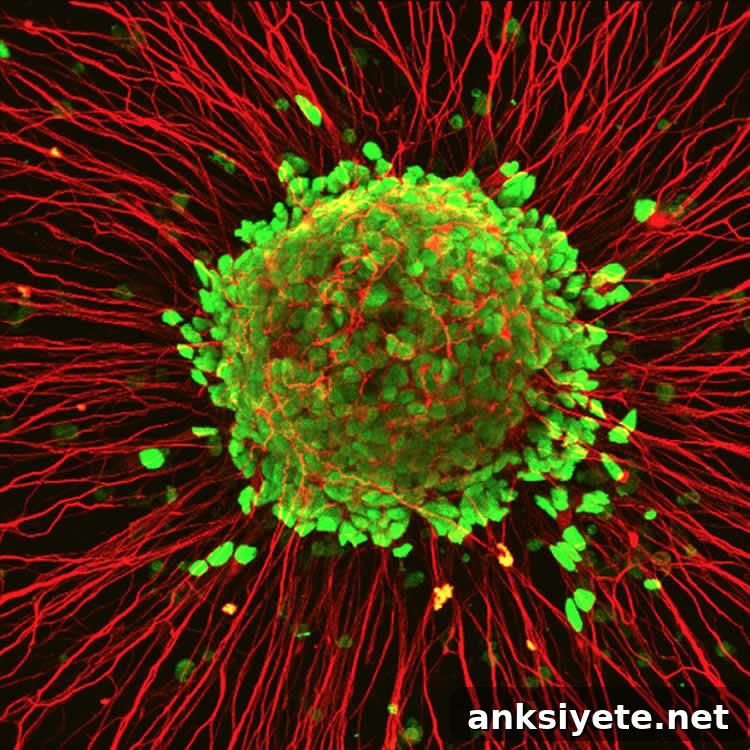
Using large numbers of patient-derived motor neurons, Zhang’s group focused on neurofilaments — the protein polymers that form an internal transport and structural network within nerve cells. Neurofilaments serve both as the cell’s scaffold and as a logistics system: they help carry neurotransmitters, mitochondria and other essential cargo between the neuron’s cell body and its distant axon terminals.
Motor neurons are unusually long; those that control muscles in the lower leg can extend several feet and must reliably transport molecular cargo across that distance. When transport breaks down, communication with muscle is lost and paralysis follows. Clinically, ALS often first appears as weakness or paralysis in the feet and legs, consistent with failure of long motor axons.
Neuropathologists have long observed tangles of abnormal protein along damaged axons in ALS and other neurodegenerative diseases. What Zhang and his collaborators have uncovered is an upstream explanation for those tangles: an imbalance in the production and regulation of the neurofilament protein subunits. Specifically, a shortage or misregulation of one of the three core neurofilament proteins causes the remaining subunits to assemble improperly, forming aggregates that block transport and trigger a cascade of degeneration.
“Neurofilaments are like the studs and rafters of a house,” Zhang explains. “They form the backbone of the cell but must be constantly built, transported, remodeled and recycled. If formation or transport is disrupted, the pieces clump together and the system fails.”
Because the research uses human motor neurons, it allows direct observation of early pathological events that would be invisible in end-stage autopsy tissue. Autopsy findings document tangles but cannot reveal when or how they first formed. In contrast, the iPS-derived neurons enabled the team to observe that the misregulation occurs very early in the life of motor neurons reprogrammed from patient skin cells. That early timing supports the idea that neurofilament subunit misregulation is a causal event rather than a late consequence of cell death.
Importantly, the investigators also demonstrated a proof-of-concept rescue. By correcting the gene expression imbalance that produced the faulty neurofilament proteins, they restored normal appearance and behavior to the cultured motor neurons. In other words, editing or otherwise correcting the defective step in neurofilament production reversed the pathological features in the dish.
These findings point to a concrete therapeutic strategy: target the early step in neurofilament production or balance to prevent the formation of tangles and preserve axonal transport. To that end, Zhang reports that high-throughput small-molecule screening facilities at UW–Madison are already testing libraries of candidate compounds against millions of lab-grown motor neurons produced from patient-derived stem cells. Large chemical libraries can be screened rapidly to find compounds that restore neurofilament balance and protect motor neuron function.
Beyond ALS, Zhang notes that related protein tangles appear in Alzheimer’s and Parkinson’s diseases, suggesting shared pathways of neurodegeneration. Studying ALS with patient-derived neurons may therefore illuminate mechanisms relevant to multiple disorders.
The study described here strengthens the case that misregulation of neurofilament subunits is an early and potentially druggable trigger of ALS. By combining patient-derived iPS cells, detailed cell biology and targeted genetic correction, this work provides both new insight and actionable routes toward therapy.
Contact: David Tenenbaum – University of Wisconsin–Madison
Source: University of Wisconsin–Madison press release
Image Source: Image credited to Hong Chen and Su-Chun Zhang, adapted from the University of Wisconsin–Madison release.
Original Research: Abstract for “Modeling ALS with iPSCs Reveals that Mutant SOD1 Misregulates Neurofilament Balance in Motor Neurons” by Hong Chen et al., Cell Stem Cell, published online April 3, 2014. DOI: 10.1016/j.stem.2014.02.004