
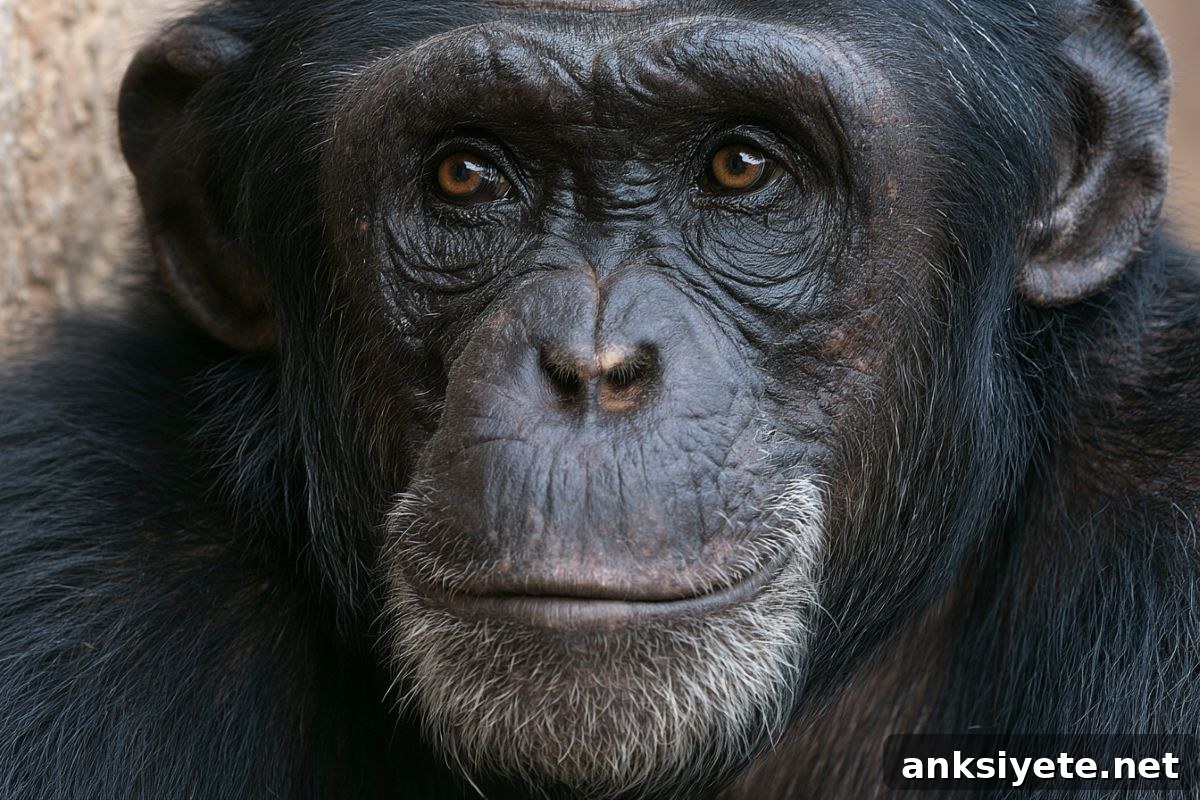
Summary: Great ape cognition is highly individual, changeable over time, and organized differently from human intelligence. Tracking 48 chimpanzees, bonobos, gorillas, and orangutans over 18 months, researchers found that cognitive differences between individuals are stable across time and strongly shaped by rearing history, sex, and social group membership.
Importantly, while human social abilities tend to cluster together, performance on distinct social tasks in apes showed no statistical correlation. This finding indicates that great apes exhibit an alternative cognitive architecture that challenges assumptions based on human-centered evolutionary models.
Key Facts
- Individual Profiles Over Species Averages: Cognitive abilities in great apes are not uniform within a species. Each ape displays unique, persistent strengths and weaknesses rather than a single species-wide profile.
- 18-Month Longitudinal Tracking: The study followed 48 individuals from four species—chimpanzees, bonobos, gorillas, and orangutans—using repeated testing over a year and a half.
- Predictors of Performance: An ape’s cognitive performance was strongly associated with stable, individual-specific factors such as social group membership, sex, rearing history, and previous research experience.
- Different from Human Cognitive Structure: Unlike humans, where social-cognitive skills commonly form cohesive clusters, apes showed no correlation across different social tasks.
- Need for Primate-Specific Assessments: The study highlights that many existing tests are designed for humans and may not map well onto ape cognition; researchers call for assessment tools built for ape biology and evolutionary history.
Source: APS
For decades, scientists have studied great ape cognition to shed light on the evolution of human intelligence. Much of that work assumes that cognitive traits are static and uniform within species: if a capacity appears only in species closely related to humans, it may have evolved late in our lineage. This study challenges that assumption by emphasizing dynamic, individual-level variation.
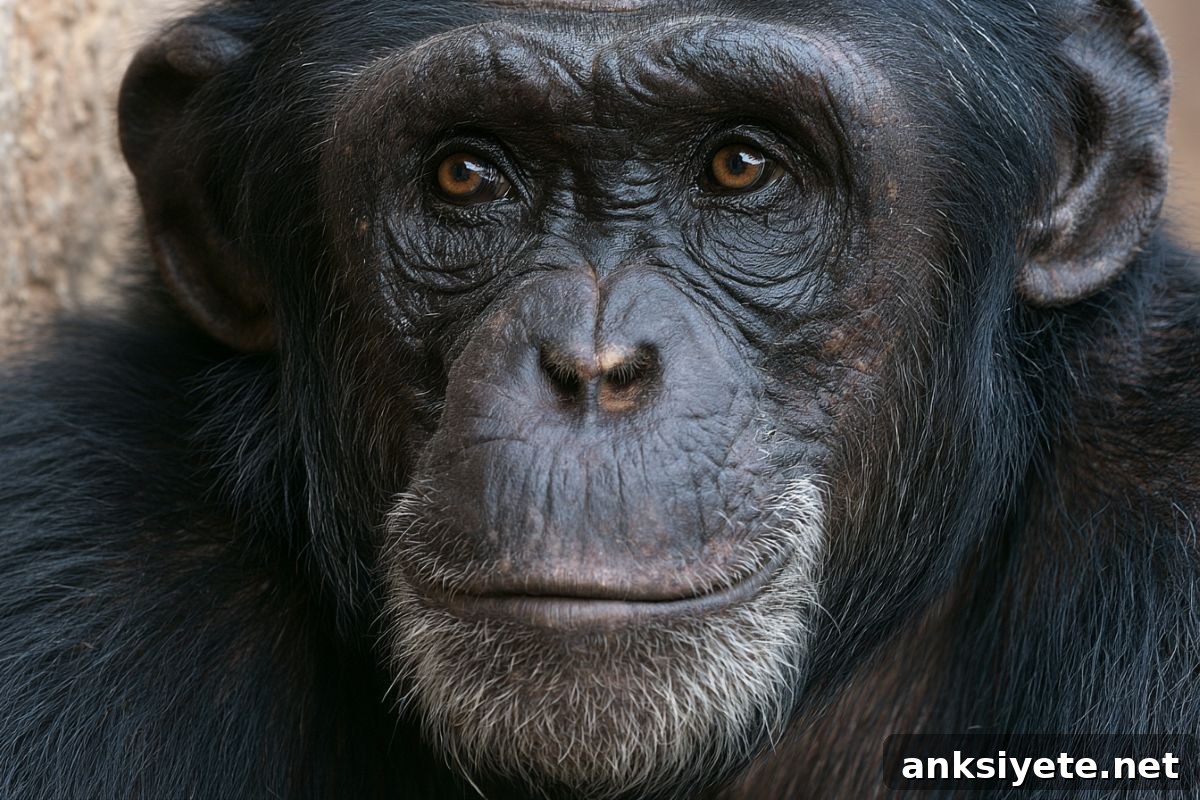
“There’s a lot of experiences that … contribute to the precise nature of how [an individual’s] cognition is structured and organized,” said Manuel Bohn, a developmental psychologist at Leuphana University of Lüneburg. “We very much have these kind of developmental and individual differences perspectives for humans. And so, we thought this was clearly missing in great apes.”
Published in Psychological Science and building on earlier work from 2023, the new study examined how a range of cognitive abilities varied across individuals and across time. Rather than treating cognition as a fixed species trait, the researchers used a longitudinal design to capture stability and change within individuals.
The team tested 48 great apes from four species—bonobos, chimpanzees, gorillas, and orangutans—across six tasks administered over ten sessions across 1.5 years. Tasks measured skills such as following a human’s attention, interpreting communicative cues, remembering search locations, reasoning, and executive functioning. These tests were adaptations of established procedures used in comparative psychology to assess social cognition, reasoning, and executive control.
Results showed substantial individual variation, even among members of the same species. Stable, individual-specific factors—such as group membership, rearing history, sex, and prior participation in research—were better predictors of performance than transient or purely group-level variables. For most tasks, individual differences remained consistent across the study period, indicating trait-like stability in many cognitive measures.
Bohn commented that this mirrors how researchers think about human individual differences: stable patterns that reflect the history and biology of each person. The ape data suggest a similar framework is appropriate for nonhuman primates.
When the researchers examined correlations among tasks to probe cognitive structure, they found a striking pattern. Performance on nonsocial tasks—those measuring reasoning and similar capacities—tended to correlate positively. In contrast, tasks that relied on social cognition did not correlate with one another or with nonsocial tasks. In other words, being good at one social task did not predict being good at another.
This pattern departs from human developmental models, where social skills often cluster: for example, an individual who reads communicative cues well is likely also proficient at following attention. “We do not find these clusters that we expect to be there from a human perspective, which I think is really interesting and thought-provoking,” Bohn said. “If it’s not this, then what is the structure of all of this?”
The authors acknowledge the study’s modest sample size but emphasize that the findings raise important questions. One priority is refining the assessment tools used in comparative cognition. Many existing measures were designed with human abilities and developmental milestones in mind; they may not capture the ways apes think. Developing non-anthropocentric tasks that reflect ape-typical cognitive processes will be essential to map ape minds accurately.
Longitudinal work is another priority. Although resource-intensive and difficult to run, long-term studies allow scientists to track developmental trajectories and how cognitive profiles change with experience and age. Comparing these developmental patterns with human data could reveal the evolutionary pathways that shaped different cognitive architectures.
“Think about these alternative structures of cognition,” Bohn said. “What are the lines along which we can think about cognition being structured, other than the ones that we put in place for humans? [This study] is an invitation to think along those lines.”
Key Questions Answered:
A: Individual apes, like humans, bring unique personalities, genetic backgrounds, and life experiences that shape their cognitive capacities across the lifetime. Treating a species as having a single fixed intelligence level misses how cognition develops, changes, and varies between individuals.
A: In human development, social skills commonly co-develop and correlate; in this study, ape social tasks did not correlate. An individual ape might excel at one social skill yet perform poorly on another, indicating a different organizational logic for social cognition.
A: Key challenges include limited sample sizes, the logistical difficulties of longitudinal research, and a lack of assessment tools designed for ape cognitive systems rather than for humans. Addressing these gaps will require investment in species-appropriate methods and long-term studies.
Editorial Notes:
- This article was edited by a Neuroscience News editor.
- The journal paper was reviewed in full.
- Additional context was added by staff.
About this social and evolutionary neuroscience research news
Author: Hannah Brown
Source: APS
Contact: Hannah Brown – APS
Image: Image credit: Neuroscience News
Original Research: Open access. “Individual Differences in Great Ape Cognition Across Time and Domains: Stability, Structure, and Predictability” by Bohn, M., Völter, C. J., Hanus, D., Eisbrenner, N., Eckert, J., Holtmann, J., & Haun, D., published in Psychological Science. DOI: 10.1177/09567976261434817
Abstract
Individual Differences in Great Ape Cognition Across Time and Domains: Stability, Structure, and Predictability
Understanding variation in cognitive abilities is essential for explaining both the evolution and development of cognition. This study examined the stability, structure, and predictability of individual differences in great ape cognition across domains including social cognition, quantitative reasoning, executive function, and inferential reasoning.
Researchers administered six tasks to 48 individuals from four species across ten sessions over 1.5 years. Task performance was most strongly predicted by stable, individual-specific characteristics rather than transient or group-level variables. Additional data from other tasks showed substantial positive correlations among nonsocial measures, while social-cognition tasks did not correlate with each other or with nonsocial measures.
The authors recommend future work to build mechanistic models of ape cognitive processes and to develop assessment tools that reflect species-specific cognitive organization, enabling a clearer understanding of cognitive evolution based on process-level commonalities across species.