
Summary: Researchers at Rice University developed an affordable, easy-to-build, open-source platform that brings optogenetics into more biology laboratories.
Source: Rice University.
Light Plate Apparatus (LPA) makes optogenetics accessible to standard biology labs
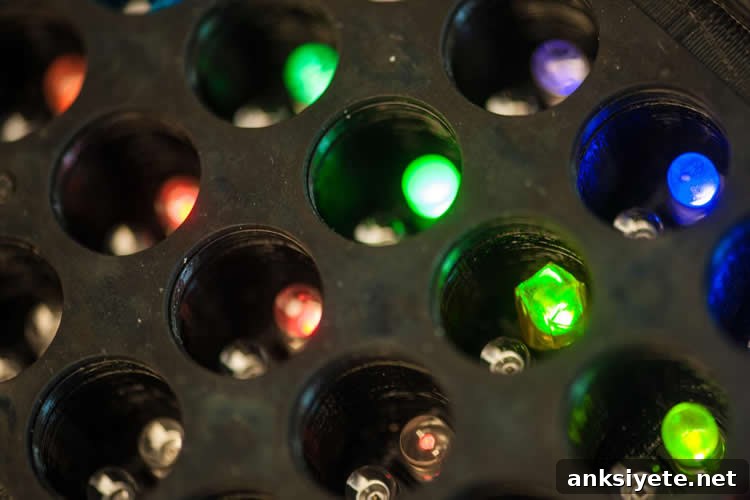
Rice University bioengineering graduate student Karl Gerhardt and colleagues have designed a low-cost, easy-to-use hardware platform that lets biologists with little or no engineering or programming experience run optogenetics experiments. Their open-hardware system, the Light Plate Apparatus (LPA), is described in a freely available paper in the open-access journal Scientific Reports.
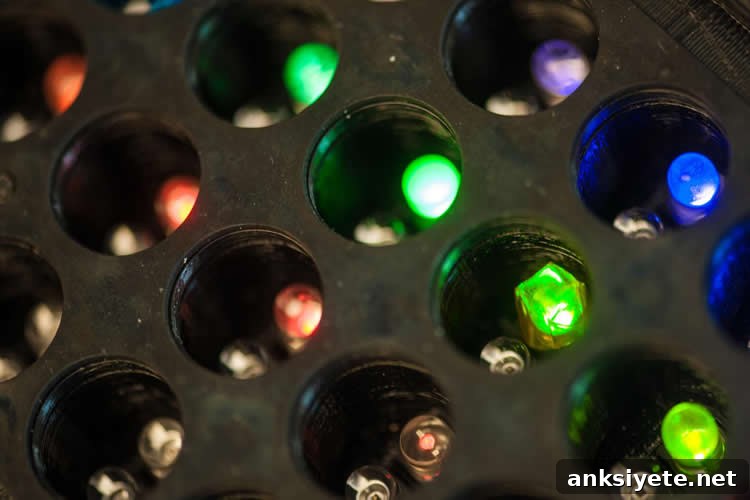
The LPA delivers two independent light signals to each well of a standard 24-well plate and accepts interchangeable LEDs spanning wavelengths from blue to far red. Built with widely available components and 3-D printed parts, total component costs are under $400 and drop to about $150 for labs that own a 3-D printer. The design emphasizes user friendliness: a unit can be assembled and calibrated by a nonexpert in a single day.
“Our goal was to bring optogenetics to any researcher who wants to use it,” said Jeffrey Tabor, assistant professor of bioengineering at Rice, whose lab developed the device. To remove barriers for biologists, the team combined open-source hardware and software and created a graphical tool named Iris that allows experiment programming through simple buttons and menus.
Optogenetics uses genetically encoded light-sensitive proteins to turn genes and cellular processes on or off with high spatial and temporal precision. While optogenetics has seen major advances in neuroscience—using brain-implantable optical interfaces to probe neural circuits related to behavior and disease—its broader adoption across microbiology, cell biology, and synthetic biology has been limited by a lack of accessible, purpose-built hardware.
“People have developed excellent biological optogenetic tools—light-sensing proteins, gene-expression systems, and optically controlled protein interactions—but outside neuroscience, user-friendly hardware has been lacking,” said Karl Gerhardt. “We set out to build hardware that any biology lab could use.”
To demonstrate the LPA’s versatility, the Rice team applied it to a diverse set of model organisms: gut bacteria, yeast, mammalian cell lines, and photosynthetic cyanobacteria. The device controlled gene expression using blue-, green-, and red-responsive optogenetic systems and enabled precise timing and intensity control for photobiology experiments, including circadian rhythm entrainment in cyanobacteria.
Design choices focused on modularity and simplicity. The LPA uses standard LED sockets for rapid wavelength changes, a low-cost microcontroller with an SD card reader, and LED drivers capable of producing more than 4,000 intensity levels with millisecond time resolution. These features support a wide range of experimental protocols without requiring command-line programming.
The Iris software provides an intuitive web-based interface so researchers without programming backgrounds can design light programs, schedule complex illumination patterns, and export protocols for repeatable experiments. The Rice team published all software, design files, and assembly instructions on an open repository to encourage adoption and collaboration within the research community.
Development began when Gerhardt sought a plate-based optogenetics system for his own work with the social amoeba Dictyostelium discoideum, which prefers flat culture surfaces and is sensitive to vibration. Earlier devices were tube-based and unsuitable. Collaborators with backgrounds in electrical engineering, physics, and software design iterated on the hardware and user interface until the current production-ready LPA and Iris combination emerged.
Early versions of the design prompted several research groups to build their own LPAs, and the published paper and shared resources aim to expand accessibility further. The team envisions the LPA becoming a standard, approachable platform for general optogenetics and photobiology experiments, especially for labs that would not normally build custom hardware.
Additional co-authors on the Scientific Reports paper include Sebastián Castillo-Hair, Eric Gomez, Prabha Ramakrishnan, Junghae Suh, Rayka Yokoo, and David Savage. The research was supported by multiple funding sources, including the Office of Naval Research, the National Science Foundation, the National Institutes of Health, the Department of Defense, the Ford Foundation, the Department of Energy, and the Simons Foundation.
Source: David Ruth, Rice University
Image Source: Jeff Fitlow, Rice University
Original research: “An open-hardware platform for optogenetics and photobiology” by Karl P. Gerhardt, Evan J. Olson, Sebastian M. Castillo-Hair, Lucas A. Hartsough, Brian P. Landry, Felix Ekness, Rayka Yokoo, Eric J. Gomez, Prabha Ramakrishnan, Junghae Suh, David F. Savage, and Jeffrey J. Tabor. Scientific Reports. Published online November 2, 2016. DOI: 10.1038/srep35363.
Abstract
An open-hardware platform for optogenetics and photobiology
Optogenetics uses light and genetically encoded photoreceptors to control biological processes with high precision. Outside neuroscience, widespread use of optogenetics has been limited by a lack of flexible, accessible hardware. The Light Plate Apparatus (LPA) delivers two independent light signals (310 to 1550 nm) to each well of a 24-well plate with intensity control across three orders of magnitude and millisecond resolution. Signals are programmed through an intuitive web tool named Iris. All components cost under $400 and the device can be assembled and calibrated by a non-expert in one day. The LPA enables precise control of gene expression in bacteria, yeast, and mammalian cells and simplifies cyanobacterial circadian entrainment, lowering the barrier to optogenetics and photobiology experiments.