
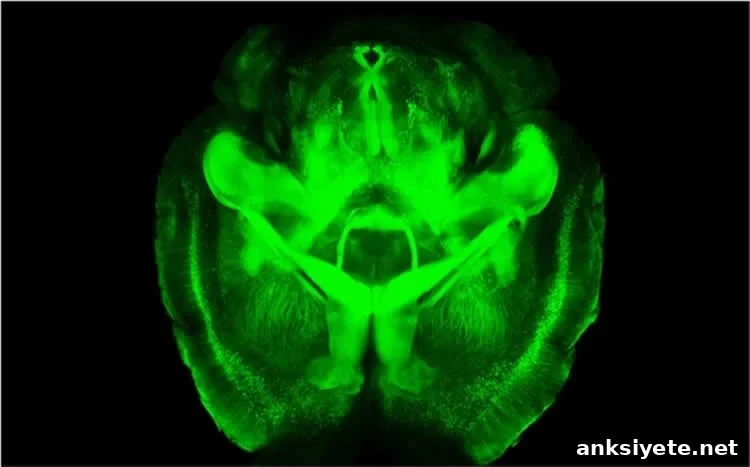
Bio-X researchers have refined their CLARITY method for imaging intact brains, making it safer, more reliable and easier to adopt. These improvements promise to accelerate studies of neural circuits, memory, disease and behavior.
Last year, Stanford professor Karl Deisseroth introduced CLARITY, a technique that renders whole brains transparent so researchers can view their internal wiring in three dimensions. Since that announcement, many labs worldwide have adopted CLARITY to explore brain connectivity, but two significant technical barriers limited broader use: the need for specialized equipment to remove lipids without damaging tissue, and the lack of imaging methods capable of rapidly scanning entire cleared brains without destroying fluorescent signals.
In a Nature Protocols paper published June 19, Deisseroth and colleagues describe practical solutions to both bottlenecks. These improvements — a gentle passive lipid-removal option and adaptations of light-sheet microscopy for high-resolution whole-brain imaging — make CLARITY far more accessible and faster. The paper’s authors include postdoctoral fellows Raju Tomer and Li Ye and graduate student Brian Hsueh. The work was supported in part by the White House BRAIN Initiative, which seeks to map neural circuits and understand how they underpin thought, memory, movement and behavior.
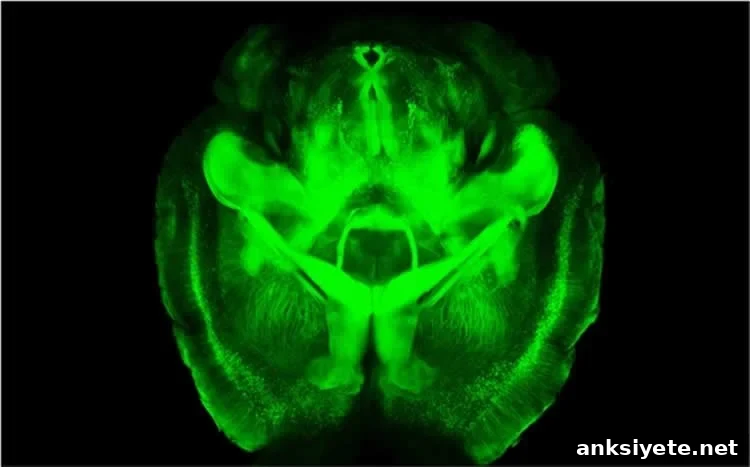
“These advances embody the BRAIN Initiative’s aim of building new technologies to reveal structure and function in the intact brain,” said Deisseroth, who holds appointments in bioengineering and psychiatry and behavioral sciences and is affiliated with Stanford Bio-X.
Removing the lipid barrier while preserving fine structure
Brain tissue is normally opaque because of lipid-rich membranes that scatter light and block detailed microscopy of deep structures. CLARITY overcomes this by embedding the intact tissue in a hydrogel that preserves proteins and ultrastructure, then extracting lipids to make the sample optically transparent. Early CLARITY protocols used an electric field to accelerate lipid removal — electrophoretic tissue clearing — but some labs found the required hardware difficult to build or prone to causing tissue damage when not tuned precisely.
To broaden access, the team developed passive CLARITY, which removes lipids through controlled chemical diffusion in a warm bath rather than by applying an electric field. Passive CLARITY takes longer but eliminates the risk of electrical damage and requires only commonly available reagents and simple equipment. For many users — especially those working with rare clinical specimens from patients with epilepsy, autism or other conditions — the increased safety and simplicity are decisive advantages.
“Electrophoretic clearing remains useful when speed is essential,” Deisseroth said, “but passive CLARITY is a practical, low-risk approach that will enable many more labs to apply whole-tissue clearing to precious samples.”
Faster, high-resolution imaging with optimized light-sheet microscopy
The second major advance addresses imaging speed and photobleaching. Fluorescent probes used to label cells and molecules are sensitive to light; continuous point-by-point scanning of an entire brain risks bleaching these labels before the dataset is complete. To avoid that, the researchers adapted light-sheet microscopy to scan whole planes at once, minimizing exposure to out-of-focus light and accelerating image acquisition by several orders of magnitude.
Traditional light-sheet systems lacked the spatial resolution to reveal fine neuronal processes deep inside adult brains. The paper describes CLARITY-optimized light-sheet microscopy (COLM), which combines optimized objectives and optical layout to preserve high resolution while benefiting from the speed and reduced photodamage of planar illumination. Deisseroth’s lab built a custom microscope to demonstrate the approach, and the protocol outlines how key components and settings can be implemented; the procedures are designed so other groups can reproduce the system or adapt available commercial parts.
Together, passive lipid removal and COLM allow researchers to clear, immunostain and image an adult mouse brain in a matter of weeks, depending on staining complexity and tissue size, while retaining fine morphological and molecular detail throughout the intact sample.
Applications and funding context
These methodological improvements will accelerate studies of normal and diseased brains in animals and in donated human tissue. Researchers are already using CLARITY to examine postmortem brains from people with neurological and psychiatric disorders, searching for cellular and molecular alterations that might explain disease mechanisms or suggest therapeutic targets. Because passive CLARITY reduces the risk of sample damage, it makes such clinical applications more feasible.
The work received support from multiple agencies, including the Defense Advanced Research Projects Agency (DARPA) via its Neuro-FAST program, the National Institute of Mental Health (NIMH), the National Science Foundation (NSF), the National Institute on Drug Abuse, the Simons Foundation and the Wiegers Family Fund. DARPA and other funders are interested in deeper knowledge of intact and injured brain circuits to inform better diagnostics and therapies.
Contact: Amy Adams – Stanford (Stanford news office)
Source: Stanford press release
Image credit: Deisseroth lab (adapted from the Stanford press release)
Original Research: “Advanced CLARITY for rapid and high-resolution imaging of intact tissues” by Raju Tomer, Li Ye, Brian Hsueh and Karl Deisseroth. Published online June 19, 2014 in Nature Protocols. DOI: 10.1038/nprot.2014.123
Advanced CLARITY for rapid and high-resolution imaging of intact tissues
CLARITY chemically transforms intact biological tissues into a hydrogel-tissue hybrid that is compatible with light microscopy and macromolecular labeling while preserving fine structure and native biomolecules. This accessibility of information from large, intact samples introduces new opportunities and challenges. The published protocols cover the full CLARITY workflow: a straightforward, reliable lipid-removal option without electrophoretic equipment (passive CLARITY) and an optimized integration with light-sheet optics (CLARITY-optimized light-sheet microscopy, COLM) to accelerate data collection by several orders of magnitude while maintaining or improving resolution and image quality. The complete protocol, including hydrogel embedding, lipid removal, whole-brain antibody staining (if needed) and high-resolution imaging, can take approximately 7–28 days for an adult mouse brain depending on clearing choices, tissue size and the number of staining rounds. The approach has been successfully applied to adult mouse, adult zebrafish and adult human brain samples and may be useful more broadly for structural and molecular analysis of large biological systems.
Reference: Tomer R., Ye L., Hsueh B., Deisseroth K., “Advanced CLARITY for rapid and high-resolution imaging of intact tissues,” Nature Protocols, June 19, 2014. DOI: 10.1038/nprot.2014.123