
Researchers at the Sanford-Burnham Medical Research Institute have developed the first experimental drug shown to restore synapses lost to Alzheimer’s disease. Named NitroMemantine, the compound links two previously FDA-approved medications to halt the damaging cascade that severs connections between neurons, producing memory loss and cognitive decline.
The decade-long work was led by Stuart A. Lipton, M.D., Ph.D., professor and director of the Del E. Webb Center for Neuroscience, Aging, and Stem Cell Research and a practicing neurologist. Published in PNAS on June 17, the study demonstrates that NitroMemantine can restore synaptic connections—physical and functional links between nerve cells—that are lost as Alzheimer’s progresses.
Unlike many treatments that have focused on upstream targets such as amyloid-beta plaques and tau tangles, this research targets downstream mechanisms that directly cause synaptic loss. That shift in strategy is significant because approaches aimed solely at clearing plaques and tangles have had limited clinical success. According to Lipton, targeting the processes that dismantle synapses “is very exciting because everyone is now looking for earlier—and also potentially later—ways to treat the disease.” In other words, restoring synapses may be possible even when plaques and tangles are already present.
Targeting lost synapses
The team used animal models and human neurons derived from stem cells to map the pathway leading to synaptic damage in Alzheimer’s. Their findings revise the understanding of amyloid-beta’s role: rather than directly destroying synapses, amyloid-beta peptides provoke nearby astrocytes to release excessive amounts of the neurotransmitter glutamate.
Under normal conditions, glutamate supports learning and memory by mediating synaptic signaling. In Alzheimer’s, however, excess glutamate spills over and overactivates extrasynaptic NMDA (N-methyl-D-aspartate) receptors—often abbreviated as eNMDA receptors—on neurons. Chronic hyperactivation of these eNMDA receptors triggers the progressive loss of synapses that underlies cognitive decline.
How NitroMemantine works
Lipton’s lab had previously shown that memantine, an FDA-approved drug, can preferentially block extrasynaptic NMDA receptors and reduce their harmful overactivity. Memantine was approved in 2003 for moderate to severe Alzheimer’s disease, but its clinical benefit has been modest. The researchers discovered one reason for this limitation: memantine, being positively charged, can be electrostatically repelled away from its intended receptor site on diseased neurons, reducing its effective concentration at the extrasynaptic receptor.
To overcome that barrier, the team linked a fragment of nitroglycerin—a second FDA-approved drug used to relieve chest pain—to memantine. Their earlier work identified an additional binding site on NMDA receptors where nitroglycerin-like fragments can attach. By chemically connecting the nitroglycerin fragment to memantine, they created a dual-function molecule: memantine guides the compound to extrasynaptic NMDA receptors, while the nitroglycerin fragment enhances receptor engagement at a secondary site. After synthesizing and testing 37 derivatives, the researchers identified NitroMemantine as an effective candidate.
In disease models, NitroMemantine rapidly reduces eNMDA receptor hyperactivity and restores synaptic numbers to near-normal levels within months of treatment in mouse models. Lipton notes that the drug’s action can begin within hours, and that NitroMemantine markedly outperforms memantine alone in protecting and restoring synaptic connectivity.
The shift from therapies that focus on removing plaques and tangles to those that prevent or reverse synaptic loss offers a new therapeutic avenue. “It’s been disappointing that plaque- and tangle-directed therapies haven’t yielded more benefit for patients with dementia,” Lipton said, “but these results make me optimistic that NitroMemantine will have value as it moves into human trials, offering hope for both early- and later-stage Alzheimer’s patients.”
Notes about this Alzheimer’s disease and neuropharmacology research
Funding for this research came from multiple sources, including the U.S. National Institutes of Health (grants P01 AG010436, P50 AG005131, P01 DA017259, R01 AA020404, P01 HD29587, and P01 ES016738), the U.S. Department of Defense (W81XWH-10-1-0093), the National Institute of Neurological Disorders and Stroke Institutional Core (grant P30 NS076411), the American Heart Association, and the Ministry of Education and Science of Spain.
The published study lists many co-authors from Sanford-Burnham and collaborating institutions, including Maria Talantova, Sara Sanz-Blasco, Xiaofei Zhang, Peng Xia, Mohd Waseem Akhtar, Shu-ichi Okamoto, Gustavo Dziewczapolski, Tomohiro Nakamura, Gang Cao, Alexander E. Pratt, Yeon-Joo Kang, Shichun Tu, Elena Molokanova, Scott R. McKercher, Samuel Andrew Hires, Hagit Sason, David G. Stouffer, Matthew W. Buczynski, James Solomon, Sarah Michael, Evan T. Powers, Jeffery W. Kelly, Amanda Roberts, Gary Tong, Traci Fang-Newmeyer, James Parker, Emily A. Holland, Dongxian Zhang, Nobuki Nakanishi, H.-S. Vincent Chen, Herman Wolosker, Yuqiang Wang, Loren H. Parsons, Rajesh Ambasudhan, Eliezer Masliah, Stephen F. Heinemann, Juan C. Piña-Crespo, and Stuart A. Lipton, among others. The full author list and institutional affiliations appear in the PNAS article.
Contact: Deborah Robison — Sanford-Burnham Medical Research Institute
Source: Sanford-Burnham Medical Research Institute press release
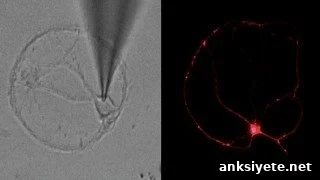
Image Source: The photomicrograph of nerve cells is credited to Sanford-Burnham Medical Research Institute and was adapted from the institute’s press materials.
Original Research: The peer-reviewed study is titled “Aβ induces astrocytic glutamate release, extrasynaptic NMDA receptor activation, and synaptic loss,” published online June 17, 2013 in PNAS (doi:10.1073/pnas.1306832110).