
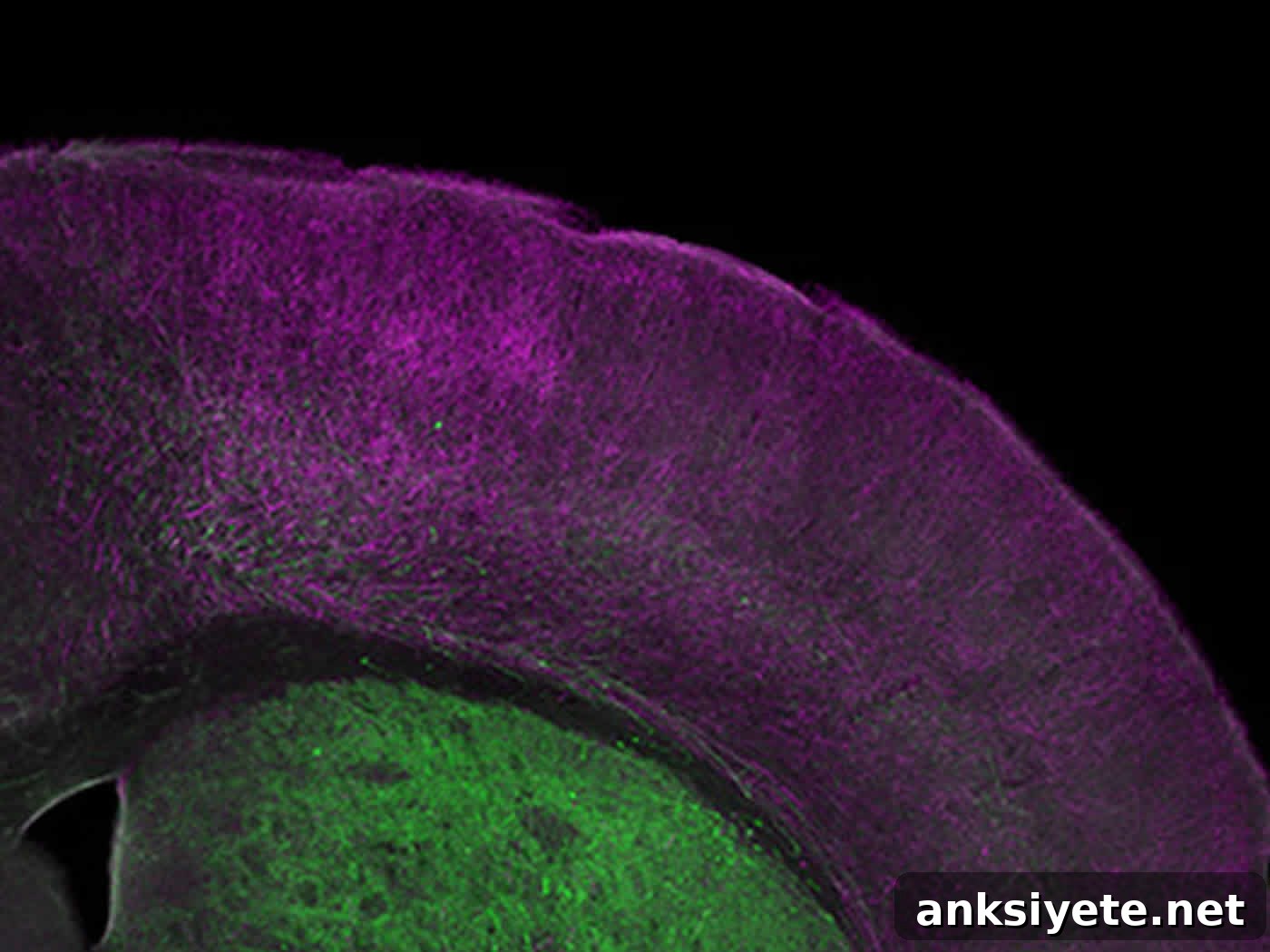
For decades neuroscientists taught a simple loop: the cortex sends sensory, motor and cognitive signals into the basal ganglia, which process them and route output through the thalamus back to cortex.
New animal research challenges that classic circuit. A study published in Nature reports a direct route from the basal ganglia to frontal cortex—bypassing the thalamus—and suggests this shortcut could reshape how we think about motor control, reward learning and psychiatric disorders such as schizophrenia.
Discovery of a direct basal ganglia-to-cortex pathway
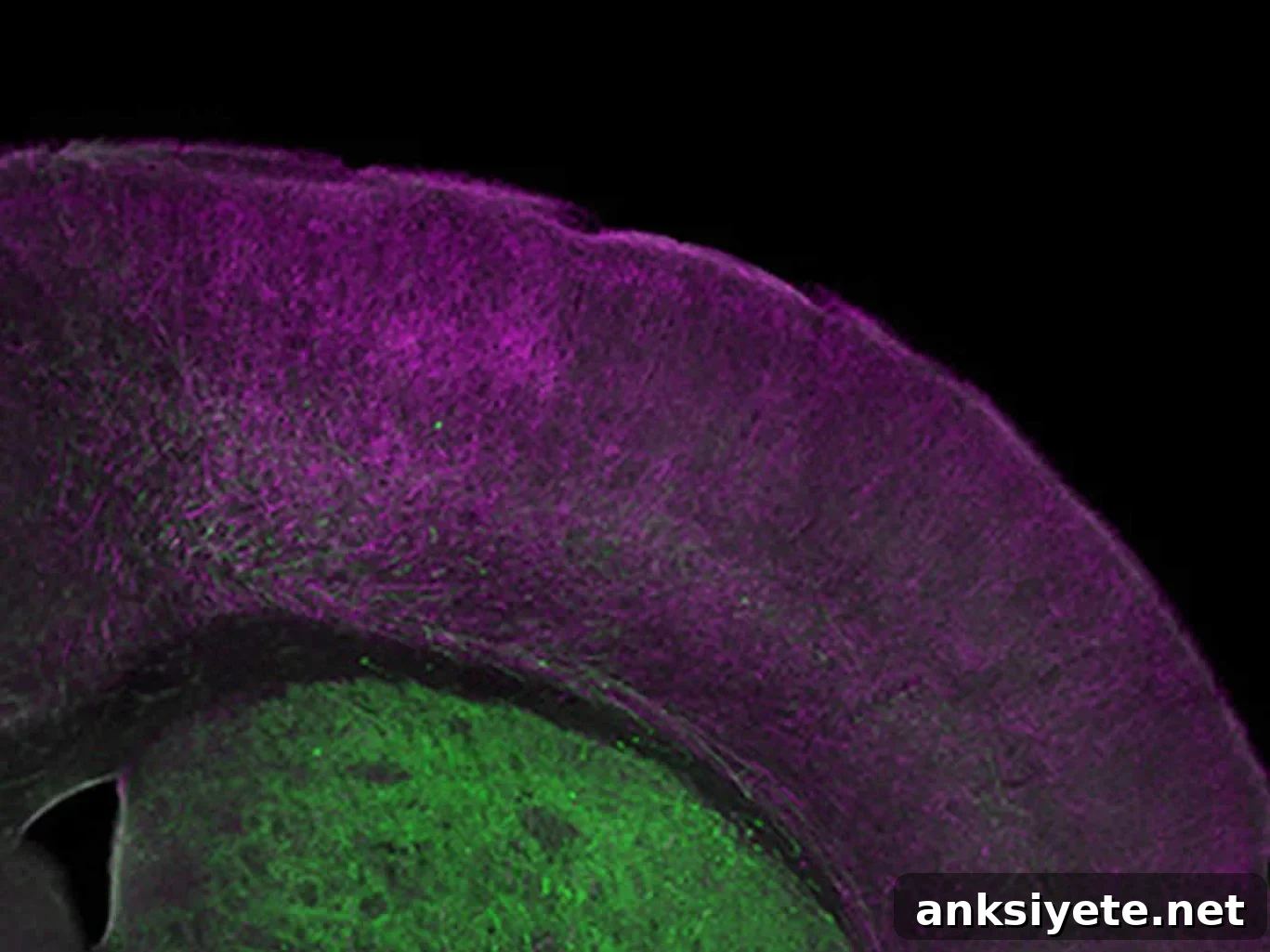
Using modern circuit-mapping methods, Harvard Medical School researchers identified neurons projecting from the globus pallidus, a central nucleus of the basal ganglia, straight into frontal cortical regions. The finding contradicts the long-standing model that the basal ganglia only influence cortex indirectly via the thalamus.
“We’ve discovered a pathway in the brain that nobody knew existed,” said Bernardo Sabatini, senior author of the study and professor of neurobiology. The first author, Arpiar Saunders, made the observation while applying viral tracers, high-resolution imaging and optogenetic tools to map deep subcortical structures.
A closer look: two types of shortcut neurons
The team found the direct outputs occur in two distinct neuron classes, distinguished by expression of the enzyme that produces acetylcholine. They labeled these ChAT+ (choline acetyltransferase positive) and ChAT− neurons and characterized their anatomy, chemistry and electrical properties in mice.
Using optogenetics to activate each population selectively, the researchers showed these cells make functional connections in frontal cortex. One surprising result was that ChAT+ neurons release both GABA, an inhibitory transmitter, and acetylcholine, which can excite targets—creating a complex bidirectional influence on cortical circuits that the authors are still working to fully understand.
Additional experiments identified similar pallidal-to-cortex cells in macaque tissue, increasing the likelihood that the pathway exists in humans as well. The researchers emphasize more work is required to map the specific cortical cell types that receive these inputs and to determine how the new pathway interacts with well-known basal ganglia circuits.
Why this shortcut matters
Basal ganglia circuits are crucial for selecting actions, shaping habitual behavior, and supporting reward-guided learning. Dysfunction in these subcortical regions contributes to movement disorders like Parkinson’s disease and to psychiatric conditions such as obsessive-compulsive disorder and schizophrenia. Yet the internal organization of the basal ganglia remains complex and only partially resolved.
“If you think of the brain as a house, these regions are the basement—messy and hard to illuminate,” Saunders said. With refined tools, the lab began probing those understudied depths and uncovered this unexpected output pathway.
Because the globus pallidus sits at a crossroads of sensory, motor and limbic information, a direct line from this region to frontal cortex could allow rapid, context-sensitive modulation of executive and decision-making circuits. “I think this pathway will be important for an animal surveying its environment and deciding what to do next,” Sabatini said, noting that delineating precise behavioral roles will take additional years of work.
Potential implications for antipsychotic action and schizophrenia
The discovery may also shed light on a puzzling clinical question: how antipsychotic drugs, which primarily target dopamine D2 receptors concentrated in basal ganglia, produce therapeutic effects on cognitive and cortical symptoms of schizophrenia. The new pathway provides a direct anatomical link—a “one-synapse hop”—from basal ganglia circuitry affected by dopamine signaling to frontal cortical targets implicated in cognitive dysfunction.
The study’s authors demonstrate that the direct pallidal-to-cortex pathway is sensitive to antipsychotics. Independent studies have shown that the cortical cells targeted by these shortcut neurons display abnormalities in schizophrenia and that the balance of neurotransmitters released by these neurons is altered in the disorder. While these observations align with a role for the new pathway, causation remains unproven and further experiments are needed to test whether antipsychotics rely on this route to exert clinical benefit.
Modeling schizophrenia in animals is challenging—mouse prefrontal cortex differs from human cortex—so establishing disease relevance will require careful follow-up work in multiple models and species. If validated, the pathway could become a more specific target for therapies that avoid side effects associated with current drugs, such as Parkinsonian motor symptoms caused by long-term antipsychotic use.
This work was supported by grants from the National Institutes of Health (R01 NS046579, F31 NS074842, F31-MH093026-01A1, P30 EY12196 and P30 NS072030). The research was conducted by a team led by Bernardo L. Sabatini with first author Arpiar Saunders; additional contributors include Ian A. Oldenburg, Vladimir K. Berezovskii, Caroline A. Johnson, Nathan D. Kingery, Hunter L. Elliott, Tiao Xie and Charles R. Gerfen. The study describes a direct GABAergic and cholinergic output from the globus pallidus to frontal cortex and was reported in Nature.
Contact information and press materials were provided by Harvard Medical School. Image credits: Arpiar Saunders and Chip Gerfen.