
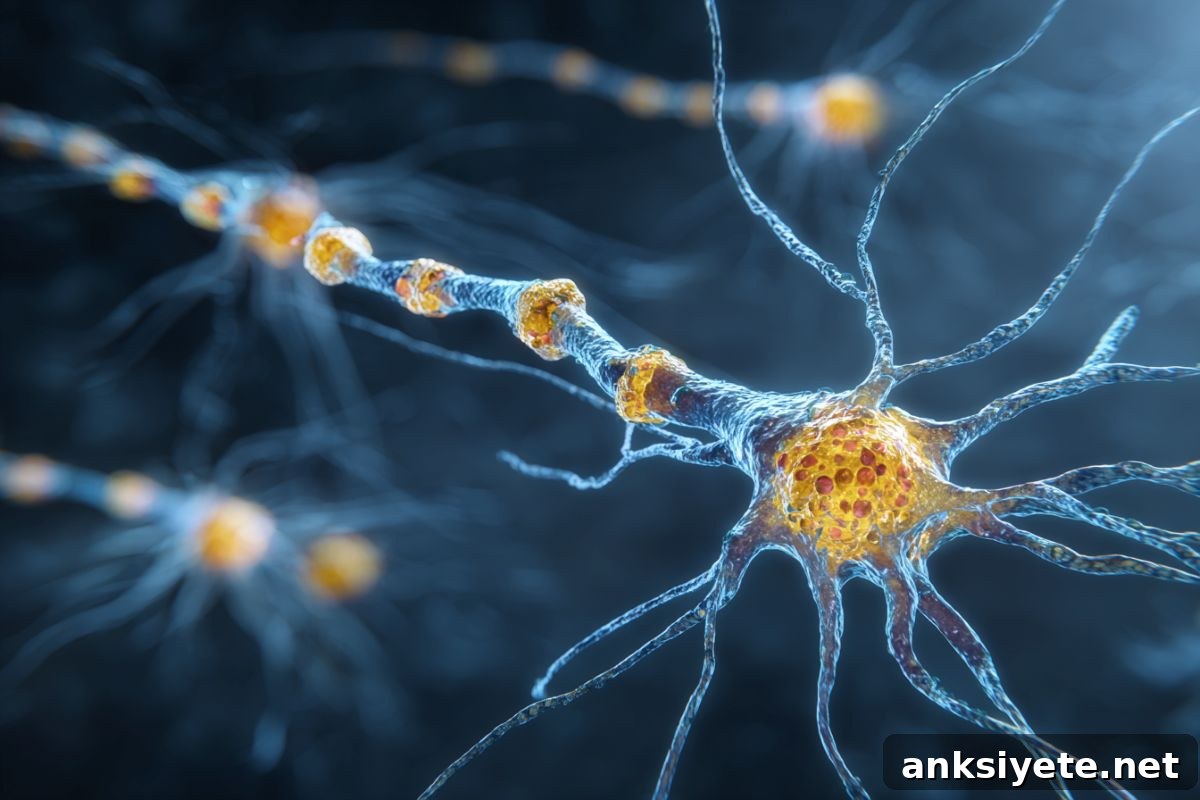
Summary: Researchers have revealed a specialized metabolic mechanism in the brain that alters how neurons and glial cells sense nutrients. Instead of relying primarily on canonical amino-acid sensors characterized in non-neuronal cell lines, these neural cells use leucine-derived acetyl‑coenzyme A (AcCoA) to regulate mTORC1 via activation of the acetyltransferase p300 and subsequent acetylation of the mTORC1 subunit Raptor. This pathway links metabolic state to autophagy control and has implications for neurodegenerative diseases such as Alzheimer’s and Parkinson’s.
Because sustained mTORC1 hyperactivation suppresses autophagy—the cell’s essential waste-removal system—and promotes toxic protein accumulation, identifying this neuron-specific control axis suggests new, targeted strategies to prevent or slow neurodegeneration.
Key Facts
- Longevity and proteostasis: Neurons are long-lived and cannot dilute damaged proteins by dividing. They depend on finely tuned nutrient sensing and autophagy to maintain protein quality and cellular health.
- Limitations of HEK293-based models: Much mTORC1 biology has been derived from HEK293 cell studies that emphasize canonical amino-acid sensors such as Sestrin2. New evidence shows neuronal nutrient sensing can differ markedly from those models.
- The AcCoA → p300 → Raptor axis: In neurons and glia, leucine breakdown generates AcCoA, which activates p300. p300 acetylates Raptor, promoting mTORC1 activation and reducing autophagic activity.
- Pathological consequences: Persistent mTORC1 overactivation and autophagy impairment are linked to accumulation of toxic proteins in Alzheimer’s, Parkinson’s, Huntington’s disease, and ALS.
- Metabolic–inflammatory convergence: Metabolic disturbances (excess AcCoA) and inflammatory signaling (for example, via CCR5) can both converge on mTORC1 regulation and jointly drive autophagy failure.
- Therapeutic direction: Instead of directly blocking mTORC1, which could disrupt essential systemic functions, targeting upstream metabolic nodes—modulating AcCoA production, inhibiting p300 activity, or disrupting inflammatory-metabolic crosstalk—may offer safer, more focused interventions.
Source: Science Exploration Press
Researchers from the University of Cambridge describe neuron-specific nutrient sensing mechanisms that open potential therapeutic avenues for Alzheimer’s, Parkinson’s, and other neurodegenerative disorders.
Neurons face unique metabolic and proteostatic challenges. Because they persist for decades without dividing, neurons must maintain protein quality through regulated autophagy and tightly controlled signaling pathways that link nutrient availability to cell maintenance. The mechanistic target of rapamycin complex 1 (mTORC1) sits at the center of this regulation, integrating amino-acid availability, growth factor input, and cellular energy to coordinate protein synthesis and degradation.
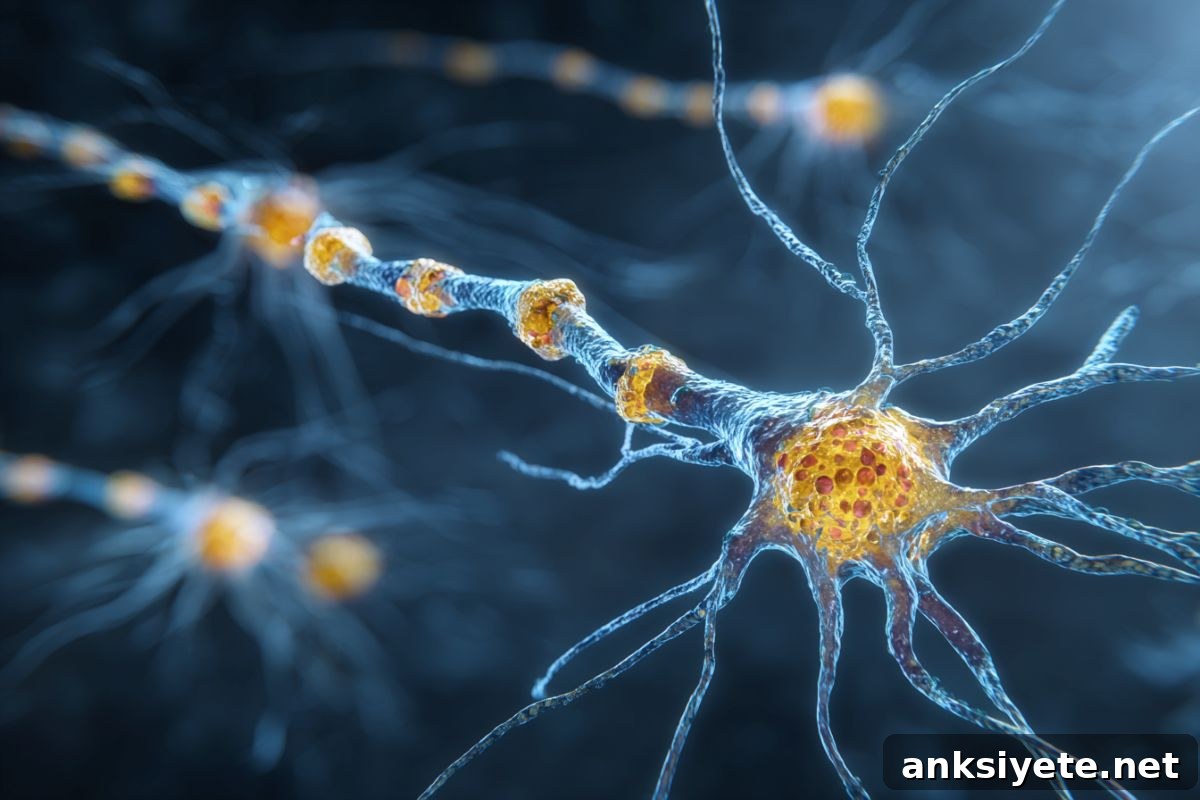
In a review published in EXO – Beyond the Cell, Prof. David C. Rubinsztein and colleagues summarize evidence that neurons and glial cells rely on a metabolic control route in which leucine-derived AcCoA functions as a principal upstream regulator of mTORC1. AcCoA activates the acetyltransferase p300, which acetylates the mTORC1 subunit Raptor. This acetylation increases mTORC1 signaling and suppresses autophagic clearance, a change that—if prolonged—promotes accumulation of misfolded or aggregated proteins.
This model contrasts with canonical leucine sensing mechanisms characterized in HEK293 and other non-neuronal cell lines, where sensors like Sestrin2 dominate the literature. The Cambridge team highlights that neuronal metabolism, axonal compartmentalization, and long-term homeostatic demands can make mTORC1 regulation in the brain distinct and more reliant on metabolic intermediates such as AcCoA.
Clinically, persistent mTORC1 overactivation has been associated with hallmarks of major neurodegenerative diseases: tau phosphorylation and amyloid-β accumulation in Alzheimer’s disease, α-synuclein aggregation and mitophagy defects in Parkinson’s disease, impaired clearance of mutant huntingtin in Huntington’s disease, and disrupted proteostasis in ALS motor neurons. By linking these outcomes to an AcCoA–p300–Raptor axis, the review identifies specific upstream mechanisms that may be amenable to therapeutic modulation.
The authors also describe how inflammatory signals intersect metabolic control of mTORC1. For example, CCR5-mediated inflammatory pathways can synergize with metabolic changes to trigger pathological mTORC1 activation and autophagy failure, suggesting combined metabolic and anti-inflammatory approaches could be effective.
Rather than attempting to inhibit mTORC1 directly—which risks broad systemic side effects given mTORC1’s central role—the review advocates for interventions that act upstream and locally in neural tissue: limiting excessive AcCoA production, modulating p300 acetyltransferase activity, or interrupting inflammatory–metabolic signaling loops. These strategies aim to restore balanced autophagy and proteostasis while preserving essential growth and metabolic functions elsewhere in the body.
Key Questions Answered
A: Neurons are non-dividing and designed for lifelong function. Unlike many somatic cells, they cannot divide to dilute toxic aggregates, so they rely entirely on efficient internal clearance systems like autophagy to maintain proteostasis.
Q: How does AcCoA inhibit neuronal autophagy?
A: When leucine is metabolized to AcCoA inside neurons, AcCoA activates p300. p300 acetylates Raptor, a component of mTORC1, which drives mTORC1 into a sustained active state. Persistent activation favors anabolic growth programs over catabolic clearance, suppressing autophagy and allowing proteotoxic material to accumulate.
Q: Why focus on upstream targets rather than blocking mTORC1 directly?
A: mTORC1 controls fundamental processes across tissues. Direct systemic inhibition can produce serious side effects. Targeting upstream neuronal nodes—AcCoA production, p300 activity, or inflammatory inputs—offers a more selective way to restore autophagy in the brain while minimizing systemic disruption.
Editorial Notes
- This article was edited by a Neuroscience News editor.
- The cited journal paper was reviewed in full.
- Additional context was added by staff to clarify therapeutic implications.
About this neuroscience research news
Author: Lijun Jin
Source: Science Exploration Press
Contact: Lijun Jin – Science Exploration Press
Image credit: Neuroscience News
Original Research: Open access. “Nutrient-sensing and mTORC1 regulation in neuronal homeostasis: from metabolic signaling to neurodegeneration” by Sung Min Son, Weining Li, and David C. Rubinsztein. EXO – Beyond the Cell. DOI: 10.70401/EXO.2026.0009
Abstract
Nutrient-sensing and mTORC1 regulation in neuronal homeostasis: from metabolic signaling to neurodegeneration
Neurons depend on precise nutrient-sensing to maintain proteostasis and stress resistance over their lifetimes. mTORC1 is a central metabolic hub integrating amino-acid availability, growth factor cues, and energy status to regulate protein synthesis and autophagy. Neuronal mTORC1 regulation reflects specialized metabolic demands and compartmentalized architecture that differ from non-neuronal cells. Emerging evidence highlights metabolic intermediates—especially leucine-derived AcCoA—as critical upstream regulators that connect nutrient flux to mTORC1 activity through EP300-mediated Raptor acetylation. Chronic dysregulation of these pathways causes persistent mTORC1 activation, progressive autophagy impairment, and accumulation of proteotoxic species, contributing to neurodegenerative processes across Alzheimer’s disease, Parkinson’s disease, Huntington’s disease, and ALS. This mini review synthesizes current understanding of neuronal mTORC1 control, emphasizes the AcCoA–acetylation axis, and outlines therapeutic opportunities upstream of mTORC1.