
Summary: These findings may provide new insights into the origins of human spoken language.
Source: Max Planck Institute.
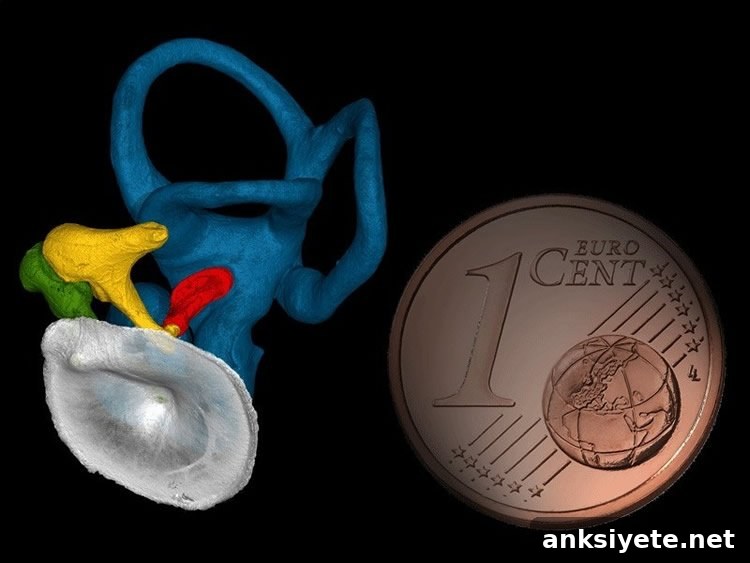
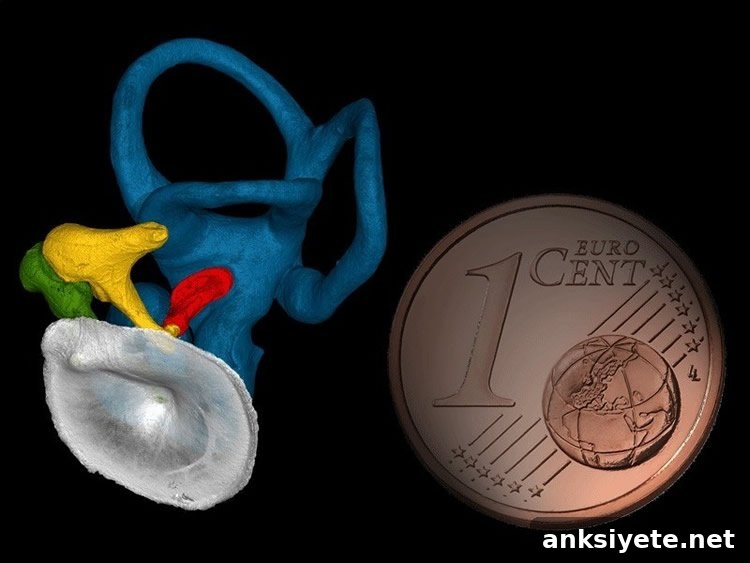
Researchers report the largest collection of Neandertal middle ear ossicles to date and compare them with those of modern humans.
A team led by scientists at the Max Planck Institute for Evolutionary Anthropology used high-resolution imaging to examine the skulls of Neandertals and discovered preserved middle ear ossicles—tiny bones that are essential for hearing—still located within the ear cavities. The researchers found that Neandertal ossicles differ in shape from those of anatomically modern humans. Despite these morphological differences, the middle ear’s functional performance appears largely similar in both groups. The authors link the shape differences to distinct evolutionary changes associated with increases in brain size and suggest the results may reflect shared aspects of vocal communication in Neandertals and modern humans. These observations offer indirect evidence relevant to understanding when and how spoken language could have emerged in our lineage.
The three bones of the middle ear—the malleus (hammer), incus (anvil) and stapes—form the ossicular chain. This chain, present in all mammals, transmits sound from the eardrum into the fluid-filled inner ear and helps amplify airborne sound so it can be perceived by the inner ear. Because they are extremely small, the ossicles are among the rarest bones preserved in the fossil record, including that of early human ancestors. This scarcity has long limited researchers’ ability to study the hearing capacities of extinct species and has been a significant obstacle for reconstructing aspects of their sensory biology.
Tiny bones still present
The same shortage of data has affected research on our closest extinct relatives, the Neandertals, whose communicative abilities and potential use of spoken language have been debated since their discovery. Led by Alexander Stoessel at the Max Planck Institute for Evolutionary Anthropology in Leipzig, the research team analyzed high-resolution micro-CT scans of Neandertal skulls to search systematically for ossicles that might remain trapped in the tympanic cavity. They identified ear ossicles in 14 Neandertal individuals recovered from sites across France, Germany, Croatia and Israel—constituting the largest sample of ossicles for any fossil human species so far. “We were really astonished how often the ear ossicles are actually present in these fossil remains, particularly when the ear became filled with sediments,” says lead researcher Alexander Stoessel.
After digitally reconstructing each ossicle, the team—working with collaborators from the Friedrich-Schiller University in Jena and University College London—compared the fossil bones to ossicles from anatomically modern humans and from our closest living relatives, chimpanzees and gorillas.
Because ossicles are small and have intricate shapes, the researchers applied three-dimensional geometric morphometrics, a method that uses many measurement points to capture the full three-dimensional form of a structure. “Despite the close relationship between anatomically modern humans and Neandertals, the ear ossicles are surprisingly different in shape between the two groups,” notes Romain David, a co-author of the study.
To understand whether those shape differences might affect hearing, and to evaluate how ossicle shape may covary with nearby cranial anatomy, the team also analyzed the tympanic cavity and surrounding temporal bone structures. The results were unexpected: although ossicle morphology contrasts markedly between Neandertals and modern humans, the functional parameters of the middle ear—by which airborne sound is transmitted and amplified—are largely comparable in the two groups.
Similar communication skills in archaic humans
Rather than reflecting different auditory performance, the researchers found that ossicle shape correlates strongly with the morphology of the adjacent cranial base, which itself differs between Neandertals and modern humans. The authors interpret these differences as consequences of distinct evolutionary trajectories in brain enlargement. As brain size increased independently in Neandertal and modern human lineages, the spatial layout of the cranial base and associated ear structures also changed, producing different ossicle shapes.
Jean-Jacques Hublin, a senior author on the study, suggests that these findings may point to shared features of vocal communication inherited from a common ancestor. “For us, these results could be indicative of consistent aspects of vocal communication in anatomically modern humans and Neandertals that were already present in their last common ancestor,” Hublin says. He adds that the study provides a foundation for further research into the nature of spoken language in archaic hominins.
Source: Sandra Jacob, Max Planck Institute.
Image credit: A. Stoessel & P. Gunz.
Original research: Stoessel, A.; David, R.; Gunz, P.; Schmidt, T.; Spoor, F.; Hublin, J.-J. “Morphology and function of Neandertal and modern human ear ossicles.” Proceedings of the National Academy of Sciences (PNAS). Published online September 26, 2016. doi:10.1073/pnas.1605881113
Max Planck Institute. “Ear Ossicles of Modern Humans and Neandertals: Different Shape but Similar Function.” Neuroscience News. 27 September 2016.
Abstract
Morphology and function of Neandertal and modern human ear ossicles
The tiny middle ear ossicles (malleus, incus, stapes) located in the tympanic cavity of the temporal bone are central to audition. Known Neandertal ossicles differ distinctly from those of anatomically modern humans despite the close evolutionary relationship between the two groups. These differences could influence hearing capacity or reflect covariation with the surrounding temporal bone. Until now, detailed comparisons were limited by the small number of available Neandertal ossicles and by the lack of methods that jointly analyze ossicles and surrounding structures. This study presents the largest sample of Neandertal ossicles to date, including several previously undescribed specimens spanning a broad temporal and geographic range. Using microcomputed tomography and 3D geometric morphometrics, the authors quantify shape and functional properties of ossicles and the tympanic cavity and compare them to recent and extinct anatomically modern humans as well as African apes. They report pronounced morphological differences between modern human and Neandertal ossicles. Both groups show derived ossicle morphologies relative to the inferred ancestral form, but they diverged in different directions. Independent increases in brain size in modern humans and Neandertals altered the tympanic cavity and therefore the shape and arrangement of the ossicles. Despite these different evolutionary pathways, middle ear functional properties are largely similar in the two groups, suggesting that comparable auditory sensitivities were conserved from their last common ancestor.
“Morphology and function of Neandertal and modern human ear ossicles” by Alexander Stoessel, Romain David, Philipp Gunz, Tobias Schmidt, Fred Spoor, and Jean-Jacques Hublin. Proceedings of the National Academy of Sciences (PNAS). Published online September 26, 2016. doi:10.1073/pnas.1605881113