
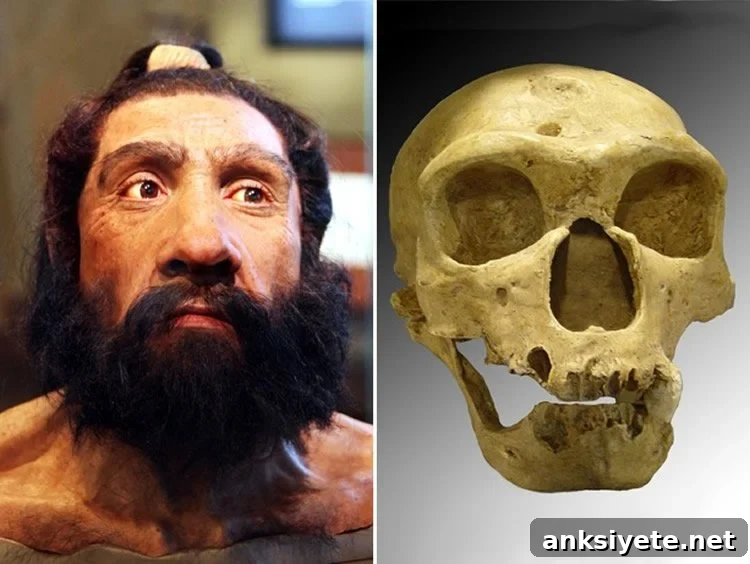
Summary: Researchers report that a distinctive gene structure arose recently in human evolution and spread with remarkable speed.
Source: University of Washington
A recently emerged genetic structure on chromosome 16 explains a major human–Neanderthal difference and raises autism risk, UW Medicine co-author says
Scientists have identified a DNA structure that represents one of the largest genetic differences between modern humans and Neanderthals and that also increases susceptibility to autism when it is deleted.
An international research team led by UW Medicine genome scientist Evan Eichler published these findings in Nature. The study focuses on a complex region of chromosome 16, known as 16p11.2, where a 95-kilobase segment containing 28 genes is flanked by nearly identical repeated sequences. These repeats create a fragile architecture prone to large-scale copy-number changes—deletions, duplications and other rearrangements—during cell division. When deletion removes the 28-gene segment, it can lead to autism.
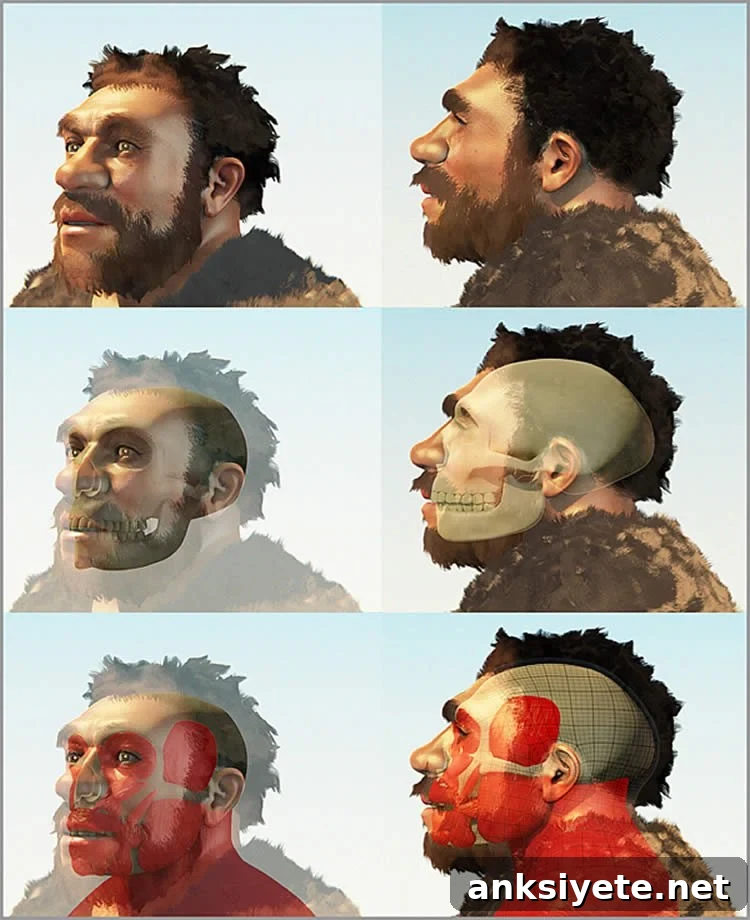
The researchers traced the origin of this duplicated structure to roughly 280,000 years ago, close to the time when Homo sapiens first emerged. This arrangement is absent from other primates, including chimpanzees, gorillas and orangutans, and it is not found in the genomes of our closest extinct relatives, Neanderthals and Denisovans. Despite its recent origin in evolutionary terms, it is now widespread across human populations worldwide.
“Most duplications in our genome are millions of years old, and the speed at which this structure transformed our genome is unprecedented,” said co-author Eichler, professor of genome sciences and an investigator of the Howard Hughes Medical Institute.
The rapid and broad spread of this copy-number variant suggests that the genes embedded in its repetitive regions provide a net benefit to humans, outweighing the increased risk of autism for a subset of offspring when a deletion occurs. Copy-number variants (CNVs) can dramatically rearrange genomic content in a relatively short time, offering a mechanism for generating significant evolutionary change far faster than single-base mutations would permit. At the same time, CNVs can predispose to neurodevelopmental and psychiatric conditions when rearrangements interrupt or remove important genes.
Humans are genetically more uniform than other great apes; for example, two wild chimpanzees typically show more genetic differences from each other than two humans do. The presence of these duplicated regions provides a means to restructure the human genome rapidly, potentially creating new functions and adaptive advantages, but also introducing vulnerabilities.
One gene drawing particular attention in this region is BOLA2. Researchers found additional copies of BOLA2 in both flanking repeat blocks. In human cells, the BOLA2 protein forms a complex with another protein, glutaredoxin 3, which appears to improve iron capture and distribution to proteins that require iron—an effect that seems especially important during early cell development and in stem cells. Greater efficiency in acquiring and using iron early in life could have provided a meaningful selective advantage during human evolution.
Beyond copy-number increases, the duplicative events at 16p11.2 appear to have created a novel human-specific gene by fusing parts of the BOLA2 gene with segments of another nearby gene. This fusion produces an in-frame transcript not seen in Neanderthals or other primates. While the exact function of the new protein product remains unknown, its emergence marks one of the clearest examples to date of a gene that arose specifically on the Homo sapiens lineage. The researchers are collaborating with other teams to investigate the role of this human-specific protein.
The study also analyzed patient data and found that more than 96% of chromosome 16p11.2 rearrangement breakpoints occur within this Homo sapiens–specific duplication, underscoring how the same genomic architecture that may have offered evolutionary advantages also predisposes to recurrent disease-associated rearrangements.
Funding: This research received support from multiple sources, including the Paul G. Allen Foundation, the Simons Foundation Autism Research Initiative, the U.S. National Institutes of Health (grants including 2R01HG002385 and TR01 MH0957410), National Institute of Mental Health (1F30MH105055-01), the Swiss National Science Foundation, Helmsley Charitable Fund, the Mathers Foundation, the JPB Foundation, the U.S. National Science Foundation (DGE-1256082) and Ente Cassa di Risparmio.
Source: Robert Sanders, University of Washington. Original Research: Nuttle et al., “Emergence of a Homo sapiens-specific gene family and chromosome 16p11.2 CNV susceptibility,” Nature, published online August 3, 2016 (doi:10.1038/nature19075).
Abstract
Emergence of a Homo sapiens-specific gene family and chromosome 16p11.2 CNV susceptibility
Genomic regions that harbor recurrent copy-number variation can be difficult to study but can also reveal evolutionary events important to what makes humans unique. Recurrent CNV at chromosome 16p11.2 accounts for about 1% of autism cases and is mediated by a complex set of segmental duplications that largely arose during recent human evolution. The researchers reconstructed the locus’ evolutionary history and identified BOLA2 (bolA family member 2) as a gene duplicated exclusively in Homo sapiens. They estimate a 95-kilobase segment containing BOLA2 duplicated across the critical region approximately 282,000 years ago, a late change among a series of events that restructured the locus. Nearly all humans examined carried one or more copies of this duplication, a pattern consistent with positive selection. The BOLA2 duplication generated a novel in-frame fusion transcript unique to humans and copy number correlated with both RNA and protein expression, with the largest differences between human and chimpanzee observed in stem cells. Analyses of patients with 16p11.2 rearrangements showed that most breakpoints cluster within the human-specific duplication. In summary, the duplicative transposition of BOLA2 at the root of the Homo sapiens lineage increased copy number of a gene linked to iron homeostasis and simultaneously created susceptibility to recurrent disease-associated rearrangements.
Feel free to share this article on advances in human evolution, copy-number variants, BOLA2, chromosome 16p11.2 and autism research.