
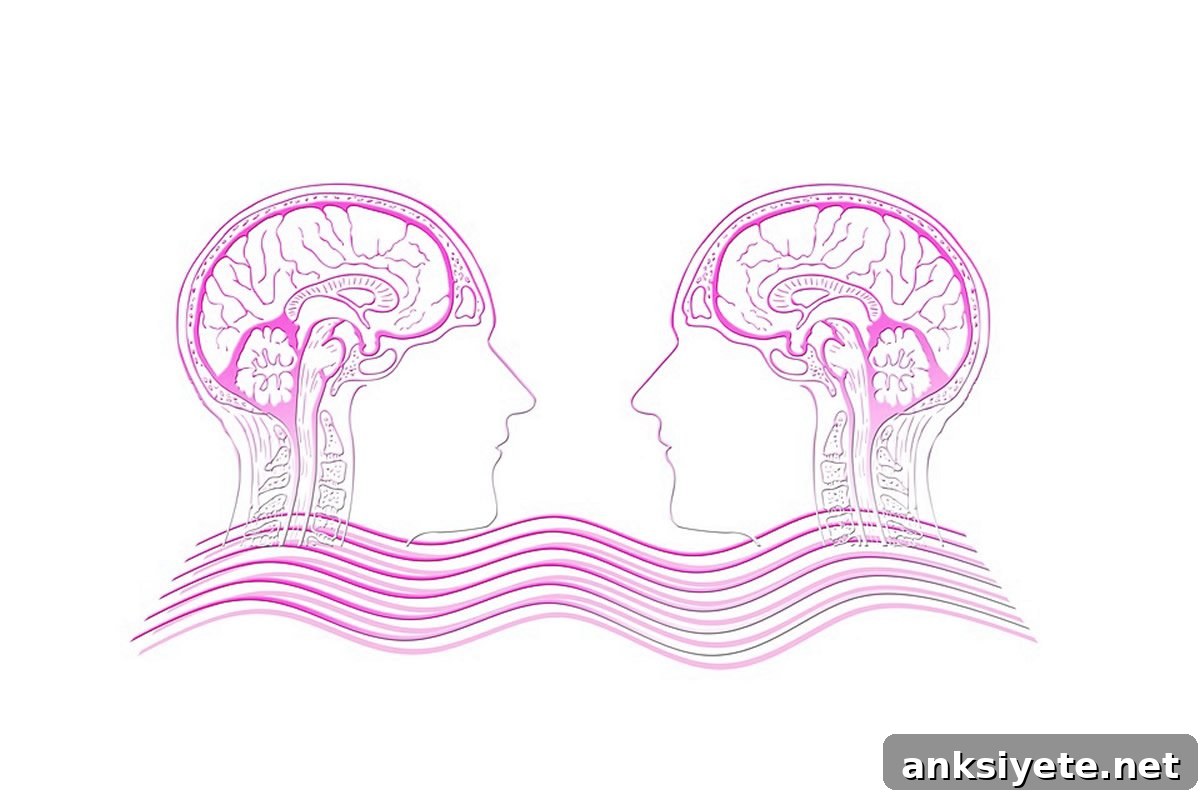
Summary: Using hyperscanning, researchers have shown that the brains of a patient and a music therapist synchronize during a music therapy session, revealing measurable neural moments that correspond to therapeutic breakthroughs.
Source: Anglia Ruskin University
Researchers have, for the first time, demonstrated synchronized brain activity between a patient and a therapist during a live music therapy session — a finding that could improve how therapists recognize and measure therapeutic progress.
The study, published in the journal Frontiers in Psychology, was conducted by Professor Jörg Fachner and Dr. Clemens Maidhof at Anglia Ruskin University (ARU). It is the first music therapy investigation to apply hyperscanning — simultaneous recording of two brains — to examine moment-to-moment interaction in therapy.
In the documented session, classical music was played while the patient described a serious family illness. Both the patient and therapist wore EEG (electroencephalogram) caps fitted with sensors to capture electrical brain signals. The session was recorded with synchronized video, allowing researchers to align neural data with observable behavior and speech.
Music therapists aim to produce “moments of change,” where a meaningful emotional connection or shift occurs between therapist and client. During the recorded session, the patient’s brain activity moved abruptly from a pattern associated with deep negative emotions to a peak associated with more positive processing. Shortly after, the therapist’s EEG showed a similar pattern when she perceived the therapy to be effective. In later interviews, both identified that instant as the point when the therapy felt to them like it had truly worked.
Investigators focused on frontal-lobe activity, analyzing right and left frontal regions that are implicated in negative and positive emotional processing, respectively. By combining dual-EEG hyperscanning with detailed video analysis and a transcribed session, the team mapped how neural synchronization emerges in real time and what a patient-therapist “moment of change” looks like inside the brain.
Professor Jörg Fachner, lead author and Professor of Music, Health and the Brain at Anglia Ruskin University, said the findings represent a milestone for music therapy research. He emphasized that while therapists have long relied on behavioral cues and client reports to judge progress, hyperscanning now makes it possible to observe subtle neural signatures of emotional connection and therapeutic change.
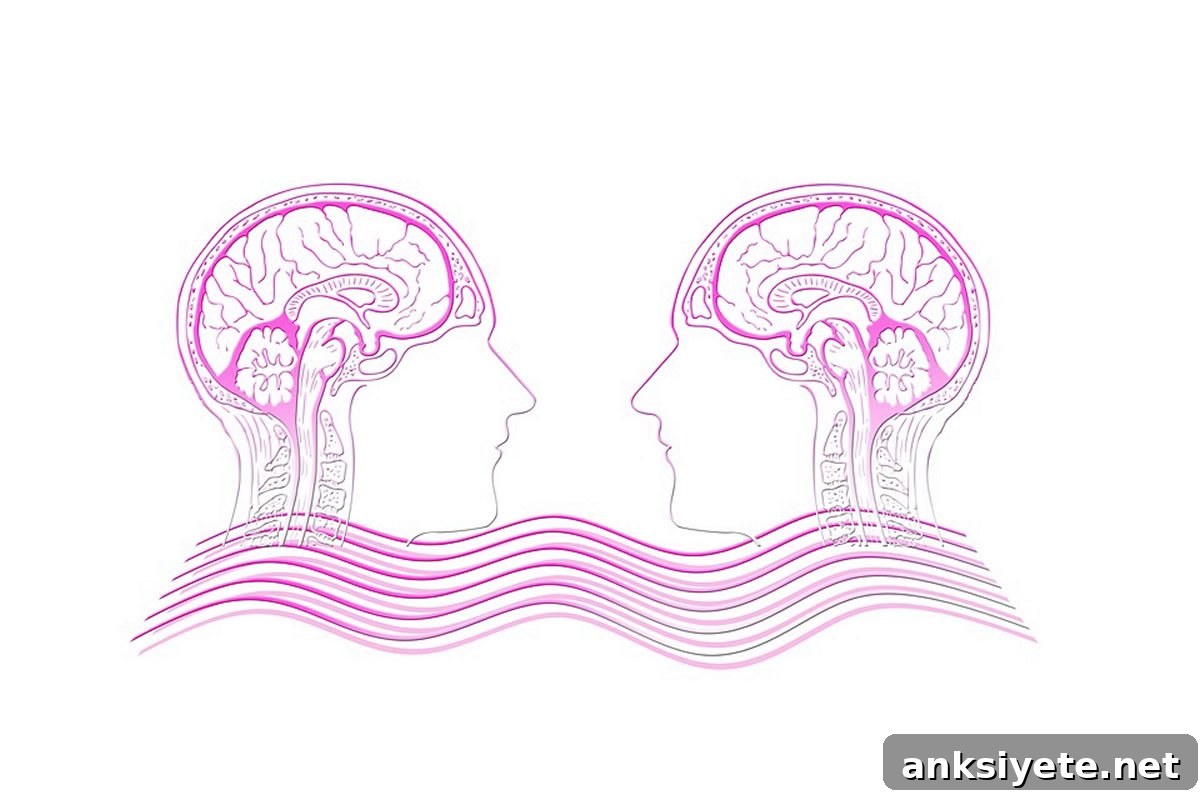
Fachner noted that music used therapeutically can support wellbeing and aid treatment for conditions including anxiety, depression, autism and dementia. Hyperscanning offers a way to detect tiny neural changes that are otherwise imperceptible, pinpointing the precise moments when therapy produces a measurable effect.
Beyond confirming neural synchrony during key moments, the approach has potential clinical benefits. It could be particularly valuable for clients with limited verbal ability, where behavioral assessment alone is insufficient. More broadly, understanding emotion processing across therapeutic interactions may lead to improved strategies for supporting patients in a range of psychological and neurological conditions.
Source:
Anglia Ruskin University
Media Contacts:
Jon Green – Anglia Ruskin University
Image Source:
The image is in the public domain.
Original Research: Open access
“Telling me not to worry… Hyperscanning and Neural Dynamics of Emotion Processing During Guided Imagery and Music”. Jörg C. Fachner, Clemens Maidhof, Denise Grocke, Inge Nygaard Pedersen, Gro Trondalen, Gerhard Tucek and Lars O. Bonde. Frontiers in Psychology. doi: 10.3389/fpsyg.2019.01561
Abstract (summary)
This study examined how emotions and imagery are shared and processed in Guided Imagery and Music therapy by recording dual-EEG from a therapist (“Guide”) and a client (“Traveler”) during a real session about the potential death of family members. The EEG recording was synchronized with video and transcribed for micro-analysis. Trained raters identified moments of therapeutic interest (MOIs) and moments of no interest (MONIs). Researchers analyzed multiple neural markers of emotion and imagery processing, including frontal and parietal alpha asymmetry, frontal midline theta, and occipital alpha activity.
Rater agreement confirmed the relevance of identified MOIs, which showed distinct cortical activity patterns compared with resting state. One pivotal MOI included an imagery experience conveying a message of hope from a close family member; another involved the Traveler sending a message to an unborn child. Overall results indicated both therapist and client dealt with negative emotions and anxiety during key moments, yet moment-to-moment dynamics revealed shifts in emotional valence and intensity. For example, receiving the hopeful message corresponded with increased frontal alpha asymmetry, reflecting more positive emotional processing and localized activation in language-related temporal regions.
Notably, peaks in emotional markers in the therapist partially paralleled those in the client. During a strong shared feeling of mutuality in one MOI, frontal alpha asymmetry time series showed significant cross-correlation, suggesting simultaneous emotional processing. The study illustrates how dual-EEG combined with detailed audiovisual and qualitative data can reveal the neural contour of therapeutic interaction, and supports further research using hyperscanning in music therapy.