
New MIT MRI Technique Could Reveal How Genes Drive Learning and Memory
Magnetic resonance imaging (MRI) is a cornerstone of modern medicine and neuroscience, routinely used to diagnose tumors, assess stroke damage, and map brain activity. Now a team of biological engineers at MIT has adapted MRI to a molecular scale, creating a method that can visualize the activity of specific genes inside the living brain. This advance could let researchers watch when and where genes relevant to learning and memory are turned on, opening a window into the molecular basis of brain plasticity.
“The vision of molecular imaging is to observe biological processes in intact organisms at the level of molecules,” says Alan Jasanoff, associate professor of biological engineering at MIT and lead author of the study. “Rather than dissecting the brain, we want to see dynamic molecular events as they occur.”
Reporter Genes and MRI: An On/Off Molecular Switch
The MIT team developed a reporter-gene imaging system that converts the presence of a genetically encoded enzyme into an MRI-detectable signal. Reporter genes are synthetic constructs used by researchers as indicators: they are turned on in response to biological events and thereby reveal when particular processes occur. In this work, the reporter gene encodes an engineered enzyme called SEAP that chemically modifies an injected MRI contrast agent, changing its solubility and causing the agent to accumulate near cells expressing the reporter.
Standard MRI relies on magnetic fields and radio waves interacting with protons in the body. In many brain studies researchers use functional MRI to infer neural activity from blood-flow changes, while contrast agents are used in other clinical settings to enhance visibility of specific tissues. The MIT approach uses a manganese porphyrin contrast agent designed to be water-soluble and rapidly cleared, so it is normally invisible to MRI. SEAP removes a phosphate group from the manganese porphyrin, rendering the compound insoluble; the insoluble product deposits near cells where SEAP is present and becomes MRI-visible.
How the System Was Tested
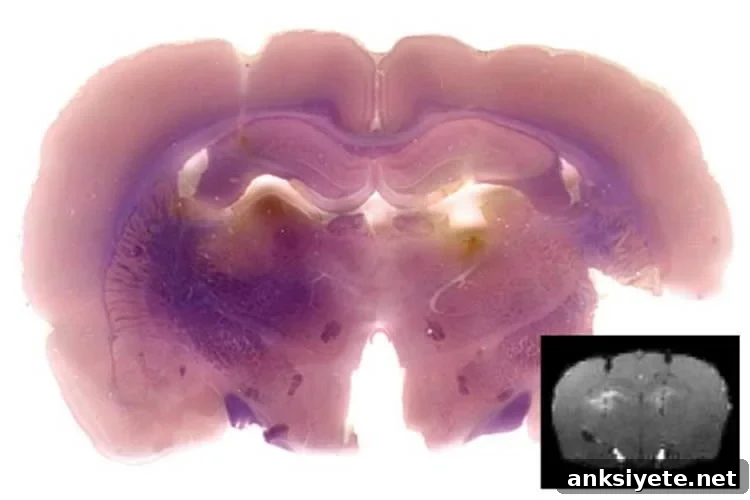
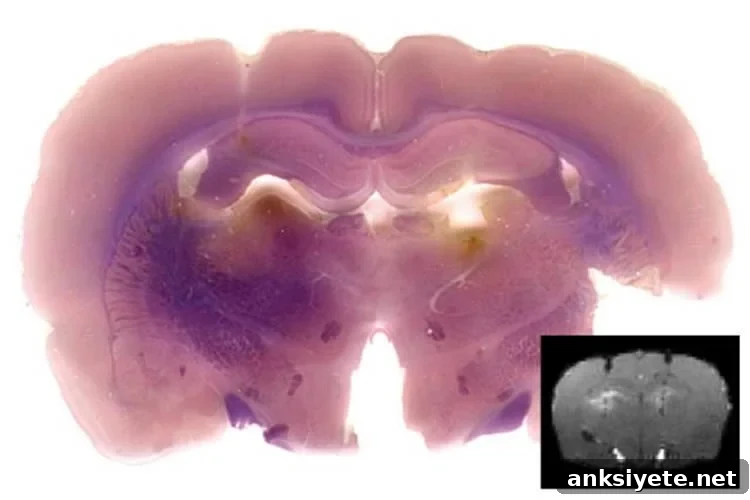
To demonstrate the method, the researchers delivered the SEAP gene into mouse brain cells using a viral vector, integrating the reporter into the cells’ genome. Cells then produced SEAP, which is secreted and can attach to the cell surface. Surface display is important because the contrast agent does not need to penetrate cells to be modified; it reacts at the cell exterior. After administering the manganese porphyrin contrast agent, the team observed selective accumulation and MRI signal at sites where the SEAP reporter was expressed, confirming the feasibility of detecting gene activity noninvasively.
Applications for Studying Learning and Memory
While the initial experiments established that reporter expression can be detected by MRI, the approach can be extended to monitor biologically meaningful gene regulation. The researchers plan to link SEAP to so-called early immediate genes—genes that are transiently activated during neuronal plasticity, the process underlying learning and memory. By coupling the reporter to genes whose expression marks synaptic strengthening or weakening, MRI could map molecular events that accompany behavioral learning across the whole brain.
Jasanoff also envisions future reporter designs that respond directly to neurotransmitters or other signaling molecules, enabling in vivo detection of neurotransmitter dynamics with MRI. Such advances would broaden molecular imaging from static localization to real-time functional readouts of neurochemical activity.
Significance and Expert Commentary
Assaf Gilad, an assistant professor of radiology unaffiliated with the study, calls the work “a very creative approach” to noninvasive, real-time imaging of gene activity. Genetically encoded MRI reporters like SEAP could transform how researchers study development, disease, and the molecular events that drive cognition.
The research received funding from the Raymond and Beverly Sackler Foundation, the National Institutes of Health, and an MIT–Germany Seed Fund grant. The paper’s lead author is former MIT postdoc Gil Westmeyer; other contributors include former MIT technical assistant Yelena Emer and Jutta Lintelmann of the German Research Center for Environmental Health.
Contact: Anne Trafton – MIT
Source: MIT press release
Image Source: Images credited to Gil Westmeyer and Alan Jasanoff; adapted from MIT materials.
Original Research: The research appears in the journal Chemical Biology.