
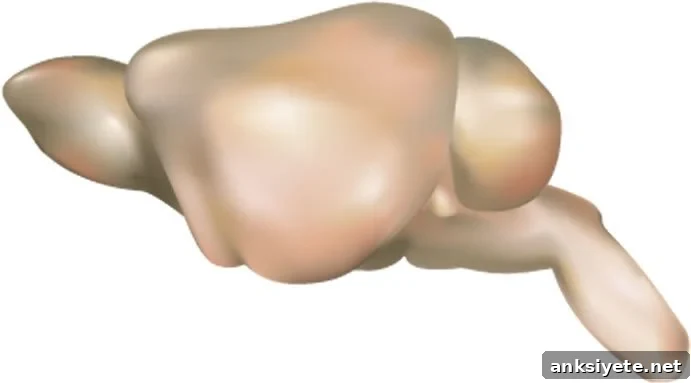
Summary: A new study maps how positive and negative memories for smells, tastes and experiences are organized in distinct subregions of the amygdala in mice.
Source: RIKEN.
Researchers report that pleasant and unpleasant memories are stored in separate parts of the basolateral amygdala (BLA). Pleasant experiences—such as rewarding tastes and scents—are represented primarily in the posterior BLA, while unpleasant experiences like pain and aversive odors are encoded in the anterior BLA. These two regions exert opposing influences on behavior through mutually inhibitory connections, and the cells that carry positive versus negative information are genetically distinct.
Previous studies had suggested a valence-based segregation for taste and odor memories in insects and rodents, but the direct connection between those segregated memory traces and the expression of positive or negative behaviors had not been demonstrated. The new study from the RIKEN-MIT Center for Neural Circuit Genetics combined behavioral assays, genetic profiling, and optogenetic manipulation to show that the anterior and posterior BLA not only store negative and positive memories, respectively, but also actively control the behaviors associated with those memories.
To identify neurons linked to negative and positive experiences, the team exposed male mice to distinct events that reliably elicit different emotional responses: footshocks to produce aversive memory traces and social interaction with a female mouse to produce rewarding traces. These experiences triggered expression of the activity marker c-Fos in discrete neuronal populations. Genetic profiling of c-Fos–positive cells revealed two molecularly distinct markers: Rspo2 (R-spondin 2) identified neurons associated with negative valence and was found almost exclusively in the anterior BLA, while Ppp1r1b marked neurons associated with positive valence and was concentrated in the posterior BLA.
Beyond their anatomical segregation, the two cell types differed in morphology and electrical properties. Ppp1r1b-positive posterior neurons became active in response to pleasant odors and water rewards, whereas Rspo2-positive anterior neurons responded to painful stimuli and aversive odors. These patterns indicate that valence-specific representations are encoded by separate, genetically defined excitatory neuron populations within the BLA.
To test whether these populations causally influence behavior, mice were trained in two separate tasks: a fear-conditioning task in which footshocks elicited freezing (a negative defensive behavior), and a reward-seeking task in which a light-cued nose poke earned water (a positive, goal-directed behavior). The researchers used optogenetics to either activate or inhibit genetically targeted neurons during training. Stimulating or suppressing anterior BLA neurons altered freezing behavior, and targeting posterior BLA neurons changed performance in the water-reward task. In other words, manipulating the neurons that encode negative or positive valence could weaken or disrupt the corresponding learned behaviors.
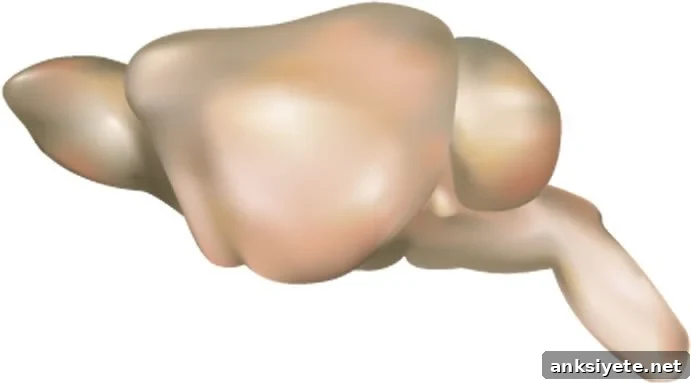
The study further showed that activation of one valence-specific population can interfere with learning driven by the opposite valence. For example, activating posterior, “positive” neurons during footshock training reduced subsequent freezing to the shock, while activating anterior, “negative” neurons during the water reward task impaired performance for the reward. These effects reflect functional antagonism: anterior and posterior BLA neurons inhibit each other, allowing one valence representation to dampen or override the other and thereby alter the behavioral meaning of sensory inputs such as water or shock.
Collectively, these findings identify a genetically defined circuit within the basolateral amygdala that segregates and antagonistically controls emotional memories and associated behaviors. The results help explain how the brain assigns positive or negative value to sensory cues and how those values guide adaptive responses to the environment.
Source: Adam Phillips – RIKEN
Image Source: NeuroscienceNews.com image used for illustration.
Original Research: Abstract for “Antagonistic negative and positive neurons of the basolateral amygdala” by Joshua Kim, Michele Pignatelli, Sangyu Xu, Shigeyoshi Itohara & Susumu Tonegawa in Nature Neuroscience. Published online October 17, 2016. doi:10.1038/nn.4414
Suggested citations: RIKEN. “Positive and Negative Memories Are Split Up in Brains of Mice.” NeuroscienceNews. 17 October 2016.
Abstract
Antagonistic negative and positive neurons of the basolateral amygdala
The basolateral amygdala (BLA) integrates signals of both negative and positive value and is essential for emotional behavior and associative learning. Here the authors identify two genetically distinct and spatially segregated populations of excitatory neurons in the mouse BLA that drive valence-specific behaviors and interact through mutual inhibition. These findings define a genetic and circuit-level substrate for the antagonistic control of emotional behaviors and memories.
Authors: Joshua Kim, Michele Pignatelli, Sangyu Xu, Shigeyoshi Itohara & Susumu Tonegawa. Nature Neuroscience. Published online October 17, 2016. doi:10.1038/nn.4414