
Summary: A new study reports that when pairs of monkeys interact during a social task, their brains display episodes of strong synchronization.
Source: Duke University.
Mirror neurons—cellular circuits thought to link perception and action—are widely believed to play a central role in social behavior. Although their precise functions remain under investigation, abnormalities in mirror-neuron systems have been proposed as a factor in conditions that affect social skills, including autism.
Previous experiments showed that when one animal observes another performing a motor action, neurons in the observer’s motor cortex can respond as if the observer were performing the same action. New research from Duke University, published in Scientific Reports on March 29, extends those findings by demonstrating that neural mirroring in monkeys is strongly influenced by social context, including proximity, social rank and competition for food.
The study reports that when two monkeys interacted during a coordinated task, their motor cortices sometimes exhibited simultaneous bursts of activity, a phenomenon the authors call interbrain cortical synchronization (ICS). These synchronized episodes occurred when groups of neurons in both animals fired together, linking neural activity across brains during social behavior.
“Our results suggest that even basic motor cortex functions—those that drive body movements—are deeply shaped by social relationships between individuals,” said senior author Miguel Nicolelis, M.D., Ph.D. The work presents a new experimental approach for studying how social factors modulate neural circuits involved in action and perception.
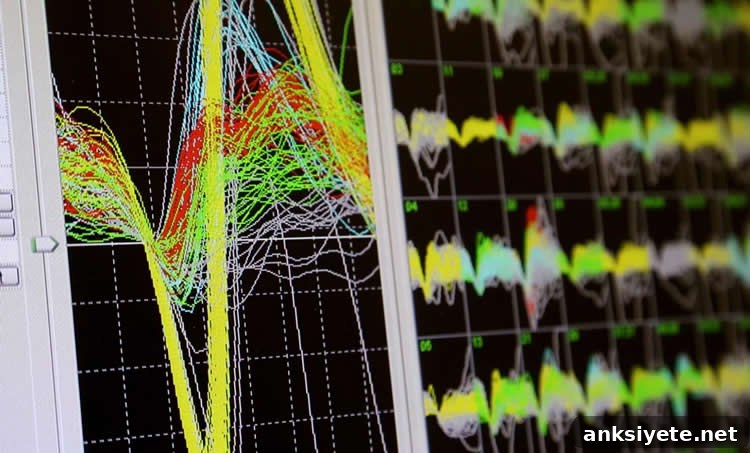
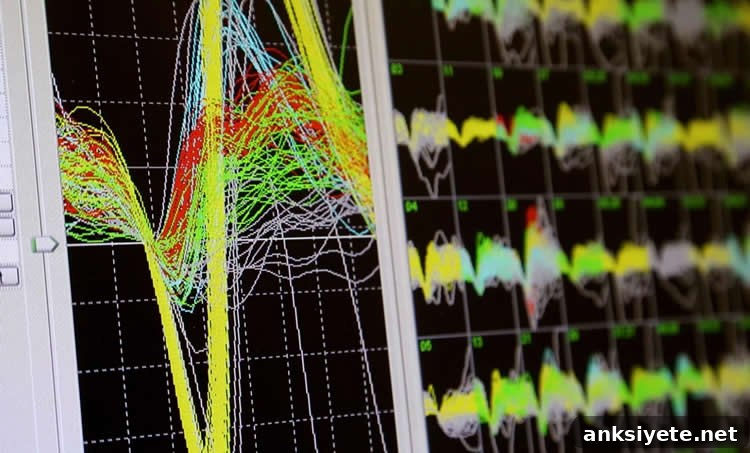
What sets this study apart is its simultaneous recording of hundreds of neurons in the motor cortices of two freely interacting monkeys. The research team developed a multi-channel wireless recording system to capture electrical activity from both animals at the same time while they shared the same space and participated in a cooperative task.
In the core experiment, one monkey—the “passenger”—sat in a robotic wheelchair that carried it toward a reward, a grape. A second monkey—the “observer”—remained stationary and watched the passenger’s trajectory. The passenger and observer alternated roles across trials, while the researchers recorded neuronal ensemble activity from the motor cortex of each animal. Analyses focused on how neural synchrony between the two brains varied with task variables and social context.
Episodes of interbrain cortical synchronization reliably reflected multiple aspects of the interaction. The researchers found that ICS could predict the passenger’s wheelchair location and velocity, and it also tracked the physical distance between the two monkeys and how close the passenger was to the reward. In other words, synchronized neural activity across brains encoded moment-to-moment features of the shared motor task.
Importantly, social hierarchy influenced the strength and timing of synchronization. When a dominant monkey acted as the passenger while a lower-ranking monkey observed, ICS increased as the two animals drew closer together and peaked at roughly three feet apart—close enough for grooming or an aggressive reach. By contrast, when a lower-ranking monkey was the passenger and a dominant animal observed, synchronization did not increase with proximity. These findings indicate that social rank modulates interbrain coordination during interaction.
The authors propose that ICS episodes arise from the coordinated activation of mirror-neuron populations in both animals’ motor cortices. If similar mechanisms operate in humans, measuring interbrain synchronization could offer new ways to study and quantify social coordination, team performance and disorders of social cognition.
The study’s authors note that these results could inform diagnostics and treatments for conditions in which neuronal mirroring or social brain dynamics diverge from typical patterns. For example, measuring interbrain cortical synchronization non-invasively in people could help evaluate how effectively groups coordinate during tasks that require tight collaboration—such as team sports, ensemble music or dance—and could guide training to improve teamwork and social cohesion.
Nicolelis and colleagues plan to extend this line of research to humans using noninvasive methods such as functional MRI and electrode caps to probe whether comparable patterns of brain-to-brain synchrony accompany shared actions and social interactions.
Study authors: Miguel A. L. Nicolelis (senior author), Po-He Tseng, Sankaranarayani Rajangam, Gary Lehew and Mikhail A. Lebedev.
Funding: This research was supported by The Hartwell Foundation and by grants from the National Institute of Neurological Disorders and Stroke (R01NS073952) and the National Institute of Mental Health (DP1MH099903), both part of the U.S. National Institutes of Health.
Original research: “Interbrain cortical synchronization encodes multiple aspects of social interactions in monkey pairs,” published in Scientific Reports, March 29, 2018.
Abstract
Interbrain cortical synchronization encodes multiple aspects of social interactions in monkey pairs
Although the primate brain is adapted to handle complex social situations, the neural signatures of social interactions are not fully understood. To address this, the authors performed simultaneous wireless recordings from neuronal ensembles in pairs of monkeys during a whole-body navigation task that required continuous social interaction. In each trial one monkey (the passenger) was carried in a robotic wheelchair toward a food dispenser while the other (the observer) watched. The two monkeys alternated roles. Recordings from motor cortex and dorsal premotor cortex revealed episodic interbrain cortical synchronization (ICS). The probability of ICS depended on wheelchair kinematics, the passenger-observer distance, and the passenger-food distance—variables known to shape social behavior. These findings indicate that ICS encodes specific aspects of primate social interaction.