
Summary: Researchers report that MDMA, the primary active compound in ecstasy, can increase cooperative behaviour—but only when the other person is perceived as trustworthy.
Source: King’s College London.
New research from King’s College London shows that MDMA enhances cooperation in social interactions, but this effect depends on the trustworthiness of the other person. The study, the first detailed investigation of how MDMA affects cooperative decision-making, also links these behavioural changes to altered activity in brain regions involved in social cognition.
Problems with social processing—such as difficulties in interpreting others’ intentions and rebuilding trust after betrayal—are central features of many psychiatric disorders and are often poorly addressed by current medications. The findings, published in the Journal of Neuroscience, may therefore be relevant for conditions where social functioning is impaired, including post-traumatic stress disorder (PTSD).
MDMA is widely used recreationally for its pronounced social and emotional effects and is known to stimulate release of neurotransmitters that influence mood and behaviour. Despite this, the specific neural mechanisms by which MDMA alters complex social behaviour have been unclear.
In a double-blind, placebo-controlled, crossover experiment, twenty healthy adult men received either a typical recreational dose of MDMA (100 mg) or a placebo before completing a series of tasks inside an MRI scanner. One of the key tasks was an iterated Prisoner’s Dilemma game. In this paradigm, two players repeatedly choose to cooperate or compete: mutual cooperation yields points for both players, but if one player competes while the other cooperates, the competitor receives the larger reward while the cooperator receives nothing.
The opponents in the game were in fact pre-programmed responses designed to behave in either a consistently trustworthy or an untrustworthy manner. Participants were led to believe they were playing against real people and were asked to rate how much they trusted their opponent throughout the task.
Results showed that MDMA increased cooperative behaviour, but crucially this effect occurred only when participants were interacting with trustworthy opponents. MDMA did not change participants’ explicit trust ratings: trustworthy opponents were rated highly and untrustworthy opponents were rated low regardless of drug condition. Likewise, MDMA did not make participants more likely to cooperate with clearly untrustworthy partners, indicating the drug did not simply make people naively trusting or gullible.
When trustworthy partners violated expectations and behaved uncooperatively, the initial negative impact on trust was similar whether participants were on MDMA or placebo. However, subjects under the influence of MDMA recovered cooperative behaviour more quickly after such breaches of trust, which resulted in higher overall cooperation with trustworthy partners across the game.
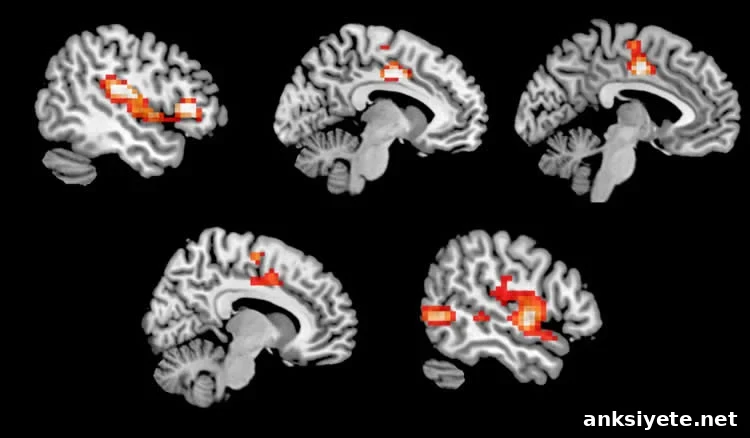
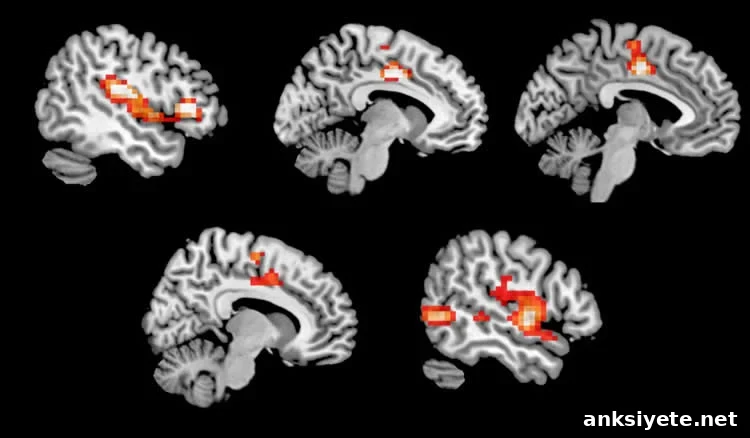
MRI data revealed that MDMA altered neural responses to other people’s behaviour rather than directly changing the decision process itself. MDMA increased activity in the superior temporal cortex and mid-cingulate cortex—areas widely implicated in understanding others’ thoughts, beliefs and intentions. During evaluation of trustworthy opponents, MDMA also increased activity in the right anterior insula, while the same region showed decreased activity when participants processed behaviour from untrustworthy opponents. The right anterior insula contributes to integrating appraisal, risk assessment and uncertainty—functions relevant to evaluating social partners.
Additional clusters showing increased activation under MDMA included regions incorporating the precentral and supramarginal gyri, the central operculum/posterior insula, and the supplementary motor area. The study also reported a treatment-by-opponent interaction in the right anterior insula and the dorsal caudate, consistent with MDMA producing context-dependent changes in social information processing.
Professor Mitul Mehta from the Institute of Psychiatry, Psychology & Neuroscience (IoPPN) noted that understanding the neural basis of social behaviour is essential for identifying what goes awry in psychiatric conditions. Given that psychotherapy depends heavily on social engagement between patient and therapist, these findings help explain why MDMA could augment psychotherapeutic approaches and be a useful adjunct in clinical settings.
MDMA is currently being evaluated in phase 3 clinical trials for PTSD when administered alongside psychotherapy and has been granted Breakthrough Therapy designation by the U.S. Food and Drug Administration (FDA).
Funding: The research was funded by the Medical Research Council.
Source: Robin Bisson, King’s College London.
Publisher: NeuroscienceNews.com (organized reporting).
Original research: “MDMA increases cooperation and recruitment of social brain areas when playing trustworthy players in an iterated Prisoner’s Dilemma” by Anthony S. Gabay, Matthew J. Kempton, James Gilleen and Mitul A. Mehta. Journal of Neuroscience. Published November 19, 2018. doi: 10.1523/JNEUROSCI.1276-18.2018
Abstract (condensed)
This study examined how MDMA modulates social decision-making and the associated neural activity using an iterated Prisoner’s Dilemma with trustworthy and untrustworthy opponents. In a double-blind, placebo-controlled crossover design, 20 male participants received 100 mg MDMA or placebo and played repeated rounds while undergoing fMRI. MDMA selectively enhanced cooperation with trustworthy opponents by promoting faster recovery from breaches of cooperation, without changing explicit trust ratings. Neural effects included increased activation across social cognition regions—superior temporal cortex, mid-cingulate cortex, precentral and supramarginal gyri, posterior insula/operculum and supplementary motor area—and opponent-dependent modulation in the right anterior insula and dorsal caudate. These results demonstrate that MDMA’s influence on cooperative behaviour is context-specific and linked to changes in social brain networks.
Significance: The findings deliver new insight into how MDMA affects interpersonal interactions, highlighting its potential to enhance cooperative engagement with trustworthy partners and to support psychotherapeutic approaches that rely on rebuilding trust.