
Summary: A low-protein diet may accelerate neurodegeneration, while supplementation with Amino LP7—a specific blend of seven essential amino acids—appears to slow brain atrophy and reduce the progression of dementia-related deficits in preclinical models.
Source: The National Institutes for Quantum Science and Technology
Dementia, including Alzheimer’s disease, is a group of disorders marked by severe loss of memory, cognition, and daily functioning. The World Health Organization estimates that roughly 10 million people worldwide develop dementia each year, making prevention and mitigation urgent public health priorities. Despite extensive research, straightforward and effective strategies to prevent dementia remain limited—particularly those that are safe and practical for older adults.
A new study published in Science Advances from researchers in Japan investigates how dietary protein and targeted amino acid supplementation influence neurodegeneration in a mouse model of tauopathy, a condition characterized by abnormal Tau protein aggregates common in Alzheimer’s disease. The team reports that protein malnutrition accelerates brain atrophy and synaptic decline, while a defined mixture of seven essential amino acids—Amino LP7—can counteract these harmful effects.
Previous clinical and preclinical work has indicated cognitive benefits from Amino LP7, and this study explores mechanisms by which essential amino acids could preserve neuronal health and slow dementia-related processes.
Dr. Makoto Higuchi of the National Institutes for Quantum Science and Technology, a lead investigator on the project, explains that older adults often eat lower-protein diets, which correlate with worse maintenance of cognitive function. Because amino acids are the structural and functional building blocks of proteins, the researchers tested whether supplementation with specific essential amino acids could protect the aging brain and which pathways might mediate that protection.
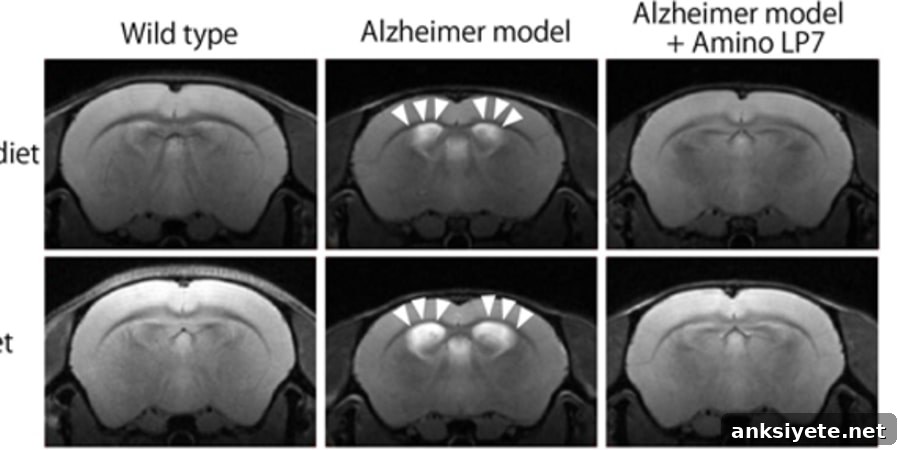
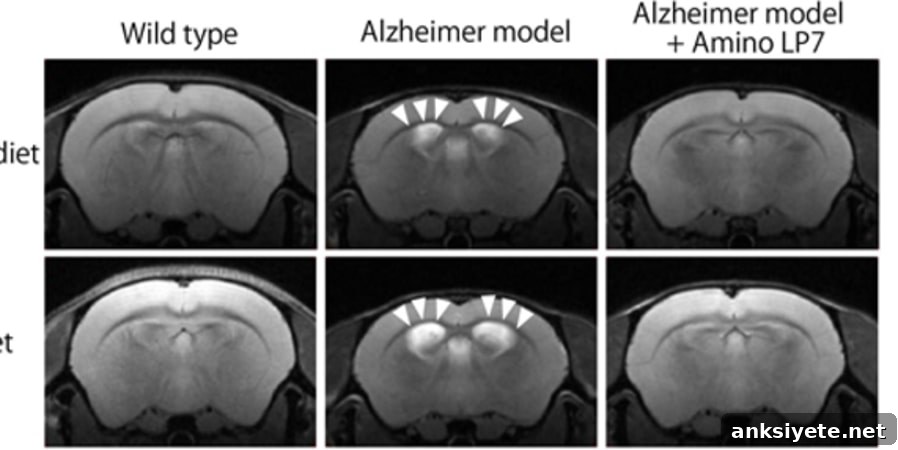
In the experimental tauopathy mouse model, animals fed a low-protein diet showed accelerated brain degeneration and reduced neuronal connectivity. When the diet was supplemented with Amino LP7, those negative outcomes were markedly reduced: neuronal loss diminished, synaptic markers improved, and overall measures of brain atrophy were suppressed, even though pathological Tau aggregates remained present.
Co-leader Dr. Akihiko Kitamura highlights an important implication: most Alzheimer’s strategies focus on clearing Tau plaques or amyloid deposits. This study demonstrates that it is possible to prevent or slow brain atrophy and functional decline without directly modifying Tau deposition, through nutritional support with essential amino acids.
To identify underlying mechanisms, the researchers performed comprehensive gene expression analyses and biochemical measurements. Amino LP7 treatment lowered markers of neuroinflammation, reduced neuronal cell death, and helped preserve synaptic function. Notably, the supplement also limited brain levels of kynurenine, a metabolite that can trigger neuroinflammatory gliosis and neurotoxicity when it accumulates. The data indicate that Amino LP7 blocks kynurenine uptake into the brain, thereby preventing inflammation-driven damage from immune cells that might otherwise attack neurons.
Drs. Hideaki Sato and Yuhei Takado, key contributors to the study, summarize the findings: essential amino acids help maintain neural homeostasis and can counteract pathways that lead to neurodegeneration. While the experiments were conducted in mice, the results suggest that targeted amino acid intake may be a viable strategy to modify dementia risk or progression in humans, including in Alzheimer’s disease and related tauopathies.
This research opens new avenues for prevention and treatment: nutritional approaches that preserve synaptic integrity and reduce neuroinflammation could complement existing therapeutic strategies aimed at protein aggregates. Because Amino LP7 has already shown benefits for cognitive function in older adults without diagnosed impairment, these findings raise the possibility that the supplement could also help people with mild cognitive dysfunction or early-stage dementia—pending clinical validation.
Although further human studies are needed to confirm efficacy and safety, the study supports the broader view that diet and specific amino acid profiles play an important role in brain health. Addressing protein malnutrition or inadequate intake of essential amino acids may be an accessible, low-risk avenue to reduce the burden of age-related neurodegeneration and dementia worldwide.
About this diet and dementia research news
Author: Masumi Nozato
Source: The National Institutes for Quantum Science and Technology
Contact: Masumi Nozato – The National Institutes for Quantum Science and Technology
Image: The image is credited to National Institutes for Quantum Science and Technology
Original Research: Open access.
“Neurodegenerative processes accelerated by protein malnutrition and decelerated by essential amino acids in a tauopathy mouse model” by Hideaki Sato, Yuhei Takado, Sakiko Toyoda, Masako Tsukamoto-Yasui, Keiichiro Minatohara, Hiroyuki Takuwa, Takuya Urushihata, Manami Takahashi, Masafumi Shimojo, Maiko Ono, Jun Maeda, Asumi Orihara, Naruhiko Sahara, Ichio Aoki, Sachise Karakawa, Muneki Isokawa, Noriko Kawasaki, Mika Kawasaki, Satoko Ueno, Mayuka Kanda, Mai Nishimura, Katsuya Suzuki, Akira Mitsui, Kenji Nagao, Akihiko Kitamura, Makoto Higuchi. Science Advances
Abstract
Neurodegenerative processes accelerated by protein malnutrition and decelerated by essential amino acids in a tauopathy mouse model
Epidemiological evidence suggests protein malnutrition could be a risk factor for age-related dementia, yet the molecular links between dietary protein, amino acids, and neurodegeneration remain unclear.
This study demonstrates that a low-protein diet down-regulates synaptic component expression and modestly accelerates brain atrophy in mice modeling neurodegenerative tauopathies. Importantly, administration of seven selected essential amino acids robustly rescued these abnormal phenotypes.
Treatment with these amino acids substantially suppressed inflammation-associated gene expression and progressive brain atrophy in the tauopathy model without altering Tau deposits. The intervention also reduced brain kynurenine levels by inhibiting its uptake into the brain, thereby limiting neuroinflammatory gliosis and downstream neurotoxicity.
These findings underscore the role of specific essential amino acids as systemic mediators of brain homeostasis and reveal a potential nutritional pathway to counteract neurodegenerative processes linked to dementia.