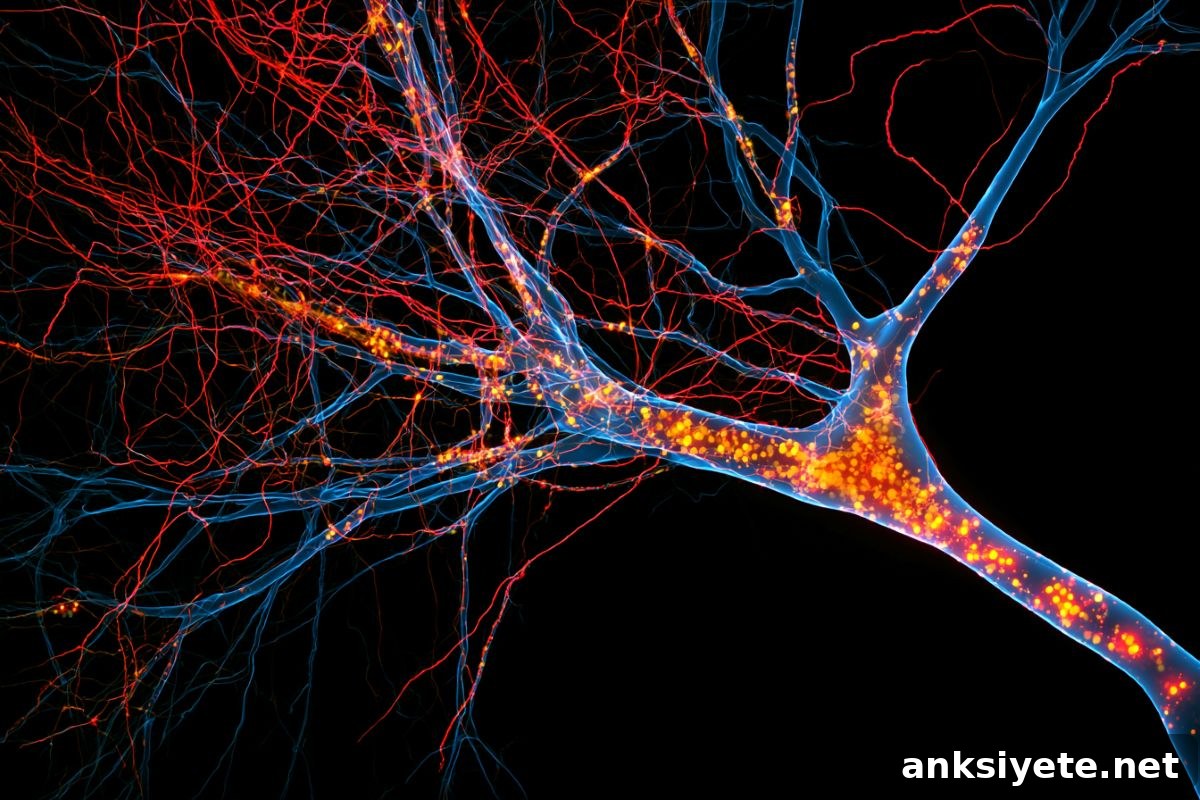
Summary: Neurodegenerative disorders such as Alzheimer’s and Parkinson’s affect tens of millions worldwide and arise from complex, progressive cellular failures. One recurring observation in affected brains is the gradual accumulation of iron inside neurons. While small amounts of neuronal iron are benign for years, long-term buildup eventually undermines cellular defenses and contributes to slow, widespread neuronal decline. A new study from the Salk Institute describes how chronic iron accumulation erodes neuronal resilience over time and defines a time-dependent pathway the authors call chronoferroptosis.
Key Facts
- Introducing chronoferroptosis: Chronoferroptosis extends the classical concept of ferroptosis by adding time as a central factor: prolonged, low-level iron accumulation creates a persistent stress state rather than an immediate lethal event.
- Time, not immediate toxicity: The researchers show that iron itself is not instantly toxic; instead, long-term retention of iron past a resilience threshold gradually strips neurons of protective mechanisms, leaving them vulnerable to age-related insults.
- Rise in lipid peroxidation: Chronically iron-loaded neurons experience substantial increases in lipid peroxidation—molecular damage to cellular fats—accompanied by depletion of critical antioxidant proteins and glutathione.
- Acute versus chronic exposure: Neurons exposed acutely to iron (hours) remain capable of withstanding additional stress, whereas neurons exposed chronically (days) collapse rapidly when challenged with the same secondary insults.
- Export machinery failure: The Salk team suggests a gradual failure of neuronal iron-export systems causes recycled iron to accumulate internally over time, driving the chronic stress state.
- Therapeutic possibilities: Defining this temporal pathway opens opportunities to develop treatments aimed at preserving neuronal resilience; the Salk lab reports early-stage chemical inhibitors that target chronoferroptosis.
Source: Salk Institute
Background: Neurodegenerative diseases affect tens of millions worldwide. In the United States, organizations such as the Alzheimer’s Association and Parkinson’s Foundation estimate roughly 7 million people live with Alzheimer’s and about 1 million with Parkinson’s. A consistent clue in affected brains is iron accumulation. Researchers at the Salk Institute set out to determine whether and how gradual iron buildup inside neurons contributes to neurodegenerative disease processes.
Using a human-derived neuronal cell line, the team created the first progressive cellular model that mimics long-term iron retention. By comparing short-term (6–8 hours) and long-term (nine days) iron exposures, they discovered that chronic iron loading remodels cellular redox balance, undermining antioxidant defenses while increasing harmful oxidative reactions—a condition they name chronoferroptosis.
Senior author Pam Maher, PhD, emphasizes that ferroptosis has been studied primarily as an iron-dependent cell death pathway driven by lipid peroxidation. Chronoferroptosis adds a temporal dimension: instead of immediate cell death, prolonged iron stress produces a persistent, sub-lethal ferroptotic adaptation that depletes glutathione and key antioxidant proteins. Over time, this adaptation leaves neurons hypersensitive to subsequent oxidative or ferroptotic challenges.
Co-author Nawab John Dar, PhD, explains that iron is essential to many biological functions—oxygen transport, mitochondrial energy production and immune function among them—so the problem is not iron per se but its mismanagement as neurons age. The team suspects a gradual failure of neuronal iron-export mechanisms causes iron to be recycled and trapped inside the cell, producing a continual low-grade stress that only becomes harmful after prolonged exposure.
Experimental findings: Retinoic acid-differentiated SH-SY5Y neuronal cells were exposed to iron acutely or chronically. Acute exposure produced minimal biochemical change and did not sensitize cells to oxidative challenges. In contrast, chronic iron exposure produced several coordinated changes: increased ferritin, mitochondrial superoxide accumulation, reduced GPX4 expression, loss of glutathione (GSH), and elevated lipid peroxidation. Chronic depletion of GSH alone reproduced many features of the iron-induced phenotype. Cells under chronic ferroptotic stress were far more sensitive to ferroptosis inducers and hydrogen peroxide, and ferrostatin-1 reduced these effects, implicating lipid peroxidation as a driving force.
These results indicate that sustained disruption of iron and glutathione homeostasis remodels neuronal redox balance and creates a persistent ferroptotic adaptation—chronoferroptosis—that may represent an early vulnerability in neurodegenerative pathology. The study highlights the importance of long-term stress models for studying progressive diseases and suggests new preventive targets upstream of widespread neuronal loss.
How chronoferroptosis could affect care and research
Chronoferroptosis reframes iron accumulation as a progressive weakening of neuronal defenses rather than a direct, immediate toxin. This perspective creates potential clinical advantages: if clinicians or researchers can detect when neurons transition into this vulnerable iron-stressed state, interventions could be applied earlier—decades before irreversible degeneration. The Salk lab reports several compounds designed to inhibit chronoferroptosis, offering a potential route to bolster neuronal resilience and delay age-related neurodegeneration.
Other authors and funding
The paper was coauthored by David Soriano-Castell of the Salk Institute. Funding was provided by the National Institutes of Health (R01AG067331, R01AG069206).
Key Questions Answered
A: Iron is vital for many cellular functions. The risk arises when aging disrupts the cellular systems that export and recycle iron. When export fails, iron accumulates and exposes cells to prolonged oxidative stress. It is the duration of that stress—rather than the mere presence of iron—that erodes neuronal resilience.
A: Classic ferroptosis is typically a rapid, iron-dependent cell death driven by lipid peroxidation. Chronoferroptosis describes a slow, persistent ferroptotic adaptation in which long-term iron retention gradually depletes antioxidant defenses and creates a hypersensitive state without immediate cell death.
A: Chronoferroptosis identifies an upstream, preventive target. Detecting the transition to this iron-stressed state could allow earlier interventions. The Salk lab has developed compounds intended to inhibit this pathway, suggesting a path toward drugs that maintain neuronal resilience and delay neurodegeneration.
Editorial Notes:
- This article was edited by a Neuroscience News editor.
- Journal paper reviewed in full.
- Additional context added by our staff.
About this neuroscience research news
Author: Salk Communications
Source: Salk Institute
Contact: Salk Communications – Salk Institute
Image: The image is credited to Neuroscience News
Original Research: Open access. “Sustained dysregulation of iron and glutathione homeostasis induces chronoferroptosis, a persistent ferroptotic adaptation in neuronal cells” by Nawab John Dar, David Soriano-Castell & Pamela Maher. DOI: 10.1038/s41420-026-03208-6
Abstract
Sustained dysregulation of iron and glutathione homeostasis induces chronoferroptosis, a persistent ferroptotic adaptation in neuronal cells
Although iron accumulates in brain regions affected by neurodegenerative diseases, the mechanism by which chronic iron contributes to neuronal dysfunction has been unclear. This study shows that sustained iron overload—unlike brief exposure—creates a ferroptotic stress state in which neurons remain viable but become hypersensitive to oxidative injury.
Retinoic acid-differentiated SH-SY5Y neuronal cells were treated with acute (6–8 hours) or chronic (9 days) iron loading to model transient versus prolonged age-related iron stress. Acute exposure produced minimal biochemical changes and did not sensitize cells to oxidative or ferroptotic challenges. Chronic exposure, however, provoked ferritin upregulation, mitochondrial superoxide accumulation, suppression of GPX4, elevated lipid peroxidation, and glutathione loss.
Chronic depletion of glutathione by buthionine sulfoximine reproduced the iron-induced phenotype. Cells under chronic stress were more sensitive to ferroptosis inducers and hydrogen peroxide, and ferrostatin-1 mitigated these effects, implicating lipid peroxidation as a key driver. Overall, chronic disruption of iron homeostasis with consequent glutathione depletion remodels cellular redox balance over time, inducing a persistent ferroptotic adaptation—chronoferroptosis—characterized by coordinated changes in iron-handling and antioxidant proteins that may mark early vulnerability to neurodegenerative disease. These findings underscore the need for sustained stress paradigms when modeling progressive neurodegeneration.