
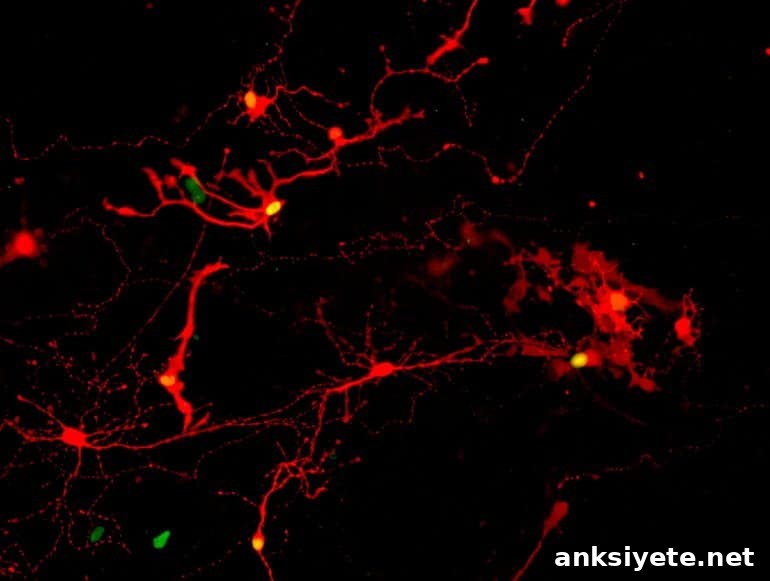
Summary: Retinal cells produced from human stem cells can extend processes and form functional contacts with neighboring cells, a new study reports. These lab-grown cells show the ability to replace damaged retinal neurons and transmit sensory signals, advancing the prospect of clinical trials for treating diseases that cause vision loss and blindness.
Source: University of Wisconsin
Retinal cells grown from human stem cells can reach out and connect with neighboring cells, completing a “handshake” that suggests they are prepared for testing in people with degenerative eye conditions.
Researchers at the University of Wisconsin–Madison have spent more than a decade developing retinal organoids—three-dimensional clusters of cells grown in the lab that model the structure and function of the retina, the light-sensitive tissue at the back of the eye.
Using human skin cells reprogrammed into pluripotent stem cells, the team guided these cells to develop into layered retinal tissues containing multiple cell types that detect light and convey visual information to the brain.
“We intended to use cells from those organoids as replacement parts for the same cell types lost to retinal disease,” says David Gamm, professor of ophthalmology at UW–Madison and director of the McPherson Eye Research Institute, whose lab pioneered the organoid system.
A key question remained: after months of growing in compact organoid form, would these cells behave appropriately once dissociated and transplanted? Their ability to reconnect and communicate with host retinal cells is critical for any potential therapy.
Earlier work published in 2022 from Gamm’s group showed that photoreceptors derived from these organoids respond to various wavelengths and intensities of light and can extend axon-like processes when separated from the organoid structure. The current study focused on whether those processes can form synaptic contacts—actual points of communication—with other retinal neurons.
“The final piece was to determine if these axon-like processes can plug into, or shake hands with, other retinal cell types so they can transmit signals,” Gamm says. The new results, showing successful re-formation of synaptic connections between dissociated organoid-derived retinal cells, appear in the Proceedings of the National Academy of Sciences.
Neurons communicate across synapses, tiny gaps at the tips of their processes. To establish that lab-grown retinal neurons can replace diseased cells and carry sensory information like native cells, the researchers needed direct evidence that new synapses could form after dissociation.
Xinyu Zhao, UW–Madison professor of neuroscience and a co-author on the study, collaborated with the Gamm lab to test synapse formation using a modified rabies virus-based monosynaptic tracing method. This approach allows identification of cell pairs that have established direct synaptic connections.
Graduate students and co–first authors Allison Ludwig and Steven Mayerl helped dissociate retinal organoids into single cells, let the cells extend processes for a week to form new contacts, then exposed them to the tracing virus. Fluorescent labeling revealed many retinal cells that had been infected via a synapse, indicating that connections had formed between neighboring cells.
“We’ve been assembling this story step by step in the lab, building confidence that these cells are moving in the right direction,” Gamm says. He has patented the organoid technology and co-founded Madison-based Opsis Therapeutics, which is working to adapt the discovery into clinical treatments for human retinal disease.
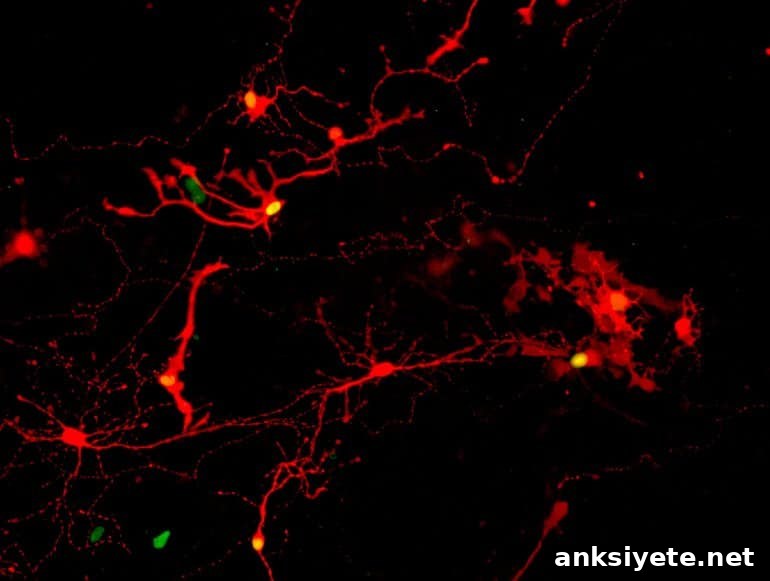
Following confirmation of synaptic contacts, the team analyzed which cell types were involved. The majority of traced presynaptic cells were photoreceptors—rods and cones—the very neurons lost in conditions such as retinitis pigmentosa and age-related macular degeneration, and often damaged by eye injuries. Retinal ganglion cells, which degenerate in optic nerve diseases such as glaucoma, were the next most common class of traced neurons.
“That finding was significant,” Gamm notes. “It underscores the broad therapeutic potential of these retinal organoids for multiple causes of vision loss.”
About this genetics and visual neuroscience research news
Author: Chris Barncard
Source: University of Wisconsin
Contact: Chris Barncard – University of Wisconsin
Image: The image is credited to UW–Madison / Gamm Laboratory.
Original Research: Open access.
“Re-formation of synaptic connectivity in dissociated human stem cell-derived retinal organoid cultures” by Allison L. Ludwig et al. PNAS
Abstract
Re-formation of synaptic connectivity in dissociated human stem cell-derived retinal organoid cultures
Human pluripotent stem cell (hPSC)-derived retinal organoids (ROs) can reliably produce retinal neurons that are promising candidates for cell replacement strategies [Capowski et al., Development 146, dev171686 (2019)].
The capacity of these lab-grown retinal neurons to form new synaptic connections after dissociation from ROs is essential to assessing their potential to restore visual function.
Until now, direct evidence showing reestablishment of retinal neuron connectivity via synaptic tracing has been lacking.
This study uses an in vitro, rabies virus-based monosynaptic retrograde tracing assay [Wickersham et al., Neuron 53, 639–647 (2007); Sun et al., Mol. Neurodegener. 14, 8 (2019)] to detect newly formed synaptic connections among early retinal cell types after RO dissociation. The authors developed a reproducible, high-throughput method to label and quantify traced retinal cell populations.
Photoreceptors and retinal ganglion cells—the primary neurons of interest for retinal cell replacement—were the two major presynaptic populations observed among traced cells. This platform enables assessment of synaptic connectivity in cultured retinal neurons and supports future cell-replacement studies that aim to characterize and enhance synaptogenesis.
Used alongside traditional preclinical animal testing, in vitro synaptic tracing offers a complementary approach, particularly because cross-species differences in synaptic machinery can limit the predictive value of xenograft models for human therapies.