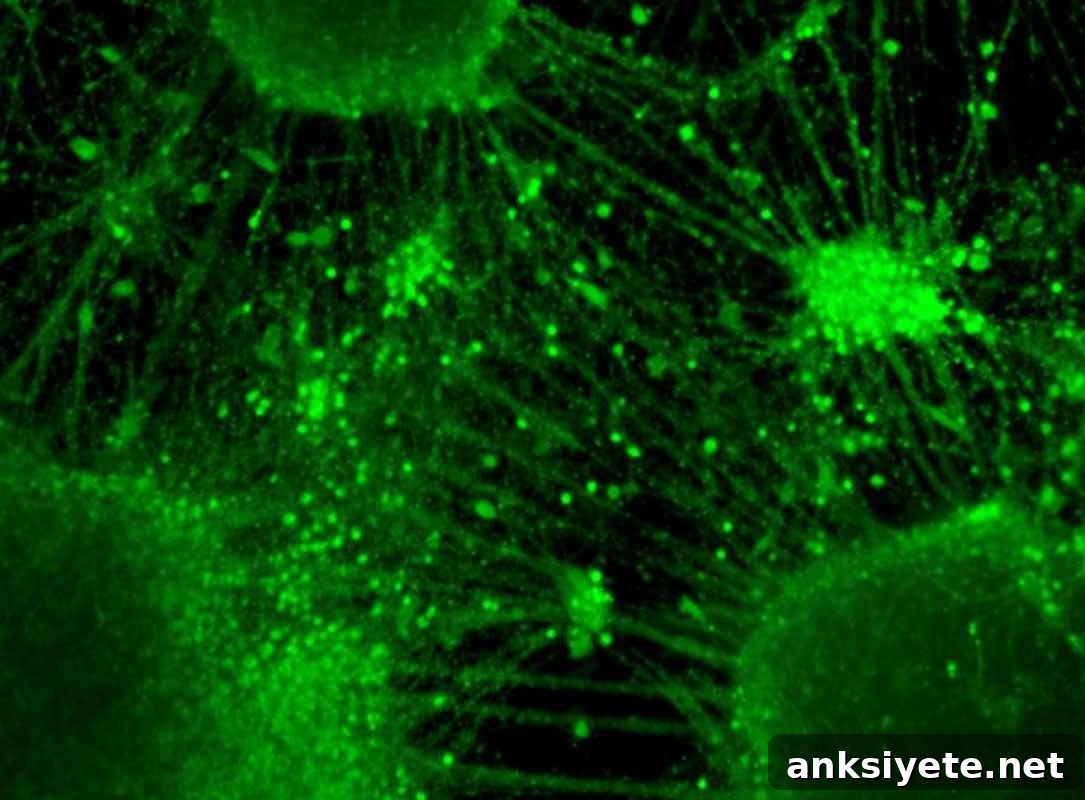
Summary: A cerebral organoid enables researchers to monitor dynamic changes in calcium signaling and to visualize the coordinated activity of large groups of cells.
Source: Cell Press
Cerebral organoids are three-dimensional, lab-grown tissue cultures that replicate many features of the developing human brain. Researchers in Japan report a new functional analysis method for neural networks derived from these organoids in a study published June 27 in the journal Stem Cell Reports. While these organoids do not possess human-level cognition, the new technique for detecting and mapping neural activity offers a powerful approach for studying human brain function at the cellular-network level.
“Because they recapitulate aspects of cerebral development, cerebral organoids can serve as a proxy for the human brain when investigating complex developmental processes and neurological disorders,” says corresponding author Jun Takahashi, professor at Kyoto University.
Current studies using cerebral organoids face several limitations. Organoids typically lack supporting structures found in vivo—such as blood vessels and surrounding tissues—which restricts long-term maturation and physiological input. At the same time, researchers have had limited tools to evaluate neural activity across large cell populations within organoids, making comprehensive functional assessment of neuronal networks difficult.
“In our study, we developed a new analysis tool that captures dynamic changes in network activity across a detected field, reflecting the behavior of more than a thousand individual cells,” explains first and co-corresponding author Hideya Sakaguchi, formerly a postdoctoral fellow at Kyoto University and currently at the Salk Institute. “The most compelling result is that we could detect changes in calcium ion signaling and visually map the overall cell activity patterns over time.”
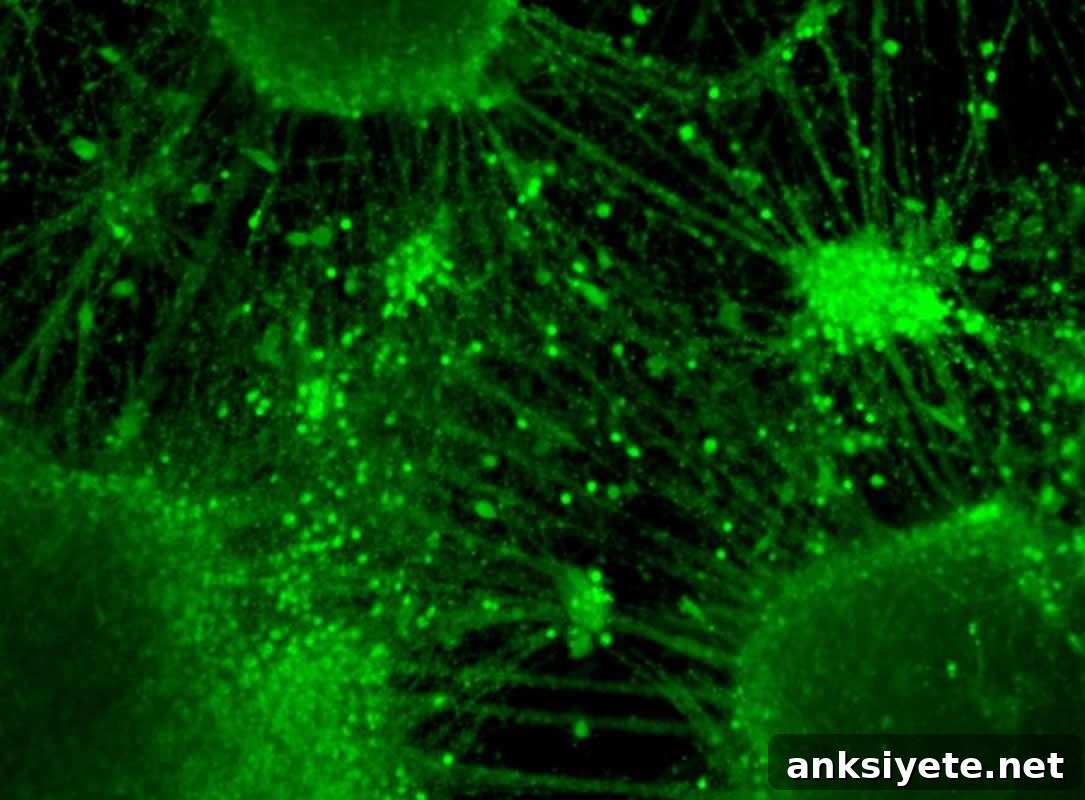
To produce the organoids, the team initiated cultures from pluripotent stem cells capable of differentiating into a range of tissues. These cells were formed into spherical aggregates and maintained in a culture medium formulated to support cerebral development. After appropriate growth, the organoids were dissociated and replated to allow the self-organization of neural networks in two- and three-dimensional culture conditions. Using calcium-sensitive fluorescent indicators, the researchers imaged spontaneous activity and recorded both synchronized and non-synchronized firing patterns among neurons.
These synchronized calcium transients are notable because coordinated activity underlies many brain functions, including pattern formation and memory encoding. The imaging and analysis pipeline provided simultaneous raster plots, cluster analyses, and spatial distributions of cells, enabling a comprehensive view of how activity propagates through human cell-derived networks.
“Our method opens the possibility of broad, high-resolution assessment of human neuronal activity,” Sakaguchi says. “It can help reveal how information is represented by specific cell assemblies and may shed light on the cellular and network mechanisms that underlie psychiatric and neurological diseases.”
Ethical questions have arisen around cerebral organoid research, particularly concerns about potential emergence of complex neuronal function. Some observers have drawn philosophical comparisons to thought experiments such as “brains in a vat,” suggesting that sufficiently advanced isolated neural tissue might one day exhibit forms of consciousness.
Both Takahashi and Sakaguchi emphasize that current cerebral organoids are unlikely to develop consciousness because they lack the sensory inputs and motor outputs necessary for subjective experience. “Consciousness requires subjective experience tied to sensory input and behavioral output,” Sakaguchi notes. “Organoids without integrated sensory tissues and input–output systems will not receive the environmental interactions needed to support conscious states. That said, if future organoids are developed with full input and output systems that could support conscious experience, research would face major ethical and regulatory challenges.”
Looking ahead, applied organoid research is expected to focus on three principal areas: drug discovery, disease modeling for neuropsychiatric and neurodevelopmental disorders, and regenerative medicine. Takahashi highlights the potential for organoid-based platforms to complement or replace traditional animal models in pharmacological testing and to model currently untreatable neural diseases.
“With our functional analysis system, researchers can examine cell activity patterns that correspond to specific brain functions, accelerating the discovery of novel therapeutics and improving disease models,” he says.
Funding: This work was supported by a grant from the Network Program for Realization of Regenerative Medicine at the Japan Agency for Medical Research and Development (AMED), JSPS KAKENHI, and the Grant-in-Aid for JSPS Fellows.
Source:
Cell Press
Media Contacts:
Annie L. Zhang – Cell Press
Image Source:
Image credited to Takahashi et al. / Stem Cell Reports.
Original Research (open access):
“Self-Organized Synchronous Calcium Transients in a Cultured Human Neural Network Derived from Cerebral Organoids.” Jun Takahashi et al., Stem Cell Reports. DOI: 10.1016/j.stemcr.2019.05.029
Abstract
Self-Organized Synchronous Calcium Transients in a Cultured Human Neural Network Derived from Cerebral Organoids
Highlights
• Cerebral organoids can recapitulate cerebral characteristics in three-dimensional order.
• A functional neural network was efficiently formed after dissociation of organoids.
• Calcium activity patterns were analyzed using clustering methods together with cell distribution data.
• The system provides a powerful approach for functional analysis of human neuronal networks.
Summary
The cerebrum is a major center for higher brain function, and its activity emerges from assemblies of activated cells within neural networks. Studying complex human cerebral network activity has been challenging. By using cerebral organoids derived from human embryonic stem cells, the authors observed self-organized, complex neural network activity that included both synchronized and non-synchronized patterns. Following dissociation culture, spontaneous and coordinated activity was measured by calcium imaging. The analytical workflow allowed examination of detailed cell activity patterns through raster plots, clustering, and spatial distribution mapping. The authors also demonstrated that the system can detect drug-induced dynamic changes in network activity. This comprehensive functional analysis platform offers a valuable tool for probing human neuronal network function and for advancing studies in drug discovery and disease modeling.