
Summary: For decades, researchers have observed that the tau protein behaves like a spreading fire in the brain—moving between regions and causing progressive cognitive decline. A new decade-long study has now mapped how that spread happens, identifying the neuronal pathways that guide tau’s movement and pointing to actionable targets for therapies.
By combining functional MRI scans taken while participants were alive with detailed postmortem analyses of their brain tissue, investigators found that tau “seeds” travel mainly along each person’s unique brain communication routes. The results show that an individual’s connectome—their personal pattern of neural connections—strongly influences where and how quickly Alzheimer’s disease advances. This provides direct rationale for antibody therapies that aim to intercept tau as it moves between synapses.
Key Facts
- The Seed Theory: Small, misfolded fragments of tau act as “seeds” that move between neurons at synapses. When a seed enters a new neuron it triggers the formation of neurofibrillary tangles (NFTs).
- Study Design and Scale: The team analyzed genetic data, antemortem fMRI scans, and postmortem tau seed bioactivity from 128 participants over roughly ten years, making this the largest study of human tau seed activity integrated with fMRI to date.
- Individual Specificity: Because neural wiring varies across people, the routes tau takes are individualized. A person’s connectome helps determine which regions are at risk and how rapidly pathology spreads.
- Evidence of Causality: Using Mendelian randomization, the researchers provided genetic evidence that tau seeds generated in the temporal cortex (a key memory region) causally drive the later appearance of tangles in the neocortex (involved in higher-order thinking).
- Therapeutic Implications: The findings explain why antibodies that target extracellular tau can be effective: by capturing tau while it travels between cells, antibodies can interrupt the chain of spread and potentially slow or prevent dementia.
Source: UAB
Overview of Alzheimer’s and Tau
Alzheimer’s disease is a progressive neurodegenerative disorder that impairs memory, thinking, and daily functioning. It is the most common cause of dementia worldwide, posing heavy emotional and economic burdens on patients and families. Two proteins play central roles in Alzheimer’s pathology: extracellular amyloid‑beta plaques and the intracellular protein tau. When tau becomes abnormal it forms neurofibrillary tangles that disrupt neuronal function, cause cell death, and correlate strongly with cognitive decline.
Researchers from the University of Alabama at Birmingham (UAB), Rush University Medical Center, and SUNY Upstate Medical Center published a study in Neuron that clarifies how tau tangles spread from one brain region to another. Their results provide solid evidence that intercepting tau as it moves between neurons could be an effective strategy to slow disease progression.
Tau normally stabilizes the internal scaffolding of neurons. In Alzheimer’s, tau proteins misfold, aggregate into tangles, and disrupt neural circuitry. What this study addressed is the mechanism by which tau seeds travel through the brain’s network and seed pathology in connected regions.
“Small pieces of tau form the aggregates inside neurons and can spread from neuron to neuron through synaptic connections,” said Jeremy Herskowitz, Ph.D., professor of neurology and neurobiology at UAB and the study’s corresponding author. The research demonstrates that, as people age, this synaptic transmission along individual-specific pathways is the likely mechanism driving cortical spread of tau.
Methods and Findings
The team analyzed postmortem brain samples and longitudinal clinical and imaging data from 128 participants in the Religious Orders Study and Memory and Aging Project (ROSMAP), a Rush University cohort of older adults who undergo yearly evaluations and have donated their brains for research. Participants averaged 91 years at death, and nearly one-third had clinical Alzheimer’s dementia.
From each donor, researchers sampled the inferior temporal gyrus (important for memory) and the superior frontal gyrus (important for working memory and complex thought). They measured tau seed bioactivity in synaptosome preparations from both regions, correlated seed levels with tau phosphorylation, neurofibrillary tangle burden, and cognitive impairment, and examined genetic data using Mendelian randomization to infer causal direction.
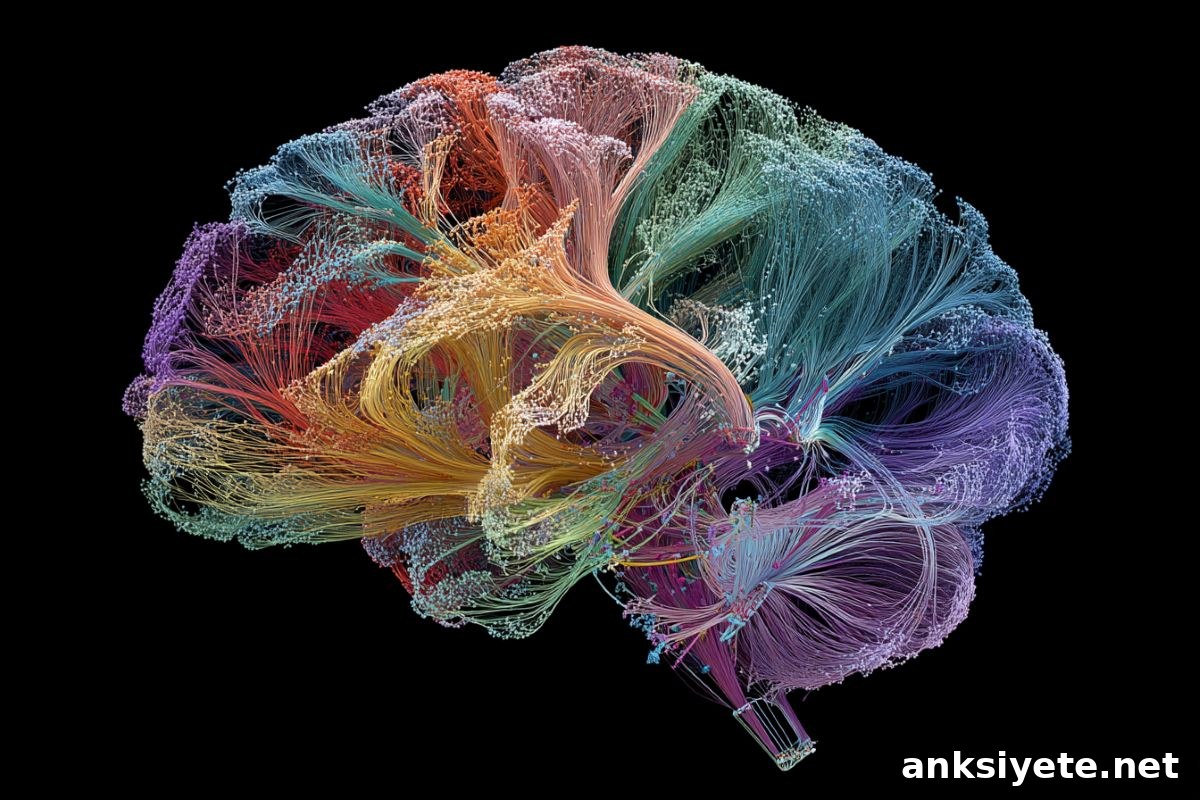
Crucially, the researchers incorporated antemortem functional MRI from the same individuals to map person-specific connectivity. These imaging data revealed that tau seed–tangle relationships are modulated by each person’s unique neural wiring: tau seeds appear to travel preferentially along the individual’s existing communication pathways, moving from one synapse to the next and establishing new sites of aggregation.
Clinical and Research Implications
The study supports the idea that therapies able to neutralize extracellular tau seeds—such as certain antibody approaches—will be most effective if they interrupt synaptic transmission of tau. Prior clinical trials have suggested extracellular tau is accessible to antibodies; this work supplies a mechanistic explanation for why that strategy can reduce spread and potentially delay cognitive decline.
“If antibodies can prevent tau from moving between brain regions, they could slow or prevent the progression to Alzheimer’s dementia,” Herskowitz said. Future research will refine how tau seeds cross synapses and how individual connectivity patterns could guide personalized therapeutic interventions or risk prediction.
First author of the Neuron paper is Audrey J. Weber, Ph.D., UAB Department of Neurology. Additional authors include Kelsey M. Greathouse (UAB), David A. Bennett and Shinya Tasaki (Rush University), Chris Gaiteri and Bernard Ng (Rush and SUNY Upstate), and Jeremy H. Herskowitz (UAB).
Funding: Supported by NIH grants F99AG083305, T32NS095775, R21AG085379, P30AG086401, R01AG061800, R01AG061798, R01AG057911, U01AG079847, P30AG10161, P30AG72975, R01AG15819, R01AG17917, U01AG46152, and U01AG61356.
Key Questions Answered:
A: Not contagious between people, but tau behaves like a slow, self‑propagating agent within the brain. A tau seed in one neuron can spread across synapses and induce healthy proteins in another neuron to misfold, creating a local chain reaction.
A: Scans taken while participants were still alive show the intact communication “roads” before they are disrupted by pathology. That allowed the team to demonstrate that tau tends to follow those specific roads to reach other regions.
A: Potentially. Because tau spread reflects an individual’s wiring, future clinical use of brain connectivity maps could help identify the next regions at risk and guide tailored antibody therapies to block those pathways.
Editorial Notes:
- This article was edited by a Neuroscience News editor.
- The journal paper was reviewed in full.
- Additional context was added by staff.
About this Alzheimer’s disease research news
Author: Rachel Beatty
Source: UAB
Contact: Rachel Beatty – UAB
Image: The image is credited to Neuroscience News
Original Research: Open access. “Tau seeds induce neurofibrillary tangle formation across brain regions via individual-specific connectivity” by Audrey J. Weber, Bernard Ng, Kelsey M. Greathouse, David A. Bennett, Shinya Tasaki, Chris Gaiteri, and Jeremy H. Herskowitz. Neuron. DOI: 10.1016/j.neuron.2026.03.001
Abstract
Tau seeds induce neurofibrillary tangle formation across brain regions via individual-specific connectivity
The spread of tau pathology across the cerebral cortex closely correlates with cognitive decline in Alzheimer’s disease. To investigate mechanisms underlying tau spread, the study measured tau seed bioactivity from inferior temporal gyrus (ITG) and superior frontal gyrus (SFG) synaptosomes in 128 individuals and demonstrated that tau seed bioactivity is associated with tau phosphorylation, neurofibrillary tangles, and cognitive impairment.
Incorporating genotype data into a Mendelian randomization framework showed that tau seeds in ITG induce local NFTs and also drive tau seeds and NFTs in SFG. Integrating antemortem functional MRI from the same individuals revealed that person-specific connectivity modulates the relationship between tau seeds and NFTs. These findings indicate that tau seeds underlie the spread of NFTs both locally and across distant brain regions via individual-specific connectivity.