
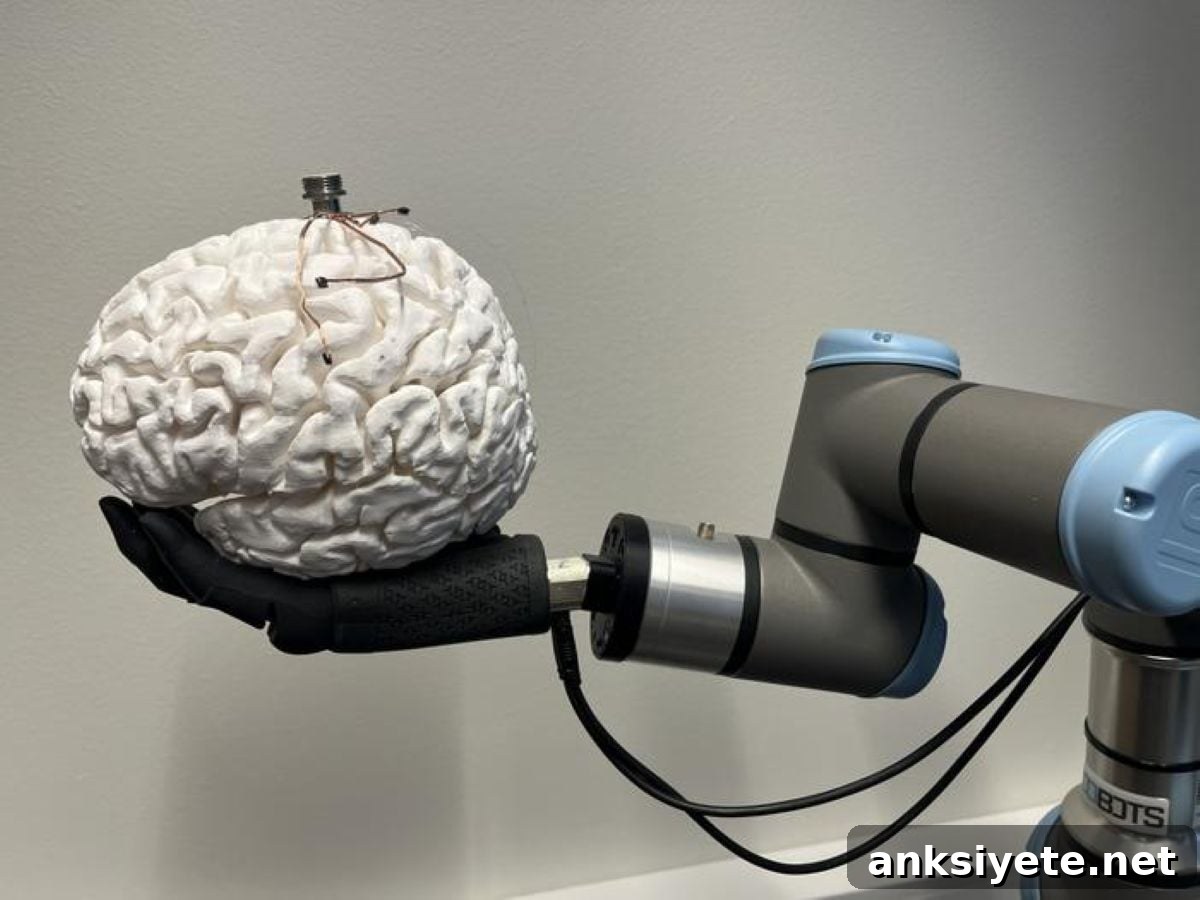
Summary: For more than fifty years, research on artificial vision and artificial touch developed in parallel but separately—vision teams working in ophthalmology and touch teams in motor-rehabilitation and robotics—leading the scientific community to assume these approaches were fundamentally different. A new comprehensive review overturns that assumption: advanced brain-computer interface (BCI) architectures for visual cortical prostheses (VCP) and somatosensory cortical prostheses (SCP) are substantially the same in their neural, computational, and electrical stimulation principles. This convergence means progress in one field can immediately benefit the other, accelerating timelines for delivering clinically viable sense-restoration technologies to people with untreatable sight loss or paralysis.
Key Facts
- Shared technological blueprint: Hardware designs, stimulation algorithms, electrode geometries and cortical microstimulation patterns used to produce artificial sight and touch are functionally equivalent.
- How cortical BCIs work: Microelectrode arrays implanted into the cortex bypass damaged peripheral pathways (for example, an injured optic nerve or spinal cord) by converting camera or sensor data into electrical micro‑pulses that the brain decodes as sensory percepts.
- Convergent complexity: Techniques developed to recreate nuanced tactile sensations—edges, texture motion, pressure gradients—use the same mathematical encoding strategies as those that generate complex visual percepts such as patterned phosphenes.
- Biological rationale: Vision and touch both transduce physical stimuli (light or mechanical pressure) into spiking electrical signals that follow comparable computational rules, making a unified stimulation strategy possible.
- Breaking clinical silos: Integrating these disciplines removes redundant research effort, enabling clinical data and technical advances in one domain to directly accelerate the other.
- A unified clinical model: The authors propose reorganizing care around a single “Department of Sense Restoration,” where patients with different sensory deficits could access a common BCI platform and shared expertise.
Source: Chalmers University of Technology
Patients living with untreatable sensory loss—such as blindness or loss of motor function with associated loss of touch—may now be closer to practical restorative options. The decisive insight is that advanced brain-interfacing solutions for touch and vision share a nearly identical technological foundation, even though they evolved in isolation over decades.
This conclusion appears in a review published in Nature Reviews Bioengineering led by Giacomo Valle, Assistant Professor at Chalmers University of Technology, Sweden. The review compares visual and somatosensory cortical prostheses side by side, examining how cortical microstimulation generates percepts, the electrode technologies in use, outcomes from clinical trials, and remaining technical and clinical challenges.
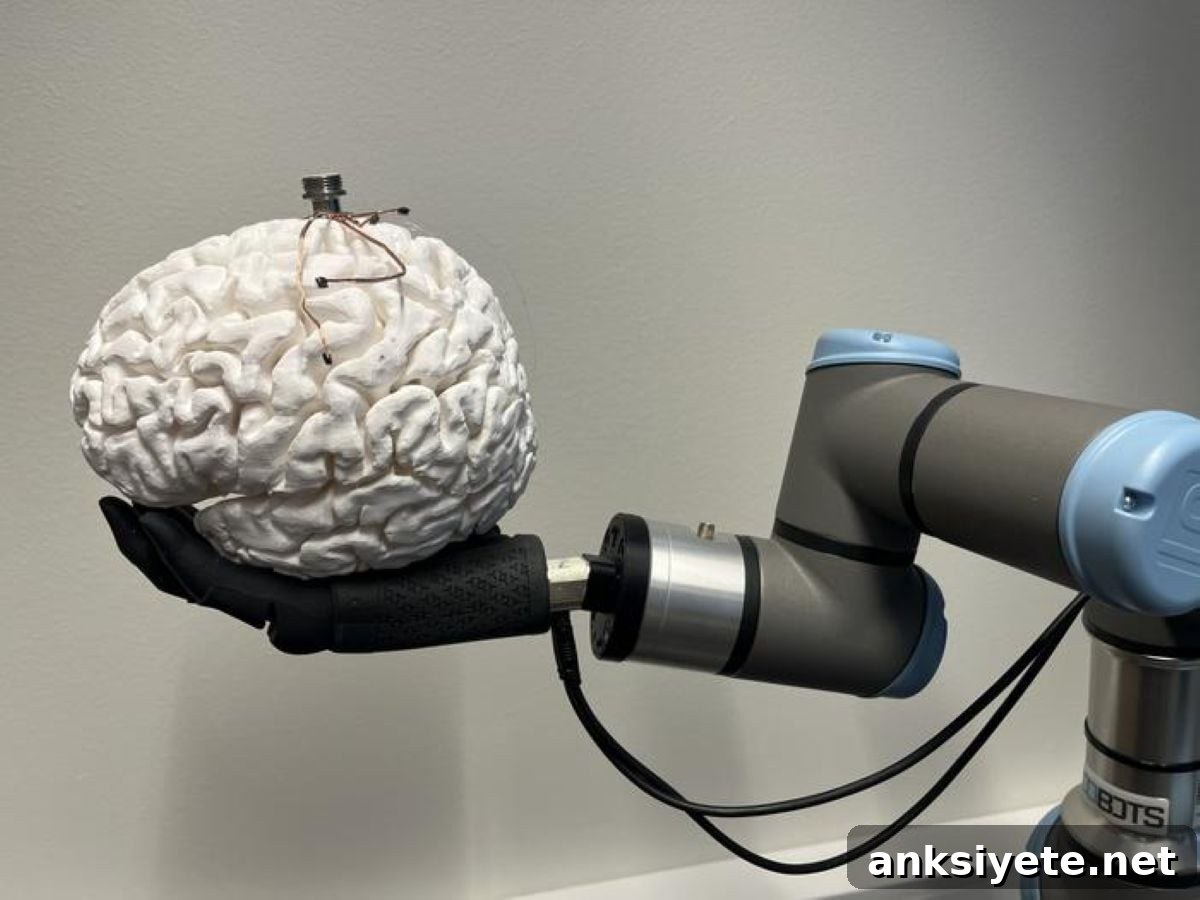
BCIs operate by implanting microelectrodes into specific cortical areas to establish a bidirectional link between the brain and external devices—cameras for vision, sensors on robotic limbs for touch. By delivering patterned electrical stimulation directly to cortical neurons, these systems can produce percepts that approximate natural sensations even when peripheral pathways are damaged or absent.
“This technology represents a meaningful advance for people with otherwise untreatable sensory deficits,” says Giacomo Valle. “By leveraging a common engineering and neuroscientific framework, we can help patients regain communication, control of movement, tactile feedback, or partial vision—capabilities that were previously out of reach.”
One technology, two senses
At a fundamental level, vision and touch operate through similar neural computations: external physical signals are encoded by peripheral receptors and then transformed into electrical activity that cortical circuits interpret. Because both senses ultimately use comparable coding and timing rules, microstimulation strategies developed for one sensory cortex can be adapted for the other by changing stimulation targets and encoding mappings. Historically, the two research communities rarely exchanged insights—attending separate conferences and treating different patient populations—so this parallel development went unrecognized until now.
Valle explains that his team’s shift toward restoring complex tactile features—such as edges, motion across the skin, or texture discrimination—highlighted encoding challenges that artificial vision researchers were already addressing for patterned phosphenes. That observation motivated a side‑by‑side review of both fields and revealed deep commonality in mathematical encoding, electrode design, and stimulation safety considerations.
The review that inspired consolidation
The review titled “Restoring vision and touch with cortical microstimulation” synthesizes animal and human research on epicortical and intracortical stimulation targeting primary visual (V1) and somatosensory (S1) cortices. It evaluates neural encoding strategies, device architectures, surgical and biocompatibility constraints, and the qualitative benefits of cortical neuroprostheses versus conventional assistive devices. The authors also outline promising directions—biomimetic encoding, multisensory integration, and alternative implant sites—that could improve perception fidelity and everyday usability.
By aligning methods and metrics across the two domains, the review argues for shared standards that will reduce duplication, harmonize regulatory pathways, and accelerate the translation of safer, higher-resolution sensory neuroprostheses into clinical practice.
Frequently asked questions
Editorial notes
- Article edited by a Neuroscience News editor.
- The referenced journal paper was reviewed in full by the editorial team.
- Additional explanatory context added by staff to clarify implications for clinical practice and research coordination.
About this neurotechnology research
Author: Emma Fry
Source: Chalmers University of Technology
Contact: Emma Fry, Chalmers University of Technology
Image credit: Chalmers University of Technology – Giacomo Valle
Original research: “Restoring vision and touch with cortical microstimulation” by Giacomo Valle, Denise Oswalt, Robert A. Gaunt, Pieter Roelfsema, Charles M. Greenspon & Eduardo Fernandez. Nature Reviews Bioengineering. DOI: 10.1038/s44222-026-00449-z. Open access.
Abstract
Restoring vision and touch with cortical microstimulation
Restoring sensory function after injury or disease is a central challenge in neuroengineering. Sensory neuroprostheses that target primary visual (V1) and somatosensory (S1) cortices aim to bypass damaged afferent pathways by reintroducing sensory percepts through direct cortical stimulation. Building on foundational non‑human primate and early human work, both epicortical and intracortical microstimulation have produced artificial visual and tactile experiences. This review examines current approaches, compares neural encoding schemes for touch and vision, evaluates technical and clinical requirements, and highlights opportunities—such as biomimetic encoding and multisensory integration—to advance clinically viable, high‑resolution restoration of naturalistic sensation.