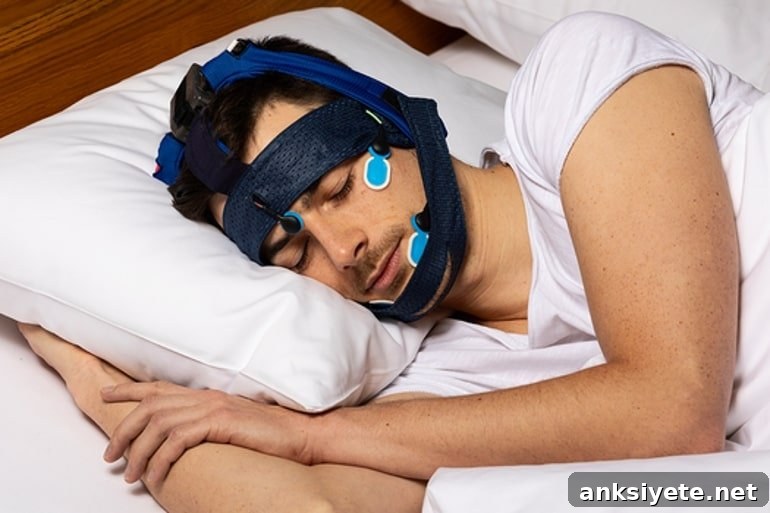
Summary: SleepLoop is a newly developed mobile system designed to strengthen deep sleep by using precisely timed auditory stimulation. The wearable monitors brain activity to detect slow-wave sleep and then delivers short sounds that help synchronize neuronal activity and amplify restorative slow waves.
Source: ETH Zurich
Many people, particularly older adults, experience disrupted or reduced sleep quality. Deep sleep phases grow shorter and lighter with age, and those deep stages are crucial for brain recovery, memory consolidation, and cardiovascular health.
Previous laboratory studies have demonstrated that playing precisely timed sounds through earphones during sleep can enhance the slow waves that characterize deep sleep. However, translating that approach into a reliable at-home solution that can be used for extended periods has been a challenge—until now.
SleepLoop to the rescue
As part of the SleepLoop project, researchers at ETH Zurich developed a compact, fully mobile system intended for home use to promote deep sleep through auditory brain stimulation. The goal is to offer a practical wearable that can reproduce lab-style stimulation outside the clinic.
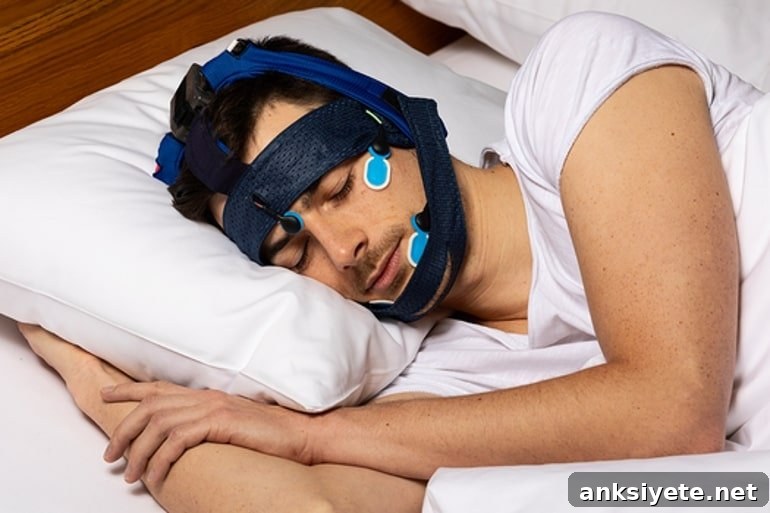
The SleepLoop system is built around a comfortable headband worn during the night. It integrates electrodes and an embedded microchip that continuously record the wearer’s brain activity. Custom software running on the microchip analyzes the signals in real time to detect the onset of slow-wave sleep.
When slow waves are detected, the device emits a short auditory click timed to the brain’s oscillations. This brief sound helps align neuronal firing and amplifies the ongoing slow waves, supporting deeper, more restorative sleep. Importantly, the signal is delivered at a level and timing that remains imperceptible to the sleeper while still influencing brain activity.
The first clinical study
A team from ETH Zurich and University Hospital Zurich, led by Caroline Lustenberger of the Neural Control of Movement Lab, conducted the first clinical trial using this home-based device. Their findings were published in the journal Communications Medicine.
The study recruited older adults aged 60–80 and trained participants to operate the SleepLoop system independently in their own homes. The device was designed to be user-friendly for people with limited technical experience. According to the team, participants were able to use the system with minimal data loss and generally rated it easy to operate.
Participants wore the headband every night for four weeks. Auditory stimulation was active for two weeks and turned off for the other two, with the order randomized and both participants and investigators blinded to the sequence. This crossover design allowed direct comparison between stimulation and sham conditions within the same individuals.
Auditory stimulation is indeed feasible
Data from 16 participants who completed the identical intervention showed that auditory stimulation can enhance slow-wave activity in most older adults when delivered at home. However, responses varied considerably: some participants showed a strong enhancement of slow waves, while others showed little or no change.
Lustenberger notes that responsiveness to the auditory stimulus did not simply reflect how well participants felt during the day. Some individuals consistently responded well regardless of daily state, while others remained unresponsive. These inter-individual differences are a key finding and point to the need for personalized stimulation strategies.
The research team used the variability in responses to refine models that predict who will benefit from stimulation. These predictive insights are already helping to optimize the SleepLoop algorithm to improve efficacy across different users.
On track for market launch
A spin-off company, Tosoo AG, is advancing the device toward clinical availability. The company intends to bring SleepLoop to the medical market rather than positioning it as a general consumer wellness gadget.
“This is a medical device, not a consumer sleep aid,” emphasizes Walter Karlen, one of the technology’s developers at ETH Zurich. Use will be by prescription and medical supervision is intended to ensure appropriate indication and monitoring. Further development of the technology will continue in collaboration with clinical partners.
About this neurotech and sleep research news
Author: Peter Rueegg
Source: ETH Zurich
Contact: Peter Rueegg – ETH Zurich
Image: The image is credited to SleepLoop
Original Research: Open access.
“Auditory deep sleep stimulation in older adults at home: a randomized crossover trial” by Lustenberger C et al. Communications Medicine
Abstract
Auditory deep sleep stimulation in older adults at home: a randomized crossover trial
Background
Auditory stimulation is an emerging, non-invasive method to enhance slow waves—deep sleep oscillations closely linked to restorative sleep and memory consolidation, which decline with age. While lab studies have shown benefits, it has remained unclear whether such stimulation could be applied effectively in real-life, at-home settings.
Methods
The investigators conducted a fully remote, randomized crossover trial in healthy adults aged 62–78 years (clinicaltrials.gov: NCT03420677). They measured slow-wave activity as the primary outcome and examined sleep architecture and daily functions—such as vigilance and mood—as secondary outcomes. Each participant completed a two-week period with active auditory slow-wave stimulation and a two-week sham period, separated by a two-week washout. Allocation order was randomized and assessments were blinded to reduce bias.
Results
Of 33 enrolled and screened participants, data from 16 who received the identical intervention are reported. The study demonstrated a robust, statistically significant enhancement of slow-wave activity at the group level using two auditory stimulation strategies, with limited effects on overall sleep architecture and daytime function. The findings also revealed substantial inter- and intra-individual variability in slow-wave responses and established preliminary predictors of responsiveness.
Conclusions
This study shows that slow-wave enhancement in healthy older adults is achievable in fully remote settings using wearable technology. Pronounced individual differences in response, however, indicate a need for personalized stimulation approaches. These results will inform the design of future wearable systems to deliver effective, individualized auditory sleep stimulation at home.